
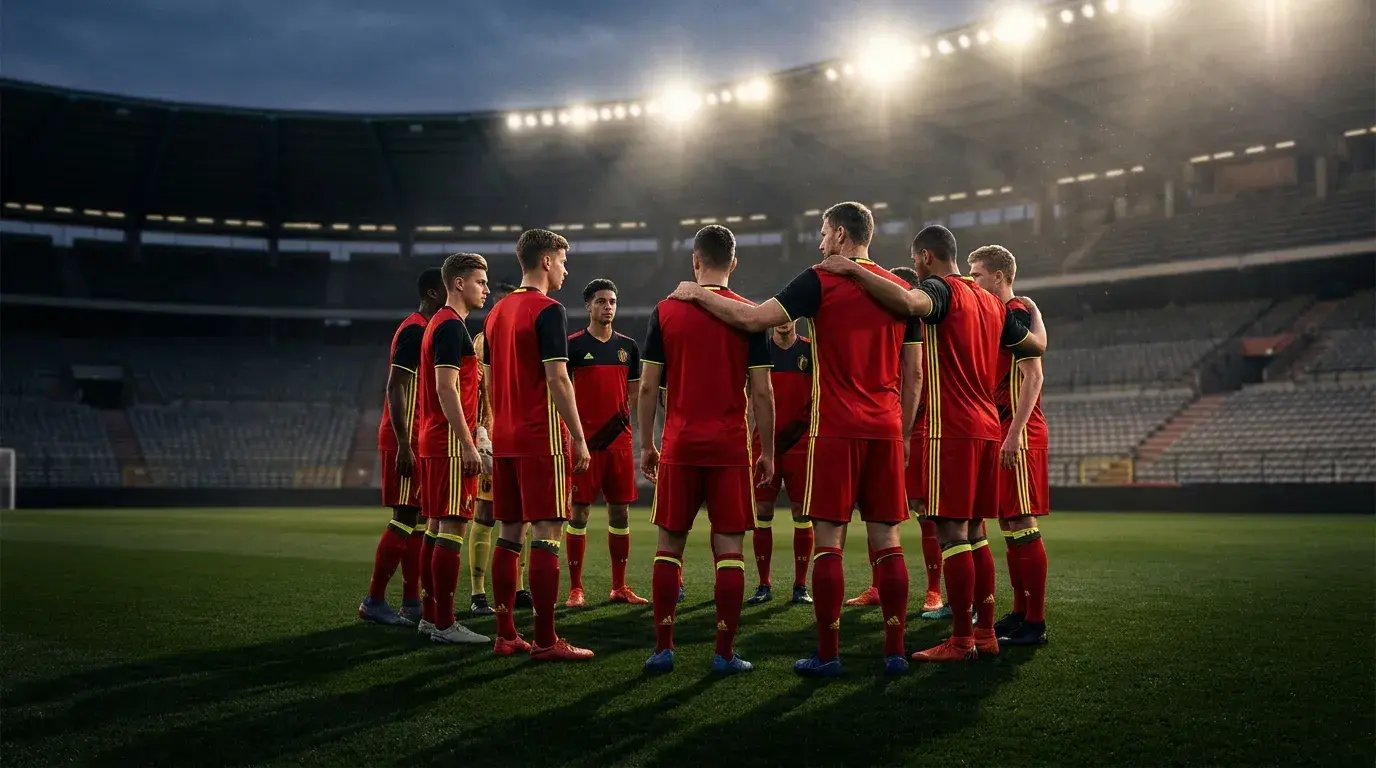
The window is closing. Belgium’s golden generation — Hazard, De Bruyne, Lukaku, Courtois — has delivered world number one rankings, a World Cup semi-final, and consistent tournament presence without the trophy that validates greatness. World Cup 2026 likely represents the final opportunity for this group to convert potential into achievement before age completes what time has already begun.
Belgium at World Cup 2026 arrives with questions that previous tournaments could defer. Eden Hazard has retired. Kevin De Bruyne’s body betrays him with increasing frequency. Romelu Lukaku’s relationship with Belgian supporters oscillates between adoration and frustration. The transition to a post-golden-generation squad has begun, yet the tournament asks whether enough remains for one final push.
The Golden Generation’s Final Stand
No Belgian squad in history has accumulated more talent than the group that peaked around 2018. Their third-place World Cup finish in Russia represented breakthrough that previous generations could only imagine — victories over Brazil and England established Belgium among football’s elite nations. Yet the subsequent years have seen gradual decline that Qatar 2022’s group stage exit painfully confirmed to those who hoped aging could be defied.
Kevin De Bruyne remains Belgium’s most important player despite injury concerns that have disrupted recent seasons with increasing frequency. His passing range, vision, and ability to control matches from midfield continues placing him among football’s elite when fitness permits full expression. At 34 during the tournament, questions about durability accompany every selection decision. Managing his minutes while maximising his influence defines Belgian tactical planning — the balance between preservation and utilisation shapes every match approach.
Romelu Lukaku’s goal-scoring record for Belgium exceeds any predecessor by substantial margin. His 85+ international goals establish him as the nation’s greatest striker statistically, with a ratio that validates his selection regardless of club-level complications. Yet his tournament performances have underwhelmed relative to qualification and friendly productivity when pressure intensifies. The criticism following Qatar 2022’s missed chances against Croatia — particularly the close-range opportunities that would have secured progression — lingers in public consciousness. Redemption through 2026 goals would reshape his legacy entirely and provide the tournament success his career statistics deserve.
Thibaut Courtois provides goalkeeping excellence that few nations can match. His Real Madrid success — including Champions League final heroics that earned Man of the Match recognition — demonstrates big-game capability that tournament football demands. The defense in front of him has weakened through retirement and aging, yet Courtois’s shot-stopping can compensate for structural vulnerabilities in ways that average goalkeepers cannot manage.
The transition players must carry increasing burden as golden generation legs slow. Jérémy Doku’s Manchester City development has produced a winger whose pace and directness creates problems regardless of opponent quality. His ability to beat defenders one-on-one provides attacking dimension that aging teammates cannot replicate. Amadou Onana provides midfield physicality that aging legs elsewhere cannot supply, with energy levels that tournament schedules demand. Charles De Ketelaere’s creative potential remains partially unfulfilled but could emerge under tournament pressure that focuses concentration.
Squad Composition Beyond the Legends
Belgium’s squad balance presents challenges that abundant talent partially obscures. The defensive organization that underpinned 2018’s success has eroded through retirements and aging. Toby Alderweireld’s departure removed defensive leadership that Jan Vertonghen’s continued presence cannot fully replace.
Centre-back options have narrowed concerning. Vertonghen at 39 provides experience without the pace that modern football demands. Wout Faes has emerged through Leicester City’s Premier League struggles. Zeno Debast offers youth from Anderlecht development. None matches the partnership that anchored previous tournament runs.
Full-back positions feature more optimism. Timothy Castagne’s Premier League experience provides right-sided solidity while attacking contributions. Arthur Theate offers left-sided balance between defensive responsibility and forward involvement. The width these players provide helps integrate attacking talent.
Midfield depth beyond De Bruyne has expanded through the emergence of talents whose European experience validates selection. Youri Tielemans provides Premier League proven quality despite inconsistent recent seasons. Orel Mangala and Aster Vranckx represent younger options whose development continues. The selection puzzle involves balancing experience against energy when tournament schedules compress recovery time.
Attacking options create the selection headaches managers prefer. Beyond Lukaku and Doku, options include Leandro Trossard’s versatility, Loïs Openda’s pace, and Johan Bakayoko’s emerging threat. This depth allows tactical variation that single-option attacks cannot provide.
Tactical Approach Under Tedesco
Domenico Tedesco’s appointment following Roberto Martínez’s departure brought different tactical emphasis to Belgian football. The German-Italian manager prioritises defensive organization over the attacking freedom that previous regimes encouraged. Whether this shift suits Belgian personnel remains debated among supporters.
The system typically deploys 4-3-3 or 4-2-3-1 formations that emphasise positional discipline. De Bruyne operates as primary creative force from central positions, with wingers providing width that stretches defences. The striker role varies between Lukaku’s physicality and more mobile alternatives depending on opponent analysis.
Pressing patterns under Tedesco exceed previous Belgian intensity. The team now engages higher than Martínez’s conservative approaches permitted. This aggression generates turnover opportunities but exposes defensive vulnerabilities that aging centre-backs struggle to resolve through recovery speed.
Possession percentages have increased under Tedesco’s guidance, reflecting controlled approaches that manage game tempo. Belgium no longer simply absorbs pressure before counterattacking — they seek territorial dominance that creates sustained attacking phases. Whether this suits available personnel better than transition-focused football remains unclear.
Group G Analysis
Belgium’s Group G placement alongside Egypt, Iran, and New Zealand presents opposition that should favour Belgian quality despite complications each opponent might create. The group lacks obvious heavyweight opposition yet contains teams capable of competitive performances.
Egypt brings African football’s organization and Mohamed Salah’s individual brilliance. The Liverpool forward’s goal-scoring threat requires specific defensive attention that could expose Belgian vulnerabilities elsewhere. Egypt’s defensive discipline will frustrate opponents seeking easy goals, making this fixture more competitive than rankings suggest.
Iran’s qualification through AFC represents continuity for a program that has developed steadily. Their compact defensive approach and counterattacking capability troubled England at Qatar 2022 before concentration lapses produced goals. Belgium cannot afford similar complacency against opponents whose competitive spirit exceeds technical limitations.
New Zealand’s inclusion as OFC representatives provides fixture where Belgian quality should dominate decisively. The All Whites’ development has progressed through European-based professionals yet cannot match elite nations’ depth. This match allows rotation that manages veteran workloads.
The knockout pathway presents potential round of 32 matchups against Group H opponents — likely Spain, Uruguay, or Saudi Arabia. Spain represents significant challenge that Belgian defensive concerns would face immediate examination. The bracket positioning could feature Argentina or France depending on results elsewhere.
Belgium World Cup 2026 Betting Assessment
Belgium typically trades around 17.00-26.00 for tournament victory, a significant drift from their position as World Cup 2018 third-place favourites. This pricing reflects the golden generation’s aging trajectory and Qatar 2022’s disappointing exit that confirmed declining competitiveness. The implied probability around 4-6% positions Belgium among outsiders rather than genuine contenders.
The value case involves tournament experience that younger squads lack. De Bruyne, Lukaku, and Courtois have navigated World Cup pressure successfully before. Their understanding of knockout football’s specific demands provides psychological foundation that theoretical talent alone cannot replace. If key players arrive fit and motivated for one final push, Belgium’s ceiling exceeds current pricing.
The case against Belgium centres on defensive deterioration that structural changes cannot quickly resolve. The centre-back pairings available cannot match 2018’s Alderweireld-Vertonghen partnership that provided foundation for tournament success. Additionally, De Bruyne’s injury record suggests he may not survive seven potential matches without fitness complications.
Alternative markets offer potentially better value. Belgium reaching quarter-finals prices around 2.80, reflecting manageable group opposition and belief that knockout navigation remains possible. Lukaku for group stage goals might be underpriced if he arrives in form against beatable opponents. De Bruyne for tournament assists depends entirely on fitness availability.
For Australian punters, Belgium represents a team whose golden generation narrative creates emotional market inefficiencies. Supporters may back them based on past achievements rather than current capabilities, creating value for those willing to oppose declining quality.
Belgian World Cup History
Belgium’s World Cup history spans respectable appearances without breakthrough triumphs that neighbours have achieved. The 2018 third-place finish remains their best result, achieved through memorable victories over Brazil (2-1 quarter-final comeback) and England (twice) en route to a semi-final loss against eventual champions France. That tournament’s success established expectations that subsequent editions have failed to meet despite squad continuity.
The 1986 semi-final represented previous best result before the golden generation’s emergence. That squad, featuring Enzo Scifo’s creativity and Jan Ceulemans’s leadership, lost to Argentina and Maradona during his legendary tournament run. The 32-year gap between semi-final appearances suggests Belgian football operates in cycles rather than sustained excellence — golden generations emerge, peak, and decline while waiting for next emergence.
The golden generation’s timeline has followed predictable arc. Early promise at Brazil 2014 produced quarter-final exit to Argentina. Russia 2018 delivered breakthrough third place that validated years of development. Qatar 2022’s group stage elimination confirmed that peak had passed, with performances lacking intensity and cohesion that defined earlier tournaments.
Qatar 2022’s group stage elimination shocked Belgian football despite warning signs. Defeats to Morocco and draws against Croatia ended their tournament before knockout rounds began. The manner of exit — flat performances lacking the spark that defined previous tournaments — suggested the golden generation’s window had closed faster than anticipated. Lukaku’s missed chances against Croatia became defining image of campaign that promised much more.
World Cup 2026 arrives as potential final chapter for the generation that elevated Belgian football to unprecedented heights. De Bruyne, Lukaku, and Courtois likely play their final World Cup together regardless of result. Whether they can summon one more tournament run or fade into respectful retirement shapes both immediate results and historical legacy that determines how this generation is remembered.