
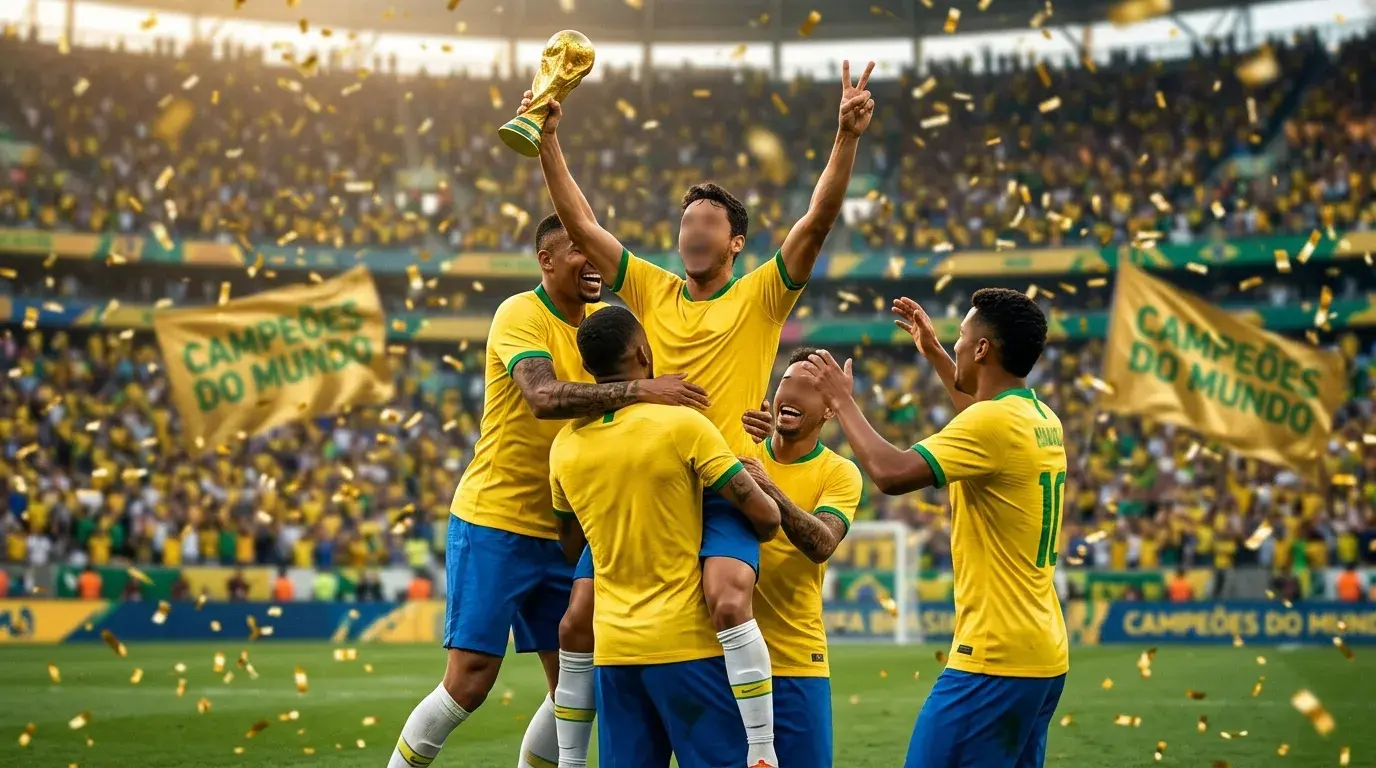
Twenty years without a World Cup trophy weighs heavily on a nation that considers five titles an entitlement rather than achievement. Brazil at World Cup 2026 carries generational expectations that have crushed previous squads — the 7-1 against Germany haunts Brazilians more than any defeat should, and Croatia’s 2022 quarter-final elimination added another layer to collective trauma. The Seleção arrives in North America with talent levels matching any era, yet the psychological burden of ending the drought shapes every tactical decision and selection choice.
Vinicius Jr leads a generation that grew up watching Neymar carry Brazilian hopes without delivering the ultimate prize. Now these players must succeed where their idol could not, armed with Champions League experience and European tactical education that previous generations lacked. The question is not whether Brazil possesses the quality to win World Cup 2026 — that much is obvious from any objective squad assessment. The question involves whether they can handle the pressure that comes with favourite status when margins become razor-thin in knockout rounds.
For Australian punters, understanding Brazil World Cup 2026 dynamics extends beyond their outright odds. The Selecao’s Group C position creates potential knockout round matchups that could include Australia if both nations navigate group stages successfully. More immediately, Brazilian market movements influence wider tournament pricing and reveal where professional money believes value exists.
Dissecting the Brazilian Squad Ahead of North America
Every World Cup cycle produces Brazilian talents who fail to fulfil potential under tournament pressure, alongside unexpected heroes who emerge from obscurity to define campaigns. The 2026 squad blends established superstars with emerging prospects whose tournament experience remains limited — a combination that creates both ceiling and floor scenarios.
Vinicius Jr occupies the talisman position vacated partially by Neymar’s fading influence. The Real Madrid winger has accumulated two Champions League titles, La Liga triumphs, and individual performances that place him among football’s elite players. His left-footed dribbling terrifies defenders who know that stopping him legally requires perfect timing — anything less results in fouls and dangerous free kicks. The concern involves tournament-specific psychology. Vinicius has never carried Brazil through a knockout round the way Neymar did before his injuries. The mental burden of being the man expected to end the drought creates pressure that club football, however intense, cannot replicate.
Rodrygo provides balance on the opposite flank, combining technical ability with tactical intelligence that Vinicius sometimes lacks. His movement off the ball creates spaces for teammates while his finishing has improved dramatically across consecutive seasons. The Madrid connection between Rodrygo and Vinicius translates directly to international football — their understanding requires minimal adaptation.
Central midfield presents selection dilemmas. Casemiro’s defensive mastery has declined with age and Manchester United’s chaotic environment, yet his tournament experience provides value that younger alternatives lack. Bruno Guimarães offers the modern profile — progressive passing, pressing resistance, and goal threat from deep positions that define elite midfielders. The partnership question involves whether both can operate in the same system or whether one must sacrifice for the other.
Raphinha’s transformation from Leeds journeyman to Barcelona star exemplifies Brazilian talent development. His work rate from the right wing provides defensive coverage that allows full-backs freedom to attack, while his set-piece delivery creates scoring opportunities from wide areas. The squad depth at attacking positions exceeds any competitor — Antony, Gabriel Martinelli, and Endrick provide alternatives that would start for most nations.
Defensive concerns persist despite individual quality. Marquinhos anchors the back line with PSG experience that translates inconsistently to international football. His partnership with Éder Militão has developed over 15 consecutive appearances, building understanding necessary for knockout pressure. Full-back options generate attacking overloads through Danilo’s experience and emerging alternatives, though aging profiles across the back four raise questions about pace against elite counterattacking teams.
Goalkeeper Alisson remains among the world’s elite, providing shot-stopping ability and distribution quality that sets Brazil’s build-up apart from most opponents. His Liverpool experience includes Premier League titles and Champions League success — the big-game mentality transfers directly to World Cup knockout rounds. The backup situation behind Alisson generates less confidence, with Ederson’s absence creating vulnerability if the first-choice becomes unavailable.
How Brazil Approach Major Tournament Tactics
Brazilian managers face unique pressure that distorts tactical planning. The nation expects attacking football regardless of opponent quality, yet tournament success often requires pragmatic adjustments that supporters find distasteful. Dorival Júnior’s appointment brought renewed emphasis on defensive organisation without sacrificing attacking flair — a balance that previous managers struggled to achieve.
The system typically deploys a 4-2-3-1 that allows Vinicius Jr freedom on the left while maintaining central solidity. Defensive midfield pairing provides cover for centre-backs while full-backs push high during attacking phases. The number 10 position rotates based on opposition profiles — creativity against deep blocks versus defensive discipline against possession-dominant opponents. This flexibility represents tactical evolution from previous regimes that forced square pegs into round holes.
Brazil’s pressing has intensified under Dorival Júnior compared to previous regimes. The team now hunts possession in the opposition half rather than sitting deep and counterattacking. This approach generates more scoring opportunities but creates transitions that expose defensive weaknesses when pressing fails. Against elite opponents, this calculated risk determines outcomes. The pressing triggers involve specific situations — goalkeeper distribution, sideways passes in defensive third, and backward passes that signal hesitation. When these triggers appear, Brazilian forwards and midfielders engage simultaneously.
Possession patterns reveal interesting tendencies. Brazil averages approximately 58% possession in competitive fixtures, lower than peak Barcelona or Manchester City standards but sufficient for territorial dominance. The preference involves direct attacking rather than patient build-up — quick combinations through central areas followed by wide delivery into dangerous positions. This directness suits the squad’s individual quality but occasionally frustrates when organised defences refuse to engage.
Set pieces receive extensive preparation that reflects modern football’s statistical emphasis on dead-ball situations. Brazil scores from corners at rates exceeding league averages, with Marquinhos, Militão, and Richarlison providing aerial threats that require multiple markers. Free kicks within 30 yards generate genuine goal expectation through Raphinha’s delivery and Vinicius’s threat from direct strikes. Defensive set pieces present vulnerabilities — the squad concedes from corners at concerning rates that opponents will target.
The tournament approach will likely involve group stage experimentation followed by knockout round conservation. Expect Brazil to attack aggressively against Group C opposition, accumulating goals that boost confidence while resting key players in the third fixture. Round of 32 onwards brings a more calculated approach — leads protected, substitutions timed conservatively, and game management prioritised over spectacular football.
Navigating Group C and Early Tournament Pathway
Brazil’s Group C draw positions them as overwhelming favourites against Morocco, Scotland, and Haiti. The expected point return sits around eight or nine from three matches, with anything less representing underperformance that generates immediate criticism. Yet group stages provide opportunities for unexpected complications that history repeatedly demonstrates.
Morocco represents the most dangerous opponent following their 2022 semi-final breakthrough. The Atlas Lions’ defensive organisation troubled Brazil in Qatar before the tournament’s knockout rounds, and their squad has gained additional experience from that campaign. Walid Regragui’s tactics specifically target Brazilian weaknesses — sitting deep, absorbing pressure, and counterattacking through pace on transitions. Brazil cannot afford complacency in this fixture. The Moroccan squad includes Achraf Hakimi’s attacking threat from right-back, Sofyan Amrabat’s midfield disruption, and emerging talents who have developed across European leagues since their breakthrough tournament.
Scotland provides European opposition whose physical approach could disrupt Brazilian rhythm. The Scots defended admirably during Euro 2024 qualification and will arrive determined to compete rather than accept defeat. Their aerial threat from set pieces creates moments where Brazilian defenders must concentrate absolutely — one lapse could generate equalising goals. Scotland’s pathway to qualifying from CONCACAF’s expanded format reflects their determination to return to major tournament football. The fixture scheduling places this match during group stage’s compressed middle period, where fatigue and rotation decisions affect outcomes.
Haiti’s inclusion as CONCACAF qualifiers generates uncomfortable conversations about competitive balance. Brazil should win this fixture by multiple goals without serious challenge, yet the potential for injury during aggressive challenges or psychological flatness affects squad management. Expect Dorival Júnior to rotate heavily, preserving first-choice players for knockout rounds. This match provides opportunities for squad depth to accumulate World Cup minutes, building confidence for potential future involvement.
The round of 32 opponent emerges from Group D — potentially USA, Turkey, Paraguay, or Australia. Each presents different tactical challenges that Brazilian preparation must address. USA’s pressing intensity requires composure under pressure. Turkey’s technical quality demands midfield dominance. Paraguay’s defensive compactness needs creative solutions. Australia’s counterattacking speed exposes high defensive lines. This round typically eliminates genuine World Cup contenders whose group-stage form fails to translate to knockout intensity.
Quarter-final positioning depends on Group D results and bracket allocation. The most likely opponent emerges from Groups A or B, potentially including Mexico, Canada, or Switzerland. Each represents stepping stones rather than insurmountable obstacles for a squad of Brazil’s quality. The semi-final and final await winners of the opposite bracket half — potentially Argentina, France, or England. These are the fixtures where Brazil’s recent tournament failures demand different outcomes.
Brazil’s Betting Odds and Where Value Might Exist
Brazil typically trades as second or third favourite for World Cup 2026 outright victory, with prices around 6.00-7.00 depending on market fluctuations. This pricing implies approximately 14-16% probability of lifting the trophy — substantial but reflecting the challenge of winning seven consecutive knockout matches against elite opposition. Market positioning fluctuates based on friendly results, injury news, and sentiment shifts that create trading opportunities.
The argument for backing Brazil involves squad depth that exceeds competitors. Injuries to key players would devastate most nations’ chances, yet Brazil could absorb Vinicius’s absence through Rodrygo elevation and still remain competitive. This depth provides insurance value that single-star teams lack. Additionally, the psychological motivation of ending the 24-year trophy drought creates collective determination that purely talented squads sometimes lack. When Brazilian players discuss World Cup preparation, the emotional weight of restoring national pride permeates every interview.
The argument against Brazil centres on their recent tournament record. Three consecutive quarter-final eliminations (2014, 2018, 2022) establish a pattern of failing when knockout pressure intensifies. The squad has not demonstrated the clinical game management that previous Brazilian champions possessed. Against equally talented European opponents, Brazil’s defensive vulnerabilities could prove fatal. Croatia’s 2022 penalty shootout victory exposed mental fragility that may persist despite personnel changes.
Market efficiency creates challenges for Brazilian betting. As a heavily traded team with substantial public support, bookmakers apply appropriate margins that limit value opportunities. The casual punter backs Brazil emotionally, allowing sophisticated markets to adjust prices accordingly. Finding genuine value requires identifying specific inefficiencies rather than simply backing outright victory.
Value hunting in Brazilian markets focuses on alternatives to outright victory. Reaching the semi-finals at approximately 2.40 prices fair value given Group C pathway advantages and squad quality. Top scorer markets offer opportunities through Vinicius Jr around 11.00 and Rodrygo at longer prices. Team totals during group stage (over 7.5 goals across three matches) might be underpriced given opposition quality.
For Australian punters, the most relevant market involves potential knockout round meetings. If Australia qualifies from Group D as best third-placed team, Brazil awaits in the round of 32. Understanding Brazilian strengths and weaknesses informs betting on that potential fixture — backing Australia to score against a Brazil team that concedes counterattacking opportunities, or under total goals in a match where Australian defence sits deep.
The Yellow Jersey’s Tournament Legacy
Five World Cup titles establish Brazil as football’s most successful nation, yet the distribution of those victories creates contemporary pressure. Triumphs in 1958, 1962, 1970, 1994, and 2002 represent different eras of Brazilian football — from Pelé’s emergence through Ronaldo’s redemption. The 22-year gap since 2002 exceeds any previous drought in Brazilian football history, and the national team has become a source of frustration rather than pride for an entire generation of supporters who have never witnessed a Brazilian World Cup victory.
The 2006 generation carried overwhelming expectations with Ronaldinho, Kaká, Ronaldo, Adriano, and Robinho promising attacking brilliance. Quarter-final elimination to France began the spiral that has never truly resolved. Zinedine Zidane’s masterful performance that evening exposed Brazilian defensive vulnerabilities that subsequent squads have failed to address. The 2010 squad fell to Netherlands in similar fashion, Felipe Melo’s red card symbolising the mental fragility that accompanies elimination pressure.
The 2014 home World Cup delivered the 7-1 humiliation against Germany that traumatised Brazilian football consciousness more deeply than any defeat should. Losing a semi-final by six goals, in Belo Horizonte, with the nation watching, created psychological scars that persist across player generations. David Luiz’s tears, the stunned silence of Mineirão, and the global mockery that followed represent the lowest point in Brazilian football history.
Recent tournaments have seen Brazil approach knockout rounds as genuine favourites before psychological collapse. Against Belgium in 2018 and Croatia in 2022, the Seleção created sufficient chances to progress before defensive errors and finishing failures combined fatally. The pattern has become predictable — dominate possession, create opportunities, concede preventable goals, exit tournament with heads bowed and questions unanswered.
The 2026 squad represents the best opportunity to break this cycle since Ronaldo’s injury-affected 1998 and redemptive 2002 campaigns. Vinicius Jr’s Champions League-winning mentality provides psychological leadership that previous talisman figures lacked. The question involves whether one player’s winning mindset can spread throughout a squad that carries generational trauma from failures they witnessed as supporters before becoming players.
Value Assessment for Backing Brazil in 2026
Backing Brazil at current outright prices requires belief that this squad can overcome psychological barriers that have blocked predecessors. The talent is undeniable — Vinicius Jr, Rodrygo, Bruno Guimarães, and Alisson would strengthen any national team on the planet. Whether that talent translates to trophy remains the fundamental uncertainty that prevents confident investment.
The value case strengthens when considering alternative markets. Brazil to reach the final at approximately 3.50 offers better risk-adjusted returns than outright victory. Their pathway potentially avoids the hardest opponents until semi-final or final stages, where the tournament’s statistical variance means anyone reaching that point has genuine winning chances.
Player-specific markets may offer clearer value. Vinicius Jr for tournament MVP if Brazil wins carries prices around 4.00 that would be shorter if Brazil were more heavily backed outright. His combination of goal involvement and assist potential makes him the likely recipient if Brazil triumphs. Backing him for Golden Ball without tied Brazil outright represents a hedged approach.
Group stage markets present lower-risk opportunities. Brazil to win all three group matches trades around 2.20 — achievable given opposition quality, though Morocco’s potential creates risk. Brazil to score in every match prices short but compounds across group fixtures to create multi-building opportunities. Team-specific totals and clean sheet markets allow granular positioning on Brazilian performances without committing to tournament-long outcomes.
Where I See Brazil Finishing This Tournament
Brazil will win Group C comfortably, likely with nine points and a substantial goal difference. The Morocco fixture carries slight upset potential but probability favours comfortable Brazilian progress. Round of 32 should prove straightforward against whichever Group D opponent awaits — even Australia or Turkey at their best would struggle to match Brazilian individual quality across 90 minutes.
The quarter-final stage represents the historical elimination point that this generation must overcome. Likely opponents from Groups A or B include Mexico, Canada, Switzerland, or surprise packages that emerge from unpredictable group stages. Brazil should progress but will face the psychological pressure of exorcising recent demons. This is where my confidence begins wavering — not in squad quality but in tournament-specific mentality that has failed when margins tighten.
Semi-final positioning opens pathways to the final that Brazilian supporters have awaited since 2002. The opposite bracket half contains Argentina, France, and England — European and South American powerhouses whose own tournament aspirations create genuinely competitive fixtures. Brazil possesses the quality to defeat any opponent on neutral ground when performance levels peak. Whether they can sustain peak performance across consecutive knockout rounds remains the uncertainty that differentiates champions from nearly-men.
My base forecast positions Brazil as semi-finalists with approximately 60% probability. They possess the quality to reach the final and win it, yet the historical pattern of quarter-final elimination creates doubt that statistical models cannot fully capture. A semi-final exit to France, England, or Argentina would represent acceptable progress while continuing the trophy drought narrative that weighs on Brazilian football.
The genuine uncertainty makes Brazil interesting rather than predictable for betting purposes. Unlike Argentina defending their title or France’s consistent tournament performance, Brazil’s outcome distribution spans from quarter-final elimination to tournament victory without clear probability weighting between extremes. That variance creates opportunities for punters who can assess the psychological factors that determine knockout round outcomes. Those who backed Brazil to exit early in recent tournaments profited from patterns that may or may not continue.