
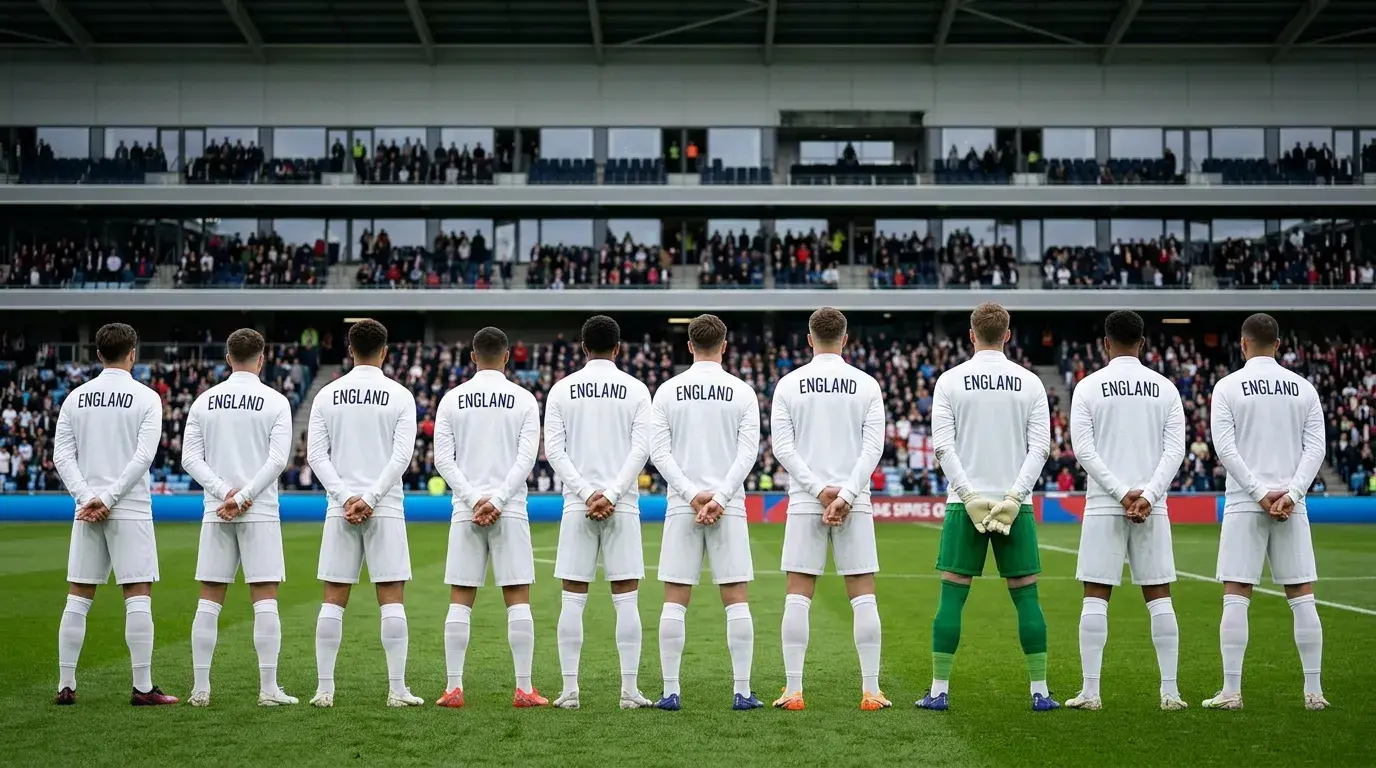
Sixty years of hurt — that’s the narrative England carries into every major tournament, and World Cup 2026 arrives with familiar hopes and familiar anxieties. The Three Lions possess a squad that would have won multiple tournaments in previous eras, yet 1966 remains the only trophy in the cabinet. For Australian punters watching from afar, England represents both opportunity and frustration: a team that consistently reaches late tournament stages but consistently fails to cross the final hurdle.
The England World Cup 2026 campaign builds upon foundations established across recent tournaments. Semi-final appearances in 2018 and Euro 2020, followed by quarter-final exits in 2022 and Euro 2024, demonstrate progress without breakthrough. The question facing this generation involves whether incremental improvement eventually produces silverware or whether psychological barriers prevent the final step regardless of squad quality.
What makes this cycle particularly significant involves transition. The players who defined English football’s recent resurgence — Kane, Sterling, Henderson — have either departed or declined. New leadership must emerge from a squad that possesses extraordinary attacking depth but uncertain defensive identity. The betting markets reflect this ambiguity, pricing England among favourites while acknowledging the consistent pattern of falling short.
The Post-Kane Era Begins in North America
Harry Kane’s international retirement following Euro 2024 removal transforms England’s attacking identity. For nearly a decade, tactical planning centred on maximising the striker’s involvement — his movement, hold-up play, and finishing dictated how England approached matches. Without Kane’s presence, the entire system requires reconstruction that tournament preparation timelines struggle to accommodate. The 66 international goals he accumulated represent a void that no single replacement can fill.
The candidates to replace Kane present different profiles rather than direct succession. Ollie Watkins offers pace and pressing intensity that Kane lacked, yet his finishing record at the highest level remains unproven across extended periods. His Euro 2024 substitute appearance produced a semi-final winner, suggesting clutch capability, but starting roles carry different pressure. Ivan Toney provides aerial dominance and link-up play closer to the Kane mould, though his career has featured fewer opportunities at elite club level. The emerging solution involves fluidity — no fixed number nine, but rotating options based on opposition profiles and match situations.
This transition creates betting implications that markets may not fully price. England’s historical dependence on Kane’s goals means his absence removes a proven tournament scorer. The replacement goals must come from elsewhere — wide players, midfielders, and tactical variations that have not been tested under World Cup pressure. Backing England’s attacking totals at group stage carries higher variance than historical averages suggest, though the weaker opposition may mask systemic issues until knockout rounds.
The psychological dimension extends beyond tactical adjustment. Kane’s leadership, his armband presence during pressure moments, and his embodiment of English football’s values created intangible stability that tournament teams require. Identifying new captaincy candidates becomes crucial — likely Declan Rice or Jude Bellingham, both of whom possess different leadership profiles than Kane’s calm consistency. Rice offers organizational leadership that keeps defensive shape, while Bellingham provides inspirational presence through individual brilliance. Neither has captained through tournament pressure.
Breaking Down England’s Squad Depth
Despite the Kane-shaped void, England’s squad depth exceeds any previous generation. The conveyor belt of Premier League talent, supplemented by European experience at elite clubs, provides selection options that create genuine tactical flexibility. The challenge involves integration rather than identification — so many quality players must somehow function as a coherent unit rather than a collection of individuals.
Jude Bellingham has emerged as England’s most important player following his extraordinary Real Madrid adaptation. Champions League success, La Liga dominance, and match-winning performances across the biggest fixtures establish him among football’s elite despite his youth. His positioning flexibility — operating as attacking midfielder, false nine, or deeper playmaker — allows tactical variation that opponents struggle to predict. Building the team around Bellingham represents the most obvious strategic choice, and his mentality suits the pressure that tournament knockout rounds generate.
Phil Foden’s club form with Manchester City has not consistently translated to international football, creating one of English football’s persistent puzzles. The talent is undeniable — his close control, intelligent movement, and finishing ability would enhance any national team. Yet tournament performances have underwhelmed relative to expectation, raising questions about whether the international environment somehow inhibits his natural game. Unlocking Foden’s international potential could transform England’s attacking ceiling.
Bukayo Saka provides consistent threat from the right wing, with his direct dribbling and crossing ability creating danger that defences must respect. His workrate on both sides of the ball makes him invaluable in the modern game’s demands for attackers who contribute defensively. Saka’s penalty in the Euro 2020 final shootout miss demonstrated character through his subsequent response — returning stronger rather than retreating from pressure.
The midfield options beyond Bellingham include Declan Rice’s defensive coverage, Kobbie Mainoo’s emerging quality, and Cole Palmer’s creative threat. Rice’s transition from West Ham to Arsenal has added offensive elements to his game while maintaining the positional discipline that anchors any successful tournament team. His understanding with Bellingham could prove decisive in controlling knockout round midfields. Palmer’s breakthrough season suggests he could become a tournament star if given consistent opportunities.
Defensive selections generate more debate than any other position group. Trent Alexander-Arnold’s attacking qualities from right-back create offensive overloads but expose defensive vulnerabilities that elite opponents exploit. His diagonal passing and set-piece delivery provide genuine value, yet the defensive trade-offs become pronounced against counterattacking teams. Kyle Walker’s pace provides recovery insurance, yet his age raises durability questions across seven potential matches. Centre-back options including Marc Guéhi, Levi Colwill, and John Stones offer quality without obvious elite-level pairing that tournament success typically requires.
Goalkeeping presents uncertainty following Jordan Pickford’s inconsistent recent form. His tournament record remains strong — penalty saves and crucial interventions have defined English progress in recent competitions — yet club-level concerns about concentration and distribution persist. The backup options provide limited comfort if Pickford becomes unavailable, though Aaron Ramsdale and Dean Henderson possess Premier League experience that would suffice against most opponents.
Tactical Identity Under New Management
The managerial transition following Gareth Southgate’s departure marks England’s most significant change heading into 2026. Southgate’s conservative approach drew criticism despite delivering consistent tournament progress. His replacement inherits both the squad’s quality and the expectations that accompany English football management.
The tactical evolution required involves unlocking attacking talent that Southgate’s systems arguably constrained. Bellingham, Foden, Palmer, Saka, and company possess creativity that demands expression rather than restriction. Whether the new regime prioritises attacking freedom or maintains the defensive caution that produced semi-final appearances creates the fundamental tactical question.
Possession patterns under Southgate averaged around 54% in competitive fixtures — respectable but not dominant. The squad’s technical ability suggests higher possession should be achievable against most opponents, yet tournament football rewards pragmatism over aesthetics. Finding the balance between entertaining play and tournament-winning efficiency determines England’s ceiling.
Set pieces have provided reliable scoring opportunities across recent tournaments. England’s height advantage and delivery quality from Foden, Palmer, and full-backs creates genuine goal probability from corners and free kicks. Maintaining this strength while developing more fluid open-play attacking represents the tactical development priority.
The pressing structure varies based on opposition. Against technically inferior teams, England engages high to force turnovers in dangerous areas. Against elite opponents, a mid-block conserves energy while remaining compact. This adaptability has served England well, yet knockout rounds against Argentina, France, or Brazil would test whether English pressing can disrupt truly world-class opponents.
Group L Presents Manageable Opposition
England’s draw into Group L alongside Croatia, Ghana, and Panama provides favourable path toward knockout rounds. All three opponents possess quality that demands respect, yet none represents genuine upset threat against a fully functioning England side. The expected return approaches nine points with comfortable goal difference that ensures optimal seeding for knockout rounds.
Croatia’s aging golden generation has declined since their 2018 World Cup final appearance. Modrić’s retirement leaves a void that younger players have not adequately filled, and the squad’s overall quality has dropped from elite to merely competitive. Their tournament experience remains valuable, yet physical decline in key positions suggests England should dominate this fixture. The historical context — Croatia’s 2018 semi-final victory over England — provides motivation for revenge that players will feel regardless of rational assessment that the opposition has weakened.
The Croatia fixture carries additional significance as potential marker of English tournament mentality. Do they approach with aggression designed to establish dominance, or with the caution that characterised Southgate’s era? The answer provides early indication of whether 2026 represents genuine evolution or continuation of conservative patterns.
Ghana brings African football’s combination of athleticism and technical skill. Their recent generational transition has produced exciting talents seeking to establish themselves on the global stage. The potential for chaotic, entertaining matches exists, yet England’s superior organisation should ultimately prevail. This fixture likely determines goal difference positioning within the group. Ghana’s counterattacking speed could expose defensive vulnerabilities if England commits too many players forward.
Panama returns to the World Cup having appeared in 2018 when England defeated them 6-1 during the group stage. Their squad lacks the individual quality to trouble English defenders, though competitive spirit ensures they will not simply concede without resistance. Rotation opportunities exist for managing player workloads ahead of knockout rounds. This is where squad depth becomes tangible advantage — resting Bellingham, Saka, and Rice while still fielding a competitive eleven.
The round of 32 opponent emerges from Group K — potentially Portugal, Colombia, or Uzbekistan. Portugal presents fascinating possibilities if Ronaldo remains involved, creating generational contrast with Bellingham that media narratives will emphasise. The fixture would pit England’s emerging superstar against football’s historical icon in potentially his final tournament appearance. Colombia’s tournament experience and quality midfield would provide genuine examination of English credentials. Either represents manageable progression that should see England reach the quarter-finals where historical patterns await.
Understanding England’s Betting Market Position
England typically trades around 8.00-10.00 for World Cup 2026 outright victory, positioning them among the top six or seven favourites. This pricing implies approximately 10-12% probability of winning the tournament — substantial given the historical pattern of falling short but reflecting genuine squad quality and favourable draw positioning.
The value case for backing England involves squad depth and tactical flexibility. The post-Kane transition, while presenting challenges, also removes dependency on a single player that created predictable attacking patterns. Bellingham’s emergence provides generational talent capable of decisive tournament moments. The draw pathway potentially avoids the tournament’s strongest teams until semi-final or final stages, creating genuine opportunity for a deep run without facing Argentina or Brazil early.
Transitional periods sometimes produce surprising tournament success. Teams without established hierarchies play with freedom that settled squads lack, and the emergence of new leaders can generate momentum that experienced but jaded groups cannot manufacture. If Bellingham, Saka, and Palmer embrace tournament pressure rather than fearing it, England’s attacking potential exceeds any previous generation.
The case against England centres on consistent tournament failure despite quality squads. Since 1966, England has reached one World Cup semi-final (2018) and zero finals. The psychological burden of 60 years without a trophy affects players regardless of conscious awareness. Media scrutiny creates pressure that continental opponents simply do not experience, with every selection decision and tactical choice dissected by commentators whose criticism permeates the camp. Penalty shootout records have improved but still carry traumatic associations. The intangible factors preventing English success remain present even as squad quality improves.
Alternative markets warrant consideration for more granular positioning. England reaching the semi-finals prices around 2.50, reflecting the favourable group and early knockout draws. Quarter-final progression at 1.60 offers near-certainty given opposition profiles. Top English scorer markets provide opportunities if you identify which attacker emerges as primary goal threat in Kane’s absence — Palmer at longer prices could represent value if he earns significant minutes and finds form that his Chelsea performances suggest is achievable.
For Australian punters, England represents familiar opposition from a betting perspective. The similarities between supporting nations with talent but historical underachievement create understanding of psychological factors that statistics miss. Both Australia and England know the weight of expectation without recent success, and both enter tournaments hoping that this time, finally, things will be different.
English World Cup History and Tournament Patterns
The 1966 triumph at Wembley defines English football’s self-image despite occurring before most current supporters’ lifetimes. Bobby Moore lifting the Jules Rimet trophy, Geoff Hurst’s hat-trick, and the Russian linesman’s controversial goal-line decision represent cultural touchstones that subsequent generations have failed to replicate. That success created expectations which have burdened every English squad since — the weight of being football’s inventors who cannot win their own tournament.
The pattern since 1966 reveals consistent competitiveness without breakthrough. Quarter-final exits represent the modal outcome — 1970, 1986, 2002, 2006, and 2022 all ended at that stage. Semi-final appearances in 1990 and 2018 provided hope before penalty-related heartbreak. The inability to convert talent into titles defines English football’s tournament narrative and creates psychological patterns that subsequent generations inherit.
Penalty shootout trauma deserves specific mention given its influence on English football psychology. Defeats against West Germany (1990), Argentina (1998), Portugal (2004 and 2006), and Italy (2021) created generational trauma that affected player confidence across decades. The technical aspect of penalty-taking somehow became intertwined with national identity, creating pressure that continental opponents seemed immune to. Recent improvement — victories against Colombia (2018) and Switzerland (2024) — suggests the curse may be lifting, yet deeply embedded associations persist in collective memory.
The 2018 Russia World Cup represented emotional reset following years of embarrassment. Gareth Southgate’s squad played with freedom that previous generations lacked, reaching the semi-finals before Croatia’s extra-time victory. That tournament’s success established foundations for subsequent progress while also revealing limitations that persist — specifically, inability to defeat elite opponents in knockout rounds when margins tighten.
Euro 2020’s final defeat to Italy at Wembley added contemporary wound to historical patterns. Reaching a major final for the first time since 1966, on home soil, only to lose on penalties encapsulated everything frustrating about English football. The subsequent Euro 2024 quarter-final exit to Spain demonstrated that even the best squads cannot guarantee tournament progression when facing genuine elite opponents.
Assessing England’s Realistic Tournament Ceiling
England will win Group L convincingly, likely with nine points and double-digit goal difference that ensures favourable knockout seeding. The group stage should generate confidence without providing genuine examination of tournament credentials. Early knockout rounds against Group K opposition should similarly favour English quality, allowing progression to quarter-finals where real tests begin.
The quarter-final stage historically eliminates England when elite opponents arrive. Potential matchups against USA (host nation advantage), Brazil (individual brilliance), or Argentina (tournament experience) would test whether this generation can overcome patterns that predecessors established. Each of these fixtures approaches fifty-fifty probability regardless of perceived English quality advantage. The psychological weight of facing elimination against superior mental competitors creates pressure that technical ability alone cannot resolve.
Semi-final positioning requires defeating one of football’s genuine elite teams, a feat England has not accomplished since 2018 against Sweden. The difference between Sweden and Argentina, Brazil, or France in semi-final contexts is substantial. Whether English players can rise to occasions that define careers remains the uncertainty that betting markets attempt to price.
My forecast positions England as quarter-finalists with approximately 70% probability and semi-finalists around 40%. These estimates align with market pricing, suggesting limited value in outright backing at current odds. The tournament victory probability sits closer to 8% than the implied 10-12%, reflecting my assessment that psychological barriers prevent the final breakthrough regardless of squad quality.
The path to changing this assessment involves early tournament performances that demonstrate different mentality. If England attacks with freedom rather than conservation during group stages, if set-piece confidence translates to knockout dominance, and if Bellingham assumes tournament-defining responsibility successfully, the ceiling could extend beyond historical patterns. These conditions represent optimistic scenarios rather than base expectations, requiring evidence that this generation differs fundamentally from predecessors.
For Australian punters, England’s position creates interesting betting dynamics. Opposing them in knockout rounds against specific opponents may offer value, particularly if those opponents possess the psychological tools to exploit English anxieties. The narrative of 60 years without a trophy resonates differently when betting against rather than for English success. Understanding this psychological dimension provides edge that purely statistical approaches miss.