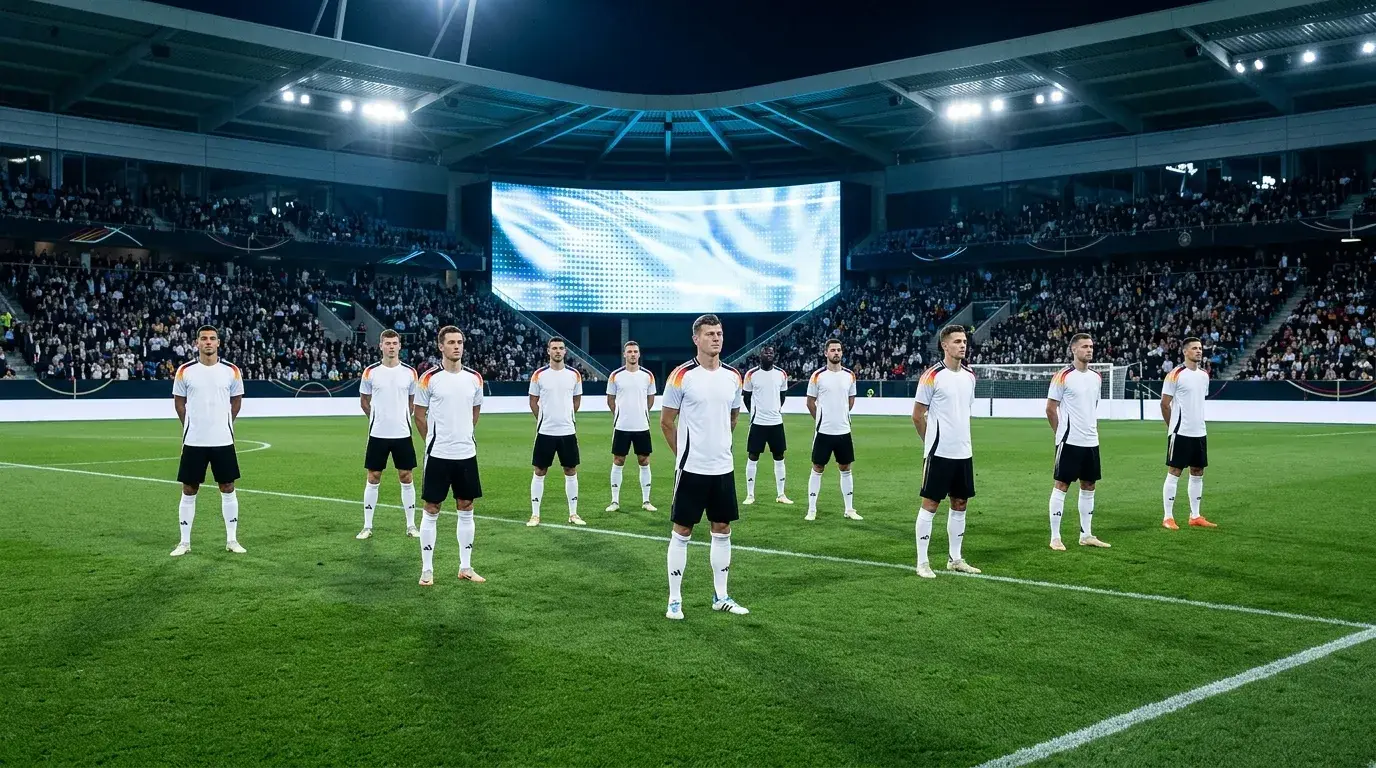
German football does not accept failure gracefully. The back-to-back group stage eliminations in 2018 and 2022 created existential crisis within a footballing culture that considers World Cup success an entitlement rather than aspiration. Die Mannschaft arrives at World Cup 2026 carrying the weight of these humiliations and the desperate need to restore national footballing pride that four World Cup titles established.
The Germany World Cup 2026 campaign represents something beyond sporting ambition — it is an attempted restoration of identity. Euro 2024’s home tournament quarter-final exit against Spain, despite competitive performances and genuine belief, added another wound to collective psyche. German football’s structural excellence — the academy systems, the Bundesliga’s quality, the institutional memory of winning — has not translated to recent tournament success. Understanding why this gap exists, and whether 2026 can close it, defines the analytical challenge.
For Australian punters, Germany presents intriguing betting dynamics. Markets price them among the top eight or ten contenders, reflecting talent without ignoring recent failures. This positioning creates potential value if you believe the redemption narrative produces elevated performance, or opportunity to oppose if you assess structural problems persist despite personnel changes.
Rebuilding Die Mannschaft After Years of Disappointment
The transition from the 2014 World Cup-winning generation to their successors has proven far more difficult than German football expected. Players who defined that Brazil triumph — Lahm, Schweinsteiger, Klose — retired without adequate replacements emerging through the academy systems that German football considers its competitive advantage. The subsequent decade featured failed attempts to blend remaining veterans with emerging talents, producing neither the experience of the former nor the energy of the latter.
Julian Nagelsmann’s appointment following Euro 2024’s quarter-final exit represents another reset in German football’s search for direction. His tactical innovations at Hoffenheim, Leipzig, and Bayern Munich suggest a manager capable of maximising squad potential through creative systems that unlock individual talents. Whether international football’s limited preparation time allows implementation of his complex approaches remains the fundamental question that his tenure will answer.
The cultural shift Nagelsmann brings extends beyond tactics. His communication style differs markedly from Joachim Löw’s increasingly distant approach during the declining years. His relationship with players emphasises collaboration rather than dictation. His willingness to make bold selection decisions — dropping established names, promoting younger talents — differs from predecessors’ more conservative approaches that trusted seniority over form. Germany needs confidence restoration as much as tactical evolution — players must believe they can compete with Europe and South America’s elite after years of evidence suggesting otherwise.
The 2024 Euros provided glimpses of what rejuvenated German football might achieve. Jamal Musiala’s emergence as genuine world-class talent suggested the generational shift might finally be completing. Florian Wirtz’s partnership with Musiala in attacking midfield created combinations that troubled every opponent they faced. The tournament’s conclusion — narrow extra-time defeat to eventual champions Spain following a controversial handball decision — hurt deeply but demonstrated competitiveness that 2018 and 2022 lacked entirely. The performance provided foundation for 2026 optimism even in elimination’s disappointment.
The institutional response to recent failures has involved soul-searching uncommon in German football’s typically confident culture. The DFB’s structural changes, the academy curriculum revisions, and the coaching education modifications all target long-term development rather than immediate tournament success. Whether these changes have had sufficient time to influence the 2026 squad remains uncertain, though the emerging talent profiles suggest positive trajectory.
Squad Analysis for the North American Tournament
Germany’s 2026 squad features fascinating contrasts between established figures and emerging talents. Nagelsmann faces selection dilemmas at multiple positions, with the choices he makes signalling tactical priorities that define tournament approach.
Manuel Neuer’s continued presence in goal generates debate that encapsulates German football’s transition challenges. At 40 during the tournament, the Bayern Munich legend remains capable of match-winning performances while also producing errors that younger goalkeepers might avoid. His tournament experience — two World Cups, multiple European Championships — provides leadership value that statistics cannot capture. The backup situation features Marc-André ter Stegen, whose Barcelona experience creates a genuine alternative if age-related decline becomes undeniable.
Defensive options have expanded beyond the personnel constraints of recent tournaments. Antonio Rüdiger’s Real Madrid success has established him as Germany’s most reliable centre-back, with aerial dominance and recovery pace that tournament football demands. His partnership options include Jonathan Tah’s physical presence and Nico Schlotterbeck’s ball-playing ability. Full-back positions feature Joshua Kimmich’s tactical intelligence from the right and various left-sided options whose defensive reliability varies.
The midfield represents Germany’s greatest strength and most difficult selection puzzle. Kimmich’s positional flexibility allows deployment as defensive midfielder, right-back, or central midfielder depending on system requirements. His understanding of German football’s traditions — the passing patterns, the pressing triggers, the collective movements — makes him essential regardless of specific position. Alongside him, Robert Andrich provides defensive solidity that Kimmich’s advancing tendencies require.
Jamal Musiala has emerged as Germany’s most important attacking player. His dribbling ability in tight spaces, his vision for final passes, and his goal threat from multiple positions create problems that organised defences struggle to solve. At 23 during the tournament, Musiala enters prime years where physical development meets accumulated experience. Building the team around his strengths represents Nagelsmann’s obvious strategic priority.
Florian Wirtz provides Musiala’s perfect complement. Where Musiala operates in chaos, creating through individual brilliance, Wirtz controls through intelligence and precision. His passing range exceeds expectations for his age, while his movement between defensive lines creates receiving opportunities that progress attacks. The Musiala-Wirtz partnership could define German football’s next era if tournament success validates their combination.
Striker options present different profiles for different situations. Kai Havertz’s development at Arsenal has added consistent goal threat to previously inconsistent finishing. Niclas Füllkrug provides aerial target that possession-oriented systems sometimes require. The choice between their profiles — mobility and link-up versus physicality and set-piece threat — depends on opposition analysis and match situations.
Nagelsmann’s Tactical Vision for 2026
Julian Nagelsmann’s reputation as tactical innovator preceded his international appointment. His club teams featured fluid shapes, aggressive pressing, and positional complexity that produced entertaining football and considerable success. Whether these approaches translate to national team football, with its compressed preparation periods and varied player availability, determines Germany’s tournament ceiling.
The emerging system builds on 4-2-3-1 foundations while allowing positional rotations that create overloads across the pitch. Musiala and Wirtz operate in interchangeable roles behind a central striker, with wide players providing width and recovery when possession is lost. Kimmich’s positioning — whether deep alongside a partner or advancing from right-back — creates numerical advantages in different pitch areas.
Pressing intensity under Nagelsmann exceeds recent German approaches. His teams hunt possession aggressively, with coordinated triggers that engage when specific passing patterns occur. This approach generates turnover opportunities in dangerous areas but requires fitness levels that tournament schedules can challenge. Managing energy across seven potential matches involves careful rotation that Nagelsmann must navigate.
Build-up patterns emphasise goalkeeper and centre-back involvement. Neuer’s distribution range opens long diagonal options when shorter passing faces pressure, while defenders carry possession forward to draw opponents out of shape. This calculated risk-taking creates opportunities but also invites the errors that recent World Cups have featured. Finding the balance between progressive building and conservative security determines outcomes against elite opposition.
Set-piece preparation reflects German football’s analytical traditions. Detailed routines for both attacking and defending dead-ball situations have been apparent in Nagelsmann’s club teams. Germany’s height advantage at set pieces — Rüdiger, Tah, Havertz, Füllkrug — creates aerial threat that opponents must respect. Converting this advantage into tournament goals could prove decisive in knockout rounds where margins compress.
Group E Opposition Analysis
Germany’s Group E draw presents manageable opposition that should allow progression without major stress. Curaçao, Ivory Coast, and Ecuador each possess quality demanding respect, yet none represents genuine threat to German qualification. The expected return approaches nine points with comfortable goal difference.
Ivory Coast arrives as African Cup of Nations champions, bringing confidence and quality that their FIFA ranking understates. Sébastien Haller’s return to fitness provides attacking focal point, while Nicolas Pépé and other European-based talents create genuine threat. The fixture carries potential for competitive match if German concentration lapses — African champions should not be underestimated regardless of historical head-to-head records.
Ecuador represents South American quality that CONMEBOL qualification produces. Their compact defensive organisation and counterattacking speed through Moisés Caicedo’s midfield drives troubled Argentina and Brazil during qualification. The altitude advantage they possess at home disappears in North American venues, yet their tactical discipline remains. Germany must break down organised defences that Ecuador will present.
Curaçao’s qualification represents Caribbean football achievement that generates romantic narratives without realistic German threat. The fixture provides rotation opportunity for squad management while still requiring professional execution. Maintaining concentration against opponents Germany should defeat comfortably tests mentality more than ability.
Round of 32 opponents emerge from Group F — potentially Netherlands, Japan, Tunisia, or Sweden. The Netherlands presents obvious rivalry dynamics that add intensity beyond typical knockout rounds. Japan’s 2022 group stage victory over Germany creates revenge motivation that players will feel. Either represents manageable progression, though neither provides the comfortable passage that Group E might suggest.
Germany World Cup 2026 Betting Markets
Germany typically trades around 11.00-15.00 for World Cup 2026 outright victory, positioning them outside the top five or six favourites but among genuine contenders. This pricing implies approximately 7-9% probability, reflecting squad quality while acknowledging recent tournament failures that justify market scepticism. The odds have drifted from pre-Euro 2024 levels when home tournament enthusiasm created optimism that results failed to validate.
The value case for backing Germany involves historical patterns and generational transition. Four World Cup titles demonstrate that German football knows how to win when circumstances align. The Musiala-Wirtz partnership provides attacking quality matching any competitor, with their combination suggesting the creative solutions that recent German teams lacked. Nagelsmann’s tactical innovations could unlock performances that previous managers failed to produce despite similar personnel availability. The redemption narrative creates motivational fuel that content teams sometimes lack — Germany plays with something to prove.
The case against Germany centres on sustained recent evidence of tournament failure. Group stage eliminations in 2018 and 2022 establish patterns that squad changes alone may not resolve. The defensive vulnerabilities that produced embarrassing goals — Japan’s counterattacks, South Korea’s late strikes — remain present in personnel profiles that favour attacking contributions over defensive reliability. Neuer’s aging raises questions about the position most critical to German confidence, and his occasional errors have increased in frequency. The semi-final exit at home Euros against Spain confirmed that even improved performances fall short against genuinely elite opposition.
Alternative markets warrant consideration for those seeking German exposure without outright commitment. Reaching quarter-finals prices around 2.20, reflecting Group E ease and manageable round of 32 projections. Musiala for tournament top scorer or Golden Ball offers value given his potential for defining performances that could produce multiple goals per match. Team totals during group stage may be underpriced against opponents whose defensive organisation varies considerably from Ivory Coast’s structure to Curaçao’s limitations.
For Australian punters, Germany’s position creates interesting dynamics. Their potential round of 32 opponent from Group F could include Japan — opponents who defeated Germany at 2022 World Cup in shocking fashion. Understanding German strengths informs betting on that potential matchup and overall tournament progression expectations. The psychological weight of facing Japan again could affect German performance in ways that pure tactical analysis misses.
German World Cup Heritage and Modern Context
Four World Cup titles establish Germany among football’s historical elite. The 1954 “Miracle of Bern” against Hungary, the 1974 home triumph featuring Beckenbauer and Müller, the 1990 reunification-era victory against Argentina, and the 2014 Brazil demolition represent distinct achievements across football eras. This legacy creates expectations that current players inherit regardless of their personal records — wearing the German shirt carries weight that few nations can match.
The 2014 triumph in Brazil remains the modern benchmark against which current squads are measured. That squad featured tactically sophisticated football that peaked in the 7-1 semi-final destruction of hosts Brazil — a result so shocking it transcended sport to become cultural phenomenon that Brazilians still struggle to process. Joachim Löw’s system that tournament represented German football at its best: collective movement, technical precision, and clinical finishing that overwhelmed opposition regardless of their pedigree.
The decline since 2014 reflects poorly on German football’s institutional response to generational transition. Löw’s continued tenure through 2018’s group stage humiliation — when South Korea eliminated the defending champions — and then 2021’s delayed departure prevented earlier regeneration that might have produced better results. The structural advantages German football possesses — academy systems that produced 2014’s champions, club infrastructure supporting player development, coaching education considered among world’s best — failed to produce tournament success when the 2014 generation aged out.
The 2018 defending champion exit against South Korea and the 2022 group stage elimination via Japan and Costa Rica represented successive traumas that no previous German generation experienced. Tournament football’s variance can produce individual upsets, but consecutive group stage failures suggested systemic problems beyond bad luck. The Japan defeat proved particularly scarring — a 2-1 loss that saw Germany dominate possession while conceding counterattacking goals that exposed defensive naivety.
Euro 2024’s home tournament provided partial restoration of German football’s self-image. The quarter-final exit to Spain stung, particularly after extra-time drama that included controversial officiating, yet the tournament demonstrated German football could again compete with Europe’s elite. The Musiala-Wirtz partnership excited supporters after years of joyless football that lacked creative spark. Whether this momentum survives two years to reach 2026 determines tournament prospects and the direction of German football’s next chapter.
My Assessment of German Tournament Prospects
Germany will win Group E convincingly, likely with nine points and significant goal difference that establishes optimal knockout seeding. The group stage provides opportunity for Nagelsmann to establish patterns, test combinations, and build confidence before elimination rounds demand peak performance. This preparation phase matters more for Germany than stronger favourites whose tournament credentials face less question. Expect rotation against Curaçao while first-choice lineups face Ivory Coast and Ecuador.
Round of 32 against Group F opposition — likely Netherlands or Japan — represents where redemption begins or failure continues. The Netherlands rivalry produces intense fixtures where form becomes secondary to historical weight that decades of confrontations have established. These matches carry emotional resonance that affects performance regardless of objective quality assessment. Japan as opponent creates revenge narrative following 2022’s humiliation that shocked German football and ended their group stage hopes. Germany should progress from either matchup, yet neither provides comfortable expectation that allows relaxed preparation.
Quarter-final positioning likely pits Germany against Group G or H winners — potentially Belgium, Spain, or Uruguay. These fixtures represent genuine examinations of tournament credentials that group stage success cannot guarantee. Spain’s Euro 2024 victory over Germany suggests the matchup favours the Spanish, though margin was minimal and circumstances differed from what neutral venue would produce. Belgium and Uruguay present different challenges that Nagelsmann’s preparation must address through tactical adjustment.
Semi-final achievement would represent significant progress given recent failures, positioning Germany among tournament’s final four where variance determines ultimate outcomes. The opponents at that stage — likely France, England, Argentina, or Brazil — would present fixtures where German quality could prevail without being favoured. These are the matches German football desperately wants to reach, where historical prestige and current talent combine for legacy-defining performances.
My forecast positions Germany as quarter-finalists with approximately 60% probability and semi-finalists around 35%. These estimates align roughly with market pricing, suggesting current odds represent fair value rather than exceptional opportunity. The tournament victory probability sits around 6-7%, slightly below implied market rates, reflecting my assessment that while Germany can defeat any opponent individually, winning seven consecutive knockout matches exceeds realistic projection given defensive vulnerabilities.
For Australian punters, Germany offers balanced betting propositions without obvious value. Backing them for quarter-final progression at 2.20 represents reasonable expectation given group and bracket positioning. Opposing them against specific knockout opponents may offer better opportunities if matchup dynamics favour those opponents. The key indicator involves early tournament performances — if Germany starts fluently with Musiala and Wirtz combining effectively, the ceiling rises; if familiar anxieties emerge through defensive errors, the historical pattern likely continues.