
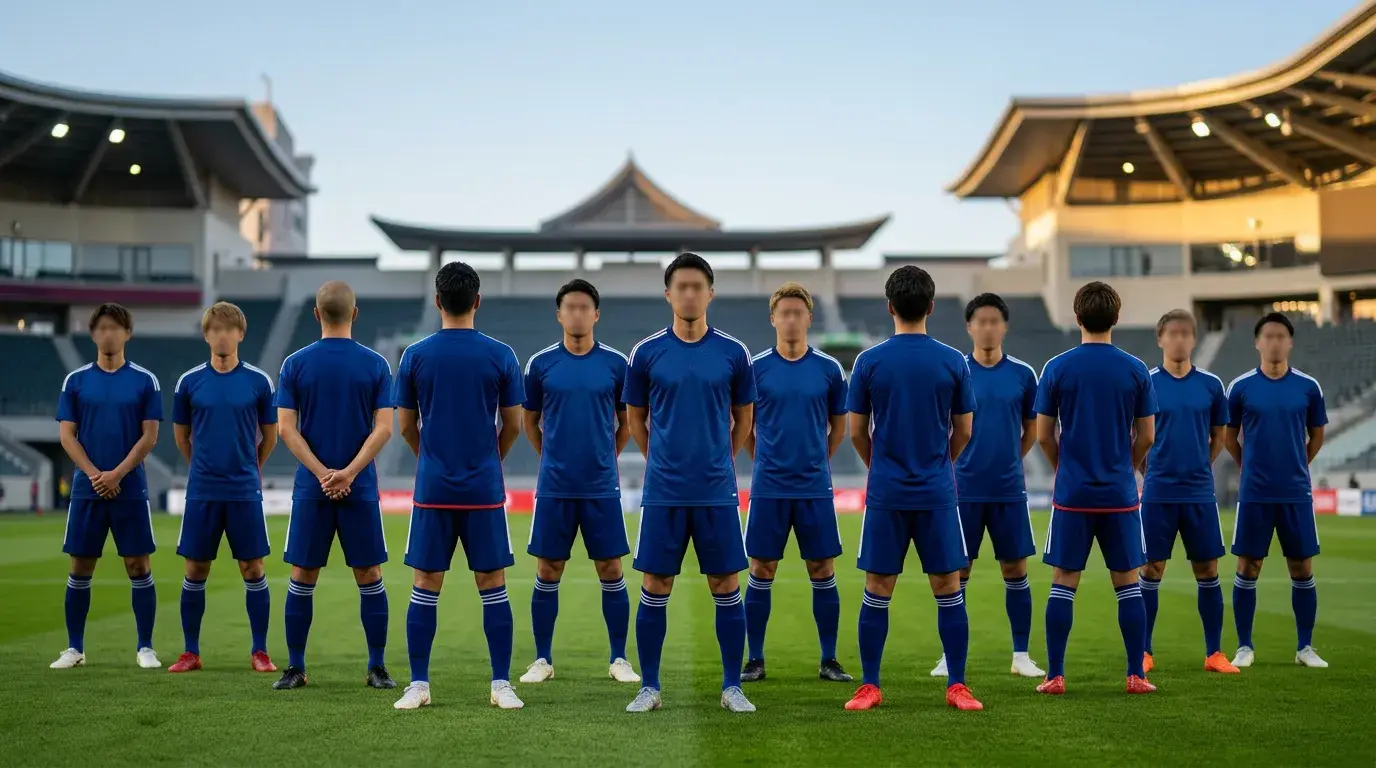
Japanese football has evolved from curious World Cup debutant to genuine knockout round threat within a single generation. The 2022 World Cup victories over Germany and Spain — both genuine shocks that announced Japan among tournament contenders — demonstrated that Asian football’s growth has accelerated beyond European and South American expectations. World Cup 2026 arrives with Japanese ambitions elevated to match demonstrated capabilities.
The Samurai Blue’s transformation reflects systematic investment in player development through European exposure. Where previous Japanese generations featured primarily J.League-based squads, the current selection includes Bundesliga, Premier League, and La Liga regulars whose tactical understanding matches elite competition requirements. This continental experience separates Japan from Asian rivals and threatens established tournament hierarchies.
Japanese Squad Composition
Japanese squad construction emphasises European experience that has expanded dramatically across recent cycles. The number of players competing in top five European leagues exceeds previous generations significantly, creating squad comfortable with intensity that international football demands.
Takefusa Kubo leads Japanese creativity through Real Sociedad performances that have established him among La Liga’s most dangerous attackers. His dribbling ability, vision for final passes, and goal threat creates problems that opponents struggle to contain. At 25 during the tournament, Kubo enters peak years where potential becomes production consistently.
Kaoru Mitoma provides explosive pace from wide positions that Premier League experience at Brighton has refined. His ability to beat defenders one-on-one creates attacking situations that organised defences cannot prevent through positioning alone. The directness he brings contrasts with more technical teammates, providing tactical variation.
Takehiro Tomiyasu offers defensive solidity and versatility through Arsenal development. His ability to operate at centre-back, right-back, or left-back provides tactical flexibility that tournament squads require. The Premier League intensity he experiences weekly translates directly to international contexts.
Wataru Endō anchors midfield with Liverpool experience that few Japanese predecessors possessed. His defensive screening, passing range, and tactical intelligence provides platform for more creative teammates. The understanding of elite-level demands he brings elevates entire squad performance.
Ko Itakura provides centre-back leadership through Borussia Mönchengladbach experiences. His aerial ability, distribution, and organisational communication establishes defensive structures that support attacking ambition. The Bundesliga’s tactical demands have developed his reading of play beyond typical Asian development.
Goalkeeping options feature competition between experienced and emerging talents. The position has historically represented Japanese concern, yet current options demonstrate reliability that tournament football demands.
Tactical Evolution Under Current Management
Japanese football has evolved beyond the technical possession approach that characterised early World Cup appearances. Modern Japanese teams combine ball retention with counterattacking capability that previous generations lacked through insufficient pace and directness. This evolution reflects both coaching development and personnel changes that have added athletic profiles to technical foundations.
The system typically deploys 4-2-3-1 or 4-3-3 formations that balance defensive coverage with attacking presence. Endō’s positioning provides defensive anchor that allows full-backs forward movement supporting wide attackers. The attacking midfield trio features pace on both flanks with Kubo’s creativity through central channels linking midfield to forward line.
Pressing intensity has increased to match European standards that Japanese players now experience weekly at club level. Japanese teams engage high against opponents whose build-up play shows vulnerability through slow distribution or telegraphed passes. The coordinated nature of Japanese pressing — with triggers well-rehearsed through preparation — generates turnover opportunities in dangerous areas that quick transitions exploit.
Transition speed represents Japan’s most dangerous weapon against elite opponents who commit numbers forward. The 2022 victories over Germany and Spain both featured quick counterattacking goals that exploited defensive complacency from opponents who expected continued possession without consequence. Mitoma’s pace and Kubo’s decision-making in transition situations creates threat that any opponent must respect regardless of their possession statistics.
Defensive organisation has improved significantly through personnel development. The willingness to sit in mid-block and absorb pressure before counterattacking demonstrates tactical maturity that previous Japanese generations lacked. This adaptability allows different approaches against different opponents rather than singular style regardless of circumstances.
Set-piece organisation has improved beyond previous Japanese levels through detailed preparation. Both defensive and attacking routines reflect tournament football’s demands for dead-ball efficiency. Height disadvantages that Japanese teams historically suffered have been partially offset through positional discipline and movement patterns that create advantages through timing rather than physical attributes.
Group F Analysis
Japan’s Group F placement alongside Netherlands, Tunisia, and Sweden presents competitive opposition where every fixture matters. The Netherlands provides genuine challenge, while Tunisia and Sweden offer different tests that require tactical adjustment.
Netherlands represents the group’s toughest fixture based on squad depth and tournament pedigree. Dutch technical quality matches Japanese levels while physical advantages in aerial situations could prove decisive. This fixture determines group leadership positioning that affects knockout bracket placement.
Tunisia brings African football’s defensive organisation that frustrated European opponents at recent tournaments. Their compact structures will test Japanese patience and creativity against deep defensive blocks. The fixture requires different approach than counterattacking opportunities against Netherlands.
Sweden’s qualification marks return to World Cup following Euro 2024’s absence. Their physical approach and set-piece threat creates specific challenges that Japanese preparation must address. The European style provides contrast with Asian and African opponents.
The knockout pathway presents potential round of 32 matchups against Group E opponents — likely Germany, Ecuador, or Ivory Coast. Germany rematch creates obvious narrative following 2022’s shock result. Japanese confidence against Die Mannschaft would exceed typical underdog expectations.
Japan World Cup 2026 Betting Markets
Japan typically trades around 34.00-51.00 for tournament victory, significant improvement from pre-2022 pricing that reflected their breakthrough performances. The implied probability around 2-3% positions Japan among credible outsiders whose progression beyond group stage represents realistic expectation.
The value case involves proven capability against elite opponents. Victories over Germany and Spain at Qatar 2022 demonstrated that Japanese quality can overcome established nations when preparation and execution align. The European experience throughout the squad removes questions about tournament readiness that previous generations faced.
The case against Japan centres on knockout round consistency that group stage success has not yet produced. The round of 16 penalty defeat to Croatia at Qatar 2022 continued pattern of elimination when matches extend beyond regulation. Converting group stage promise into deep tournament runs remains unproven.
Alternative markets offer potentially better value. Japan reaching quarter-finals prices around 4.00, reflecting belief that knockout navigation is achievable while semi-final progression remains ambitious. Kubo for tournament breakthrough player offers value given his platform for performances that could define Japanese campaign. Match betting against specific Group F opponents provides opportunities.
For Australian punters, Japan represents Asian rival whose tournament success affects continental perception. Their performances inform understanding of Asian football’s competitive level that extends to Socceroos assessment.
Japanese World Cup Heritage
Japan’s World Cup history demonstrates rapid progression from 1998 debutant to consistent qualifier whose knockout ambitions have intensified across seven consecutive appearances. The co-hosted 2002 tournament’s round of 16 achievement represented early peak that subsequent generations have sought to surpass.
The 2022 World Cup represented genuine breakthrough. Victories over Germany (2-1) and Spain (2-1) in the same group stage announced Japanese football at levels that shocked global observers. Both results featured disciplined defensive phases followed by clinical counterattacking that exposed European complacency. The subsequent round of 16 penalty defeat to Croatia provided familiar disappointment, yet the group stage achievements established new expectations.
Previous tournaments featured consistent group stage presence without knockout breakthrough. South Africa 2010’s round of 16 loss to Paraguay (on penalties) and Russia 2018’s round of 16 defeat to Belgium (3-2 after leading 2-0) represent painful near-misses that have defined Japanese tournament psychology.
The development pathway that has produced current squad depth reflects J.League’s evolution and European pathway expansion. Where previous generations featured few European-based players, current selections feature double-digit numbers competing at elite continental levels. This exposure has closed competitive gaps that previously separated Asian football from established powers.
World Cup 2026 arrives with expectations elevated beyond previous tournaments. Japanese supporters now expect knockout qualification as baseline rather than achievement. Quarter-final or semi-final progression would establish Japan among genuine World Cup contenders rather than plucky outsiders whose upset victories surprise.