
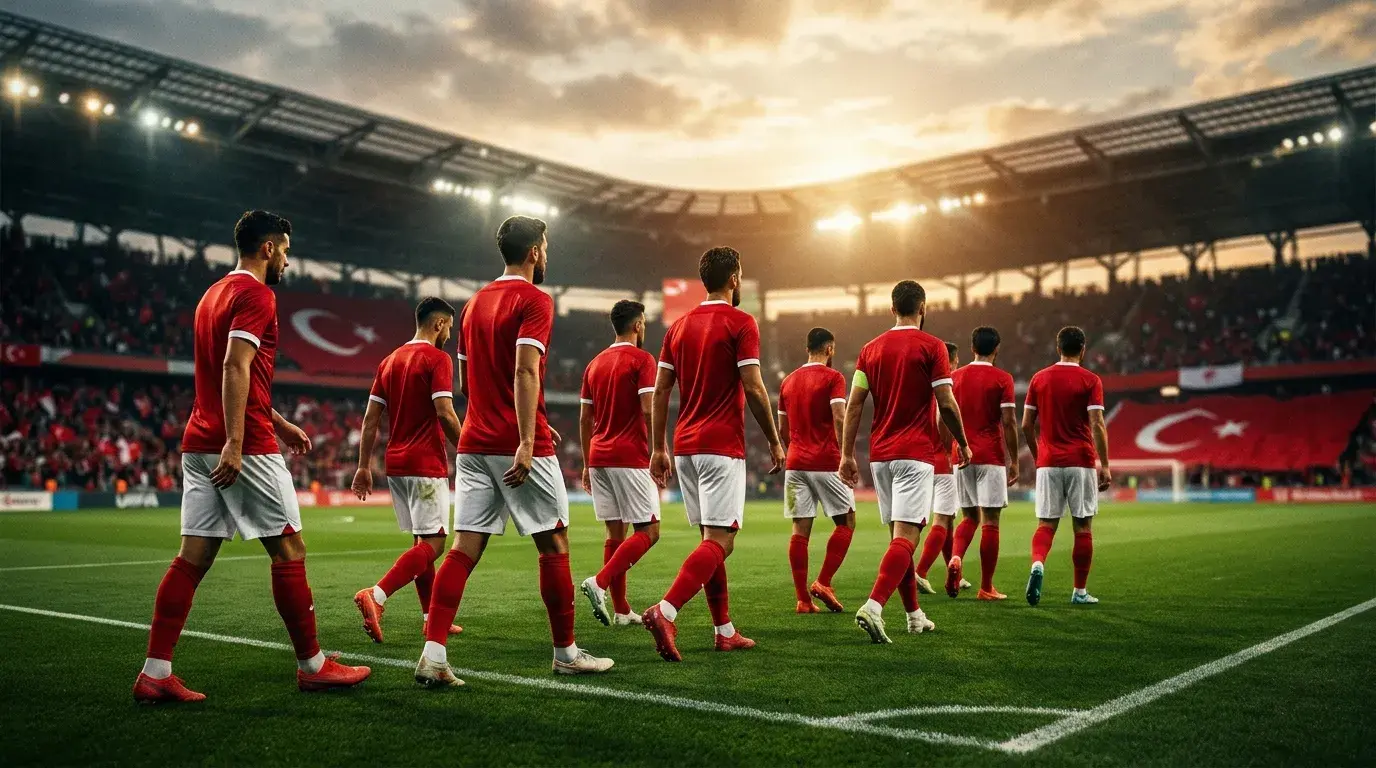
Turkish football operates on boom-and-bust cycles that produce extraordinary highs followed by frustrating absences. The 2002 World Cup third-place finish announced Turkey among football’s emerging powers before subsequent failures to qualify for multiple tournaments undermined that promise. World Cup 2026 marks Turkey’s return to football’s biggest stage following qualification that restored national football pride.
For Australian punters, Turkey represents the Group D opponent the Socceroos will face first in Vancouver. Understanding Turkish strengths and vulnerabilities directly affects betting on Australia’s opening fixture and overall group progression. This analysis provides the foundation for those assessments.
Turkish Squad Composition
Turkish squad construction blends Süper Lig experience with European exposure that has expanded significantly through recent generations. The balance between domestic competitive rhythm and continental tactical understanding creates squad capable of competing with established nations when preparation and motivation align.
Hakan Çalhanoğlu anchors midfield with quality that Serie A success at Inter Milan validates beyond question. His passing range, set-piece delivery, and tactical intelligence provides platform for Turkish attacking play that flows through his central positioning. The transition from playmaker to deeper controlling roles has extended his career and enhanced his influence on team structure, making him irreplaceable regardless of tactical variation.
Arda Güler represents Turkish football’s most exciting talent in a generation. His Real Madrid development — earning minutes in the world’s most demanding squad environment alongside Vinícius and Bellingham — suggests potential that could explode at tournament level. At 21 during World Cup 2026, Güler enters the stage where prodigies either fulfil promise or reveal limitations that pressure exposes. His technical ability, creativity, and finishing threaten any defence when concentration peaks and confidence flows.
Kenan Yıldız provides additional attacking quality through Juventus’s development pathway. His directness and goal threat from wide positions creates problems that organised defences struggle to contain without committing extra resources. The combination of Güler and Yıldız in the same squad gives Turkey attacking options that previous generations lacked entirely — European elite development rather than purely domestic preparation.
Ferdi Kadıoğlu offers versatility that tournament squads require. His ability to operate at left-back, wing-back, or further forward provides tactical flexibility that allows formation changes without personnel disruption. His Brighton development has added Premier League intensity to Turkish technical foundations.
Defensive organisation has improved through experience accumulated at competitive European clubs. Merih Demiral’s Serie A and Saudi Pro League experience provides centre-back solidity that commands the defensive line. Various full-back options create width that supports attacking play while providing recovery pace that modern football demands. Goalkeeper Altay Bayındır has developed through Manchester United’s competitive environment despite limited playing time, learning from elite-level training standards.
Tactical Approach Analysis
Turkish football has evolved beyond the purely defensive approaches that characterised previous tournament appearances. Modern Turkish teams combine defensive discipline with attacking ambition that previous generations sacrificed for security.
The system typically deploys 4-2-3-1 or 4-3-3 formations that balance defensive coverage with attacking presence. Çalhanoğlu’s positioning — whether deeper alongside a partner or advanced in creative zones — shapes team structure match by match. The wingers provide width while the central attacking midfielder operates between lines seeking pockets of space.
Pressing intensity exceeds previous Turkish approaches without matching elite European standards. Turkey engages in middle thirds rather than aggressive high pressing, preferring to force opponents into wider areas where recovery becomes possible. This approach conserves energy across tournament schedules while maintaining competitive intensity.
Transition speed represents Turkey’s most dangerous attacking dimension. Quick progressions from defensive positions into counterattacking situations exploit pace that Güler and Yıldız provide. Against possession-heavy opponents, Turkey willingly concedes territory to create counterattacking opportunities that technical quality can convert.
Group D Context for Australian Punters
Turkey faces Australia in the Group D opening fixture at BC Place, Vancouver. This match shapes both teams’ tournament trajectories — victory provides foundation for knockout qualification while defeat creates pressure that subsequent fixtures must resolve under intensified scrutiny.
Turkish strengths that concern Australian preparation include midfield quality that could dominate central areas if Socceroos cannot match intensity. Çalhanoğlu’s distribution creates attacking opportunities from deep positions that Australian pressing must disrupt before passes release. The pace of Güler and Yıldız in transition threatens Australian defenders who push high supporting attacks, potentially exposing the spaces behind the defensive line that quick counterattacks exploit.
Set-piece quality represents additional Turkish advantage. Çalhanoğlu’s delivery from free kicks and corners creates aerial threat that Australian defenders must manage without conceding positioning advantage. His direct free-kick scoring record at Inter Milan demonstrates that shots from distance represent genuine threat rather than mere possession restart.
Turkish vulnerabilities that Australian tactics might exploit include defensive organisation against sustained pressure. When opponents maintain possession in Turkish defensive third, gaps appear between defensive lines that quick passing combinations can penetrate. Set-piece defending has shown inconsistency that Australian aerial threats — particularly from corners — might exploit when height advantages exist.
The Turkish tendency to sit deep against quality opponents could actually benefit Australian approach. If Turkey respects Australian attacking threat sufficiently to adopt conservative positioning, spaces for counterattacking may decrease while possession opportunities increase. Australian midfield control could establish territorial advantage that creates sustained pressure.
The fixture represents genuine competitive balance where either team can progress. Neither team enters as clear favourite — betting markets typically price the match close to even with slight Australian underdog status reflecting Turkish ranking advantage. This pricing reflects quality parity that makes the outcome genuinely uncertain and dependent on match-day execution.
Turkey World Cup 2026 Betting Markets
Turkey typically trades around 67.00-101.00 for tournament victory, positioning them among outsiders whose qualification represents achievement without suggesting genuine contention. The implied probability around 1-1.5% reflects realistic assessment of Turkish ceiling relative to established elite.
The value case involves attacking talent that could produce tournament breakthrough performances. Güler’s potential for star-making displays creates upside that sedate tournament appearances would not. If Turkish attacking quality clicks across group stage, deeper progression becomes possible against bracket opponents whose quality may be manageable.
The case against Turkey centres on defensive vulnerabilities and tournament inexperience. The squad lacks players with extensive World Cup history following long qualification absence. Defensive organisation against elite attackers remains unproven at tournament level. These limitations suggest round of 32 exit as realistic ceiling.
Alternative markets offer better value for Turkish interest. Reaching knockout rounds prices around 2.20, reflecting genuine possibility given Group D composition. Güler for breakthrough player or young player of tournament offers longer odds with potential if his performances match potential. Match betting against Australia provides direct opportunity for those assessing Turkish superiority.
Turkish World Cup History
Turkey’s World Cup history features one extraordinary tournament amid frequent qualification failure that defines the nation’s relationship with football’s biggest event. The 2002 third-place finish in Korea/Japan announced Turkish football to global audience through Hakan Şükür’s goals and Rüştü Reçber’s goalkeeping heroics. That generation — featuring Emre Belözoğlu’s midfield craft and Alpay Özalan’s defensive leadership — delivered achievement that subsequent generations have failed to approach despite abundant talent.
The path to 2002’s bronze medal included victories over Japan (hosts) and South Korea (co-hosts) that demonstrated Turkish ability to handle tournament pressure in hostile environments. The semi-final loss to Brazil — eventual champions — came without disgrace against a squad featuring Ronaldo, Rivaldo, and Ronaldinho at their peaks.
The two decades following 2002 produced just one World Cup appearance — Brazil 2014’s group stage exit without victory against Netherlands, Chile, and Australia. Repeated qualification failures created frustration that undermined Turkish football’s international reputation. The gap between domestic league enthusiasm and national team disappointment widened painfully as Süper Lig investment failed to translate to international success.
Euro 2024’s quarter-final run restored belief that Turkish football could again compete at tournament level against elite opposition. Victory over Austria and competitive performance against Netherlands — eventually losing 2-1 to semi-finalists — demonstrated quality that 2026 qualification subsequently confirmed. This recent success provides psychological foundation that extended absence had eroded.
World Cup 2026 provides opportunity to establish whether Turkish football has genuinely recovered or whether Euro 2024 represented isolated achievement that tournament variance sometimes produces. The Group D draw offers realistic knockout round pathway if opening fixtures produce positive results. Australia will test Turkish credentials in Vancouver before USA and Paraguay complete group examination that determines Turkish tournament fate.