

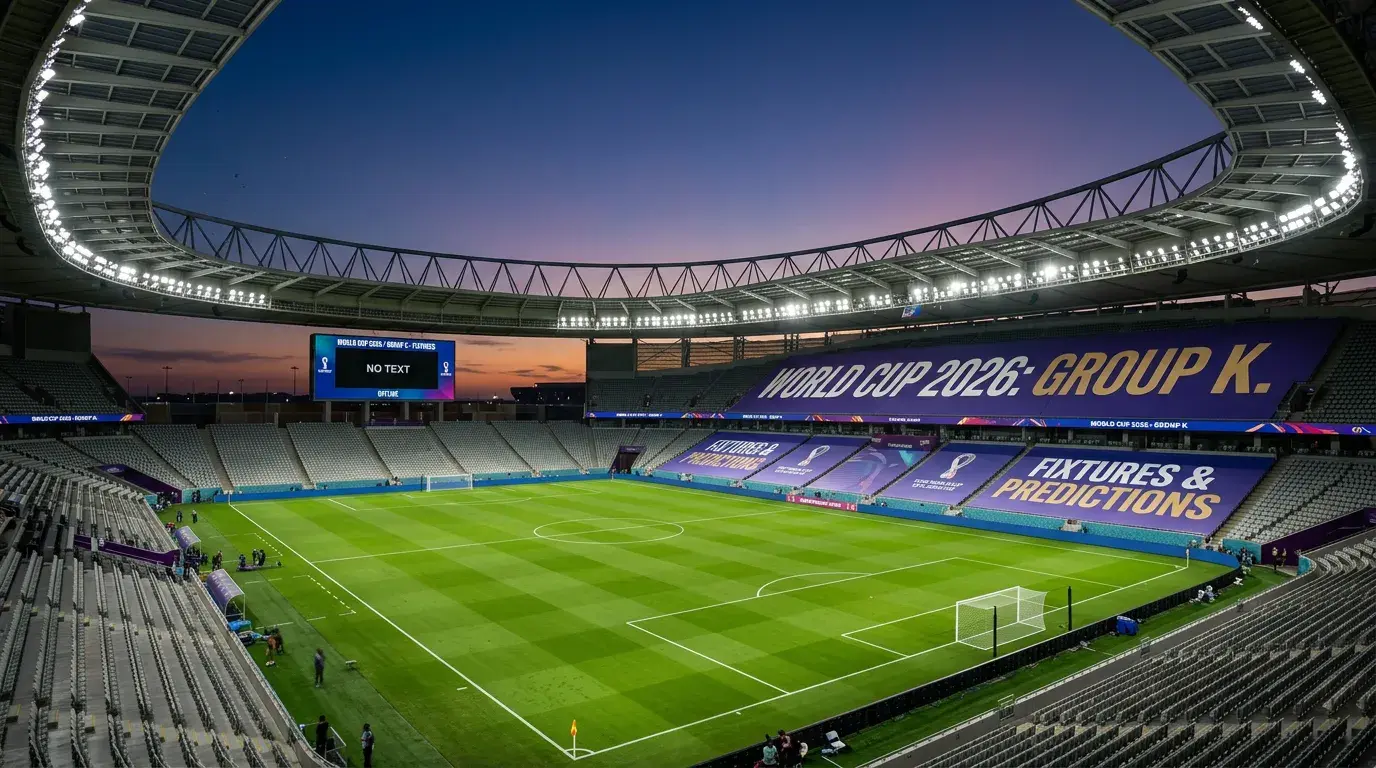
What happens when two football cultures built on joy collide? Portugal’s samba-influenced style and Colombia’s cumbia-fuelled celebrations create Group K’s headline fixture — two nations who play with flair, entertain crowds, and believe football should express rather than merely compete. Around them, Uzbekistan’s Asian qualification success and DR Congo’s African resilience add depth without threatening the top-two positioning that European and South American pedigree should deliver. Group K promises entertainment above defensive caution.
Portugal enters as clear favourites despite post-Ronaldo transition questions that their younger generation has begun answering. Colombia brings Copa América experience and attacking talent that demands respect from any opponent. Uzbekistan’s Central Asian development program has produced players capable of competing at this level without suggesting giant-killing potential. DR Congo returns to World Cup football after decades of absence, carrying African hopes that their talented diaspora might deliver unexpected competitiveness.
Portugal: The Post-Ronaldo Generation Emerges
Cristiano Ronaldo’s international career stretched across five World Cup cycles, his presence defining Portuguese football’s identity for two decades. That era has concluded, leaving a generation who must create their own legacy rather than supporting the greatest goalscorer in international football history. The transition involves psychological adjustment as much as tactical evolution — Portugal must believe they can win without the figure who delivered so many decisive moments throughout their recent history.
The current Portuguese squad possesses quality that exceeds most World Cup competitors regardless of Ronaldo’s absence. Bruno Fernandes provides creative midfield influence from Manchester United’s mixed fortunes. Rafael Leão’s pace and skill terrorise defenders through direct running that creates space for teammates. Rúben Dias anchors defensive organisation with Manchester City’s tactical sophistication. The names have changed but Portuguese football’s depth continues producing elite talents.
Tactically, Portugal has evolved toward possession-based approaches that emphasise collective movement over individual brilliance. Their 4-3-3 formations maintain width through inverted wingers who drift inside while fullbacks overlap, creating numerical advantages in wide areas that organised defences struggle to manage. Against Colombia’s similar attacking philosophy, this match becomes a contest of who can control central areas while releasing dangerous wide players.
Group K should provide comfortable progression toward knockout rounds where Portugal’s genuine tests await. Maximum points from group matches represents reasonable expectation, though Colombia’s quality ensures at least one genuinely competitive fixture. Uzbekistan and DR Congo should provide opportunities for rotation before elimination intensity demands full commitment from Roberto Martínez’s preferred eleven.
Betting markets price Portugal at $1.50 to win Group K, reflecting strong favouritism tempered by Colombia’s competitive quality. Portugal to qualify at $1.08 essentially guarantees progression. For betting value, focus on Portugal versus Colombia match outcomes rather than group positions that carry predictable pricing.
Colombia: Los Cafeteros Return to Form
Colombian football’s history oscillates between devastating talent and devastating inconsistency. Carlos Valderrama’s generation reached the 1990 quarter-finals before collapsing in 1994 amid tragedy that scarred the nation forever. James Rodríguez’s emergence delivered 2014’s Golden Boot before subsequent tournaments disappointed expectations. The current generation seeks consistency that previous Colombian sides couldn’t maintain — competitive quality sustained across tournaments rather than brilliant moments followed by unexplainable failures that leave supporters bewildered.
The Colombian squad features players from Europe’s top leagues who understand tournament demands through extensive club experience at the highest level. Luis Díaz’s Liverpool performances demonstrate ability to produce decisive moments against elite opposition, his directness and finishing quality providing attacking threat that defenders cannot ignore. Jhon Durán provides young striking threat that Premier League defences have struggled to contain throughout his emergence at Aston Villa. Around them, experienced Copa América campaigners maintain collective organisation that holds results when individual brilliance fails to deliver immediate rewards.
Tactically, Colombia plays direct attacking football that prioritises entertaining the audience alongside winning matches. Their 4-4-2 diamond or 4-3-3 formations create central overloads where technical players combine quickly, then release wide runners into spaces that compact defences leave exposed. Against Portugal’s similar attacking philosophy, Colombia must win midfield control to establish territorial dominance that feeds their attacking quality.
Colombia’s objective involves securing second place through competitive performance against Portugal plus dominant victories against Uzbekistan and DR Congo. Six points from accessible fixtures would guarantee qualification regardless of the Portugal result, though pride demands competitive engagement against European opposition.
Current odds price Colombia at $3.80 to win Group K and $1.55 to qualify. Group-winning odds carry value if Colombia defeats Portugal directly — the most balanced fixture in Group K. Colombia to qualify at $1.55 represents fair pricing for South American quality that should handle Uzbekistan and DR Congo. Colombia to beat Portugal at approximately $3.60 offers speculative appeal for believers in their attacking quality troubling Portuguese defence.
Uzbekistan: Central Asian Football’s Flagship Nation
Uzbekistan’s qualification for World Cup 2026 represents Central Asian football’s most significant achievement in the modern era. A nation that gained independence only in 1991 has developed football infrastructure that now produces World Cup participants — thirty-five years from Soviet republic to World Cup competitor. Their Asian Cup performances demonstrated steadily improving quality that ultimately delivered this historic qualification, creating expectations that transcend mere participation and demand competitive engagement.
The Uzbek squad includes players primarily from domestic and Russian leagues with limited exposure to elite European competition. Their captain Eldor Shomurodov provides Serie A experience that elevates overall quality, while collective organisation has developed through regional competition where Uzbekistan typically dominates. Against Group K’s European and South American opponents, individual limitations become more apparent than Asian competition reveals.
Tactically, Uzbekistan deploys organised defensive structures that aim to frustrate technically superior opponents. Their 4-5-1 or 5-4-1 formations pack central areas, forcing opponents wide where crosses into disciplined defensive lines rarely produce clear chances. This approach succeeds when concentration maintains for ninety minutes — a significant challenge against Portugal and Colombia’s patient possession that eventually finds gaps.
Uzbekistan’s realistic objective involves competing for third place against DR Congo while hoping for points from one of the higher-ranked opponents. Any result against Portugal or Colombia would represent extraordinary success for Central Asian football. Points from DR Congo become essential for third-place qualification hopes.
Betting markets price Uzbekistan at $14.00 to win Group K — essentially speculative acknowledgment of mathematical possibility. Uzbekistan to qualify at $4.50 requires results against Portugal or Colombia that their squad composition makes unlikely. The most realistic Uzbek market involves finishing third at $2.10, achievable through victory against DR Congo and competitive performances limiting damage against favourites.
DR Congo: Africa’s Sleeping Giant Awakens
Democratic Republic of Congo returns to World Cup football for the first time since 1974, when they competed as Zaire and suffered football’s most infamous defeat — 9-0 against Yugoslavia in a match that created lasting stereotypes. That humiliation obscured Congolese football’s genuine quality, evident in AFCON performances where DR Congo has consistently competed without capturing the continental title their abundant talent deserves. World Cup 2026 offers opportunity to rewrite narratives that fifty-two years of absence have allowed to persist unchallenged in global football consciousness.
The Congolese squad features players scattered across European leagues who understand competitive demands without possessing the squad depth that Group K’s favourites enjoy. Cédric Bakambu provides attacking threat developed through Spanish football, while younger talents have emerged through European academies that now identify Congolese prospects earlier than previous generations allowed. DR Congo’s diaspora represents untapped potential that this generation begins to harness.
Tactically, DR Congo plays physical, direct football that emphasises individual athleticism over collective sophistication. Their 4-3-3 formations create width through pacy wingers who exploit defensive transitions, then cut inside for shooting opportunities. Against organised defences, this approach struggles to create clear chances. Against disorganised opponents, DR Congo’s pace becomes devastating. Group K’s structure provides both scenarios — hopeful against Uzbekistan, challenging against Portugal and Colombia.
DR Congo’s objective involves securing third-place positioning through victory against Uzbekistan plus competitive performances against Group K’s favourites. Third-place qualification remains achievable if they can accumulate points against accessible opposition while avoiding heavy defeats that damage goal difference comparisons.
Current odds price DR Congo at $18.00 to win Group K — reflecting African football’s occasional giant-killing potential without realistic expectation. DR Congo to qualify at $5.00 offers speculative value for believers in their athletic advantages creating unexpected results. DR Congo to finish third at $2.40 represents the most likely outcome — competitive against Uzbekistan, respectful defeats against favourites.
Fixture Schedule and Viewing Implications
Group K fixtures distribute across American venues with kick-off times that challenge Australian viewers seeking live coverage of these entertaining encounters. The opening round brings Portugal against DR Congo and Colombia against Uzbekistan — establishing competitive hierarchies before the decisive second round’s Portugal-Colombia clash. Both opening matches should clarify tactical intentions and squad fitness that informs subsequent betting decisions for the marquee fixture.
Portugal versus Colombia deserves maximum Australian attention as Group K’s defining fixture. The tactical battle between possession philosophies creates entertainment guaranteed regardless of result. Draw at approximately $3.40 offers value if both teams prioritise avoiding defeat in a qualification-significant encounter. Colombia to win at approximately $3.60 provides upside if their attacking quality surprises Portuguese defensive organisation.
The opening-round fixtures establish contrasting dynamics. Portugal should dominate DR Congo through technical superiority and defensive organisation. Colombia versus Uzbekistan presents similar imbalance, with South American flair expected to overcome Central Asian discipline. These fixtures inform rotation decisions and physical condition assessments before the decisive Portugal-Colombia encounter.
Final-round fixtures bring Portugal against Uzbekistan and Colombia against DR Congo — each favourite facing accessible opposition in matches that might determine group positioning or merely confirm qualification. If Portugal and Colombia have already secured progression, rotation becomes likely. Uzbekistan versus DR Congo implications shift to third-place positioning rather than advancement hopes.
Projected Final Standings and Value Positions
My projected Group K final standings show Portugal first with seven points, Colombia second with seven points, Uzbekistan third with three points, and DR Congo fourth with zero points. Portugal and Colombia draw their direct encounter, then both defeat Uzbekistan and DR Congo convincingly. Head-to-head record or goal difference separates them for group positioning. Uzbekistan secures third through victory against DR Congo.
The clearest betting value in Group K involves the Portugal versus Colombia fixture. Draw at approximately $3.40 captures likely tactical caution between quality opponents. Both to Score at approximately $1.90 offers value given attacking philosophies that create scoring opportunities regardless of match dynamics. Portugal to win at $2.10 reflects slight favouritism that home-continent advantage and squad depth justifies.
For Uzbekistan and DR Congo markets, focus on their direct encounter which determines third-place positioning. Uzbekistan at $2.20 reflects favouritism based on superior organisation and tournament experience. DR Congo at $3.40 provides value if their athletic advantages prove decisive against Central Asian discipline. Draw at $3.20 captures likely tight encounter between evenly-matched underdogs where defensive priorities outweigh attacking ambitions.
Group K provides entertainment value alongside competitive intrigue. Portugal and Colombia’s attacking philosophies ensure goals. Uzbekistan and DR Congo’s developing programs create uncertainty at the bottom. Within this structure, the Portugal-Colombia fixture determines group outcomes while providing the tournament’s most entertaining group-stage encounter. For analysis of all twelve groups, see our complete World Cup 2026 groups guide.
