

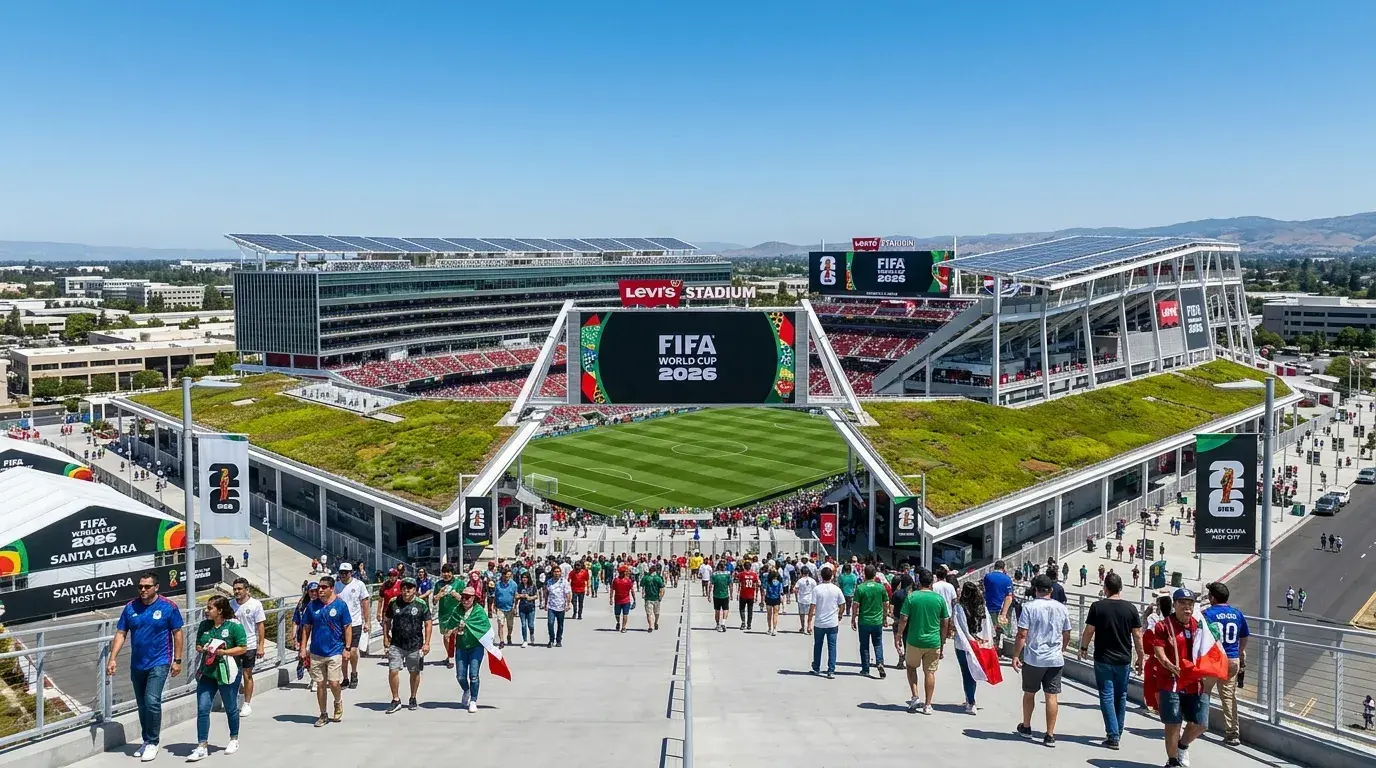
The Socceroos’ Group D campaign concludes at Levi’s Stadium in Santa Clara — the Silicon Valley venue where Australia’s World Cup 2026 fate will be decided against Paraguay. On 26 June 2026, the final group match determines whether knockout-round football awaits or tournament elimination ends Australian dreams. For supporters who’ve followed from Vancouver through Seattle, Levi’s Stadium represents the decisive moment where accumulated points either deliver progression or prove insufficient.
Levi’s Stadium’s location in California’s Bay Area places the match within reach of Australia’s largest American expatriate community. San Francisco and Silicon Valley have attracted Australian professionals whose presence provides potential home-ground atmosphere for a fixture officially designated as Paraguay’s home match. Understanding this venue helps Australian punters assess conditions that might influence the Socceroos’ decisive Group D fixture against South American opposition.
Stadium Overview and Technical Specifications
Levi’s Stadium opened in 2014 as home to the San Francisco 49ers NFL franchise, replacing the historic Candlestick Park with modern infrastructure that Silicon Valley’s tech wealth demanded. The approximately $1.3 billion construction cost delivered facilities that have since hosted Super Bowl 50, international soccer friendlies, and concert events that demonstrate operational versatility. World Cup 2026 adds football’s grandest tournament to this prestigious venue portfolio.
The stadium’s World Cup capacity will be approximately 68,500 — configured for FIFA’s pitch requirements while maintaining the atmospheric intensity that major events demand. Open-air design exposes the playing surface to California sunshine while covered seating protects most spectators from direct sun exposure. The venue’s modern construction provides operational infrastructure that older American stadiums cannot match.
Playing surface at Levi’s Stadium uses natural grass that California’s climate supports year-round with irrigation systems managing the Bay Area’s Mediterranean weather patterns. The grass surface provides playing conditions that international footballers prefer over artificial alternatives, with consistent ball behaviour that technical play requires. Both Australia and Paraguay will find familiar surface characteristics that minimise adaptation concerns.
Late June conditions in Santa Clara deliver warm weather that tests player endurance without reaching extreme temperatures that demand special hydration protocols. Average highs around 27-30°C with low humidity create manageable playing conditions compared to more challenging American venues. Evening kick-off timing further moderates temperature impact as California’s coastal influence provides natural cooling.
Paraguay vs Australia: The Decisive Fixture
Australia’s final Group D match against Paraguay on 26 June 2026 represents the fixture where tournament progression is determined conclusively. By kick-off, results from earlier rounds will have established precise qualification requirements — whether Australia needs victory, draw, or merely goal difference management to secure knockout-round advancement. This mathematical clarity transforms tactical approach based on stakes that earlier fixtures cannot predict with certainty.
Kick-off timing for Paraguay vs Australia falls at 12:00 PM AEST on Friday 27 June — midday viewing that allows Australian workplaces to accommodate tournament interest without requiring early morning dedication. This accessible timing contrasts sharply with the 5:00 AM USA fixture, providing comfortable viewing conditions that maximise Australian audience engagement for the decisive group match. Extended lunch breaks and workplace viewing parties will characterise this Friday afternoon across Australia as the nation watches collectively.
Paraguay enters as South American opponents whose tactical identity emphasises physical commitment and defensive organisation that frustrates technically superior opponents throughout matches. Their World Cup history includes quarter-final appearances in 2010 and competitive performances against major nations that Australian preparation must respect seriously. Paraguay at a World Cup represents different challenge than European opposition — pragmatic South American football that accepts limited possession while threatening through transitional efficiency and set-piece quality.
Australia’s tactical approach will depend entirely on group-stage position entering the fixture and the mathematical requirements that accumulated points create. If victory against Turkey and competitive performance against USA have established favourable position, Australia might approach Paraguay with attacking ambition that accumulated points permit without existential pressure. If earlier results created must-win desperation, the pressure transforms tactical calculation toward risk acceptance that comfortable positions avoid and conservative managers resist.
The Australian expatriate community in the Bay Area provides potential atmospheric advantage despite Paraguay’s nominal home-match designation in the fixture schedule. Silicon Valley’s Australian population — drawn by tech industry opportunities that mirror their Californian counterparts in ambition and expertise — should generate significant supporter presence that creates home-ground energy in ostensibly neutral territory. This demographic advantage distinguishes Santa Clara from other American venues where Australian presence remains minimal.
Location and Bay Area Accessibility
Levi’s Stadium occupies a Santa Clara location approximately 65 kilometres south of San Francisco, requiring transport planning that casual visitors might underestimate. The stadium sits within Silicon Valley’s corporate landscape rather than urban entertainment district, meaning pre-match and post-match activities require deliberate organisation beyond walking distance attractions.
San Francisco International Airport provides the primary arrival point for international visitors, with connections to Australian cities through trans-Pacific hub routes. The approximately 16-hour journey from Sydney or Melbourne arrives into one of America’s most expensive metropolitan areas, where accommodation costs exceed most tournament venues. Early booking proves essential for supporters seeking affordable options.
Public transport to Levi’s Stadium includes VTA Light Rail connections from San Jose and Caltrain commuter rail from San Francisco. These services expand for major events but require advance scheduling understanding that suburban American venues complicate. Many supporters opt for ride-sharing services that provide door-to-door convenience at costs that Silicon Valley traffic congestion can elevate significantly.
The Australian community presence in the Bay Area facilitates supporter networking that isolates foreign visitors might struggle to establish independently. Expatriate Facebook groups, supporter club chapters, and informal networks provide accommodation sharing, transport coordination, and pre-match gathering information that enhances the overall tournament experience beyond the ninety minutes.
Weather and Playing Conditions
Late June in Santa Clara delivers California’s characteristic Mediterranean climate — warm, dry conditions with minimal precipitation probability. Average temperatures reach 27-30°C during afternoon hours before cooling as Pacific coastal influence moderates evening conditions. These temperatures represent the warmest conditions Australia will face during Group D fixtures, though they remain manageable compared to extreme heat venues elsewhere in the tournament.
Humidity levels in the Bay Area remain low compared to coastal or Gulf Coast venues, allowing perspiration to provide effective cooling that high-humidity environments prevent. Players can sustain high-intensity effort longer in dry conditions, reducing the tactical adjustments that humid venues require. Both Australia and Paraguay will benefit from conditions that suit continuous pressing without rapid fatigue accumulation.
Wind factors at Levi’s Stadium vary based on Bay Area weather patterns that can produce afternoon breezes from the Pacific. These conditions rarely reach levels that significantly affect play but might influence long-ball tactics and set-piece delivery. Teams should expect calm conditions while preparing contingencies for occasional gusts that California’s geography can produce.
Evening kick-off timing (late afternoon local time) places play during temperature transition from afternoon peak toward evening moderation. The match will begin in bright sunshine before fading to artificial lighting during closing stages. These lighting transitions rarely affect play but create atmospheric shifts that broadcast audiences appreciate.
Betting Considerations for Levi’s Stadium
Match outcome probabilities for Paraguay vs Australia depend entirely on group-stage context entering the fixture. If Australia requires victory, odds will reflect desperate attacking approach that creates both scoring opportunities and defensive vulnerabilities. If Australia needs only a draw, conservative pricing reflects tactical caution that prioritises avoiding defeat over pursuing maximum points.
The neutral-venue designation combined with Australian expatriate presence creates home-ground dynamic that market pricing might undervalue. Paraguay’s “home” fixture will feature significant Australian supporter presence that provides psychological support Australian players rarely experience in overseas matches. Consider this atmospheric advantage when assessing draw or Australian victory markets.
South American tactical identity suggests low-scoring possibilities regardless of group-stage context. Paraguay’s defensive organisation frustrates opponents who expect territorial dominance to produce goals. Under 2.5 goals at approximately $1.75 offers value in a fixture where Paraguayan pragmatism meets Australian structure regardless of broader competitive requirements.
First goalscorer markets provide value where squad familiarity disadvantages disappear. Australian set-piece threats through aerial presence offer clear scoring pathways against South American opponents who occasionally concede concentration at dead-ball situations. Backing Australian defenders or target forwards for first goal combines long odds with legitimate scoring probability.
Half-time draw at approximately $2.00 captures the likely cautious approach both teams will adopt regardless of overall match requirements. Neither team can afford early concession that transforms tactical calculation, suggesting conservative opening periods before second-half urgency increases attacking commitment as elimination approaches. For complete Socceroos World Cup 2026 analysis, including all group fixtures and squad details.
Historical Context and Tournament Significance
Levi’s Stadium’s World Cup hosting represents California’s return to football’s grandest tournament after the 1994 World Cup established the state as proven territory for international football. The Rose Bowl’s iconic 1994 final created memories that current venues seek to match, though Silicon Valley’s modern infrastructure provides different experience than Pasadena’s historic bowl design. California’s football culture has matured significantly since 1994, with MLS success through the San Jose Earthquakes and LA Galaxy plus frequent international friendlies cultivating sophisticated supporter expectations that rival traditional football markets.
For Australian football, Levi’s Stadium represents the culmination of Group D’s narrative arc that began in Vancouver against Turkey. Victory against Turkey, competitive performance against USA, and decisive result against Paraguay would establish Australian credentials that previous generations couldn’t match despite talented squads and passionate support. The knockout rounds await for teams who navigate group-stage challenges successfully — Levi’s Stadium determines whether Australia joins that select company of advancing nations.
The Bay Area’s multicultural population adds cosmopolitan dimension to the fixture’s atmosphere beyond typical American sporting events. Silicon Valley’s international workforce includes South American communities whose Paraguay support will contest Australian presence for atmospheric supremacy throughout the ninety minutes. This supporter battle within the stands mirrors on-pitch competition for knockout qualification rights, creating theatre that extends beyond the playing surface.
Whatever result emerges from Levi’s Stadium, the venue will occupy permanent place in Australian World Cup memory alongside Kaiserslautern, Durban, and Al Wakrah from previous campaigns. The Silicon Valley setting adds contemporary flavour to this collection — Australian football reaching America’s technological heartland as the sport globalises beyond traditional boundaries.
