

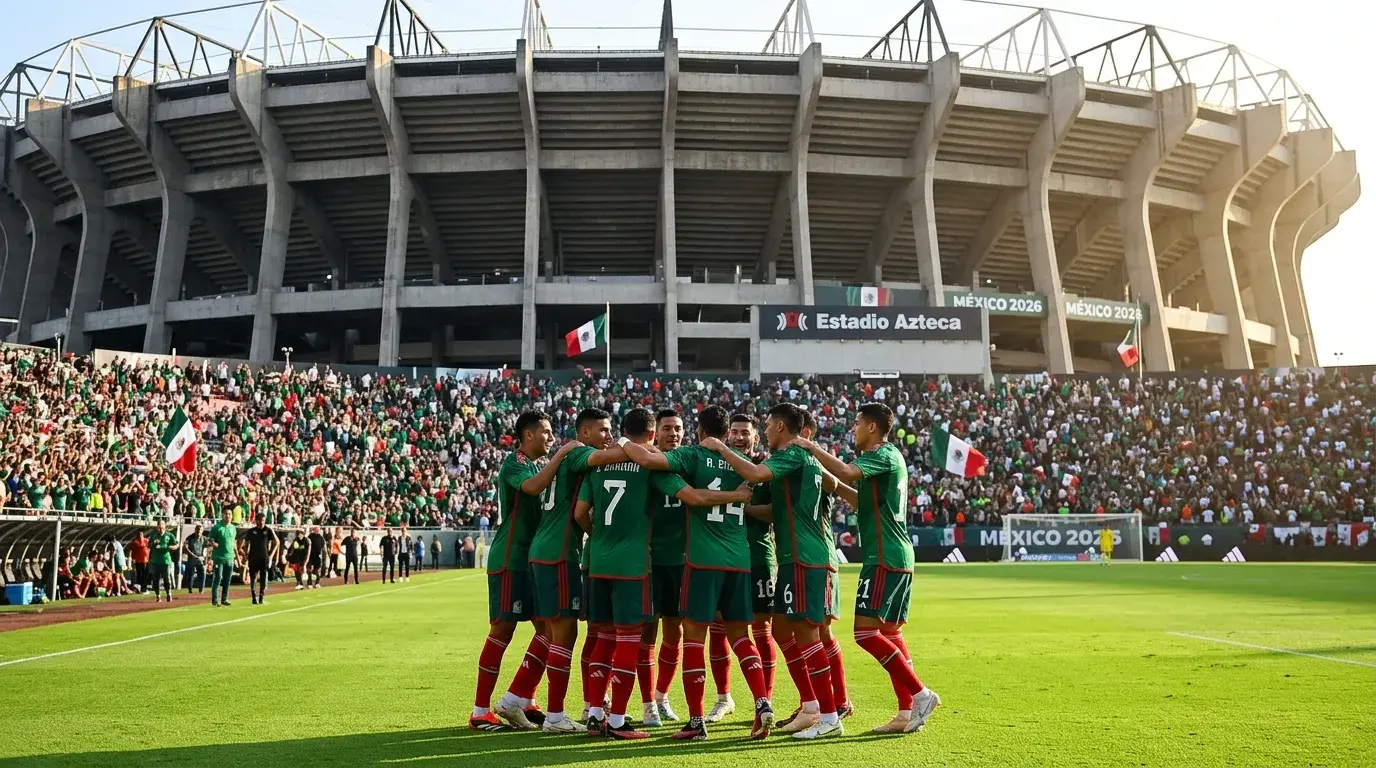
The curse of the fifth game haunts Mexican football. Seven consecutive World Cups have produced identical outcomes — round of 16 exit, the glass ceiling that El Tri cannot shatter regardless of squad quality or tournament preparation. World Cup 2026 arrives with home advantage for the first time since 1986 and desperate hope that playing on Mexican soil can finally deliver “el quinto partido” — the fifth match that would represent quarter-final achievement.
Mexico at World Cup 2026 carries weight that no previous generation has experienced. Co-hosting with United States and Canada provides advantage that Mexico has not possessed since their only quarter-final appearance 40 years ago. The Azteca Stadium will host the opening match. Mexican cities will overflow with supporters creating atmosphere that opponents must navigate. If this generation cannot break the round of 16 barrier with these advantages, questions about Mexican football’s fundamental limitations will intensify.
Squad Analysis and Key Figures
Mexican squad construction reflects Liga MX dominance supplemented by European experience that previous generations lacked in such numbers. The balance between domestic familiarity and continental exposure creates tactical flexibility that purely home-based squads cannot achieve. The European contingent brings understanding of different tactical approaches while Liga MX players provide competitive rhythm from North America’s most demanding league.
Édson Álvarez anchors midfield with Premier League intensity developed through West Ham’s competitive demands. His ability to screen defences while progressing possession through passing provides platform for more creative teammates to operate. The transition from Ajax’s possession-heavy environment to English football’s physical demands has enhanced his profile without diminishing technical qualities that made him attractive to elite European clubs.
Santiago Giménez represents Mexican striking evolution that has long been sought. His Eredivisie goal-scoring for Feyenoord — including Champions League contributions against elite defences — establishes credentials that previous Mexican forwards struggled to demonstrate at European level. At 25 during the tournament, Giménez enters prime years with confidence from consistent club productivity that translates to international contexts.
Hirving Lozano provides pace and directness from wide positions that Mexican attacks have traditionally featured. His PSV and Napoli experiences validated ability against elite opposition, though injury concerns and inconsistent form have complicated recent seasons. When fully fit and confident, Lozano terrorises defenders through acceleration that creates one-on-one situations where his dribbling ability flourishes.
Jesús Corona and Diego Lainez offer creative alternatives whose technical gifts can unlock organised defences through different methods. Corona’s experience across multiple European leagues provides adaptability that younger players develop through accumulated exposure. The depth of attacking options allows tactical variation that single-dimensional approaches cannot provide. Mexican managers have historically favoured rotation that maintains freshness across tournament schedules demanding seven matches for champions.
Defensive organisation has improved through European exposure that previous generations lacked. César Montes and Johan Vásquez provide centre-back options whose tactical awareness exceeds purely Liga MX development. Their understanding of different attacking styles — European technical play, South American trickery, African physicality — prepares them for tournament variety. Goalkeeper Guillermo Ochoa, if selected at 41, brings tournament experience that no Mexican player can match — five World Cup appearances establish him among Mexican football legends. Yet younger alternatives like Luis Malagón may finally displace the veteran if management prioritises future development.
Full-back options feature Jorge Sánchez and Jesús Gallardo whose attacking contributions complement defensive responsibilities. Mexican football has traditionally produced overlapping full-backs whose width creates crossing opportunities that central forwards exploit. This tactical tradition continues through current personnel selections.
Tactical Evolution Under Current Management
Mexican football has cycled through managerial approaches seeking formula that breaks the round of 16 barrier. The current setup emphasises possession-based football that previous counterattacking approaches have supplemented rather than replaced.
The typical formation deploys 4-3-3 with width provided by pacy wingers whose movement stretches defences horizontally. Central midfield combinations featuring Álvarez’s screening and more creative partners create platform for sustained attacking phases. The striker role varies between Giménez’s mobility and more physical alternatives depending on opponent analysis.
Pressing intensity has increased relative to previous Mexican approaches. The team now engages higher than conservative predecessors permitted, generating turnover opportunities that quick transitions exploit. This evolution reflects modern football’s demands while acknowledging that purely reactive approaches have consistently failed at round of 16 stage.
Home advantage tactical considerations will shape tournament preparation. Playing at altitude in Mexico City’s Azteca creates physical demands that acclimatised Mexican players handle better than sea-level opponents. Matches in American venues remove this advantage but provide familiar North American conditions that European or South American opponents may find challenging.
Group A Assessment
Mexico’s Group A placement alongside South Korea, South Africa, and Czechia presents manageable opposition that should facilitate knockout qualification without guarantee. The group lacks heavyweight presence that would threaten Mexican progression, yet each opponent brings quality demanding respect and preparation.
South Korea provides the most credible challenge based on recent tournament performances and squad quality. Their 2022 World Cup round of 16 appearance — achieved through dramatic victory over Portugal — and technical midfield options featuring Premier League talents create genuine competition for group leadership. Son Heung-min’s individual quality threatens any defence. The fixture likely determines bracket positioning that affects knockout difficulty significantly.
South Africa brings African football’s athleticism and home continent proximity that creates supporter advantage in North American venues where South African diaspora communities exist. Their qualification through CAF represents achievement that generates tournament motivation throughout the squad. Mexico cannot afford complacency against opponents whose European-based professionals understand elite competitive demands from club experience.
Czechia’s qualification through UEFA represents quality that should produce competitive fixture without genuine upset threat if Mexican preparation proves adequate. Their tactical organisation and set-piece threat creates specific challenges that Mexican preparation must address through targeted analysis. The European style differs from CONCACAF opponents that Mexican defenders regularly face, requiring adjustment.
The opening match against South Africa at Estadio Azteca carries enormous significance beyond three points. Mexico will host the tournament’s first fixture before global audience, creating pressure and opportunity that historical moments provide. Victory establishes momentum that group navigation requires and sets tone for entire tournament; anything less creates immediate crisis that intensifies existing pressure on players carrying generational expectations.
Round of 32 opponents emerge from Group B — potentially Canada, Switzerland, Qatar, or Bosnia. The Canada possibility creates CONCACAF rivalry with co-hosts that would generate enormous attention. Switzerland presents European quality that has troubled major nations at recent tournaments. The bracket positions Mexico for potential quarter-final against Group I or J winners, likely France or Argentina — fixtures where Mexican quality would face severe examination.
Mexico World Cup 2026 Betting Evaluation
Mexico typically trades around 41.00-67.00 for tournament victory, positioning them among outsiders whose home advantage creates slight pricing reduction from typical Mexican World Cup odds. The implied probability around 1.5-2.5% reflects persistent round of 16 exits that define Mexican tournament football.
The value case involves home advantage that previous generations lacked. Playing in familiar conditions with overwhelming supporter presence creates intangible benefits that objective analysis struggles to quantify. The 1986 quarter-final run — Mexico’s only progression beyond round of 16 — occurred during previous home World Cup. Historical precedent suggests Mexican football performs better when environmental factors favour them.
The case against Mexico centres on persistent failure patterns that home advantage alone may not resolve. Seven consecutive round of 16 exits suggest structural limitations rather than circumstantial bad luck. The quality gap between Mexico and genuine contenders remains substantial regardless of venue advantages. Quarter-final opponents would likely include France, Argentina, or Brazil — matchups where Mexican quality falls short.
Alternative markets offer potentially better value. Mexico reaching quarter-finals prices around 3.50, representing the breakthrough that would end persistent frustration. Giménez for group stage goals might be underpriced against beatable opponents. Team totals during opening match could attract interest given Azteca atmosphere and South African defensive limitations.
For Australian punters, Mexico represents a co-host whose tournament position affects overall bracket dynamics. Their results in Group A influence knockout positioning for multiple teams, making Mexican performance relevant beyond direct betting interest.
Mexican World Cup Legacy
Mexico’s World Cup history features consistent qualification without breakthrough triumph. Sixteen World Cup appearances establish Mexico among football’s most regular participants, yet zero semi-final appearances limit historical significance relative to European and South American giants.
The 1986 home World Cup remains Mexico’s tournament peak. Quarter-final appearance that year — achieved through penalty shootout victory over Bulgaria — represents the only time Mexican football has advanced beyond round of 16. The generation featuring Hugo Sánchez, the nation’s greatest player, delivered under home pressure that subsequent generations have not faced.
The round of 16 curse began at France 1998 and has continued through every subsequent tournament. Germany, Argentina, Netherlands (twice), Brazil, and other opponents have ended Mexican tournaments at identical stages regardless of squad quality or tactical approach. The psychological weight of this pattern affects every Mexican World Cup campaign.
Qatar 2022’s group stage exit represented new low in recent Mexican football. Failing to reach round of 16 for the first time since 1978 shocked supporters accustomed to at least four matches per tournament. The result intensified pressure for 2026 success that home advantage creates opportunity to deliver.
World Cup 2026 provides Mexican football’s clearest path to breakthrough in 40 years. The combination of home advantage, favourable group draw, and squad quality exceeding recent generations creates conditions that may never recur. Whether this generation can finally deliver el quinto partido determines their historical legacy and Mexican football’s trajectory for decades following.
