

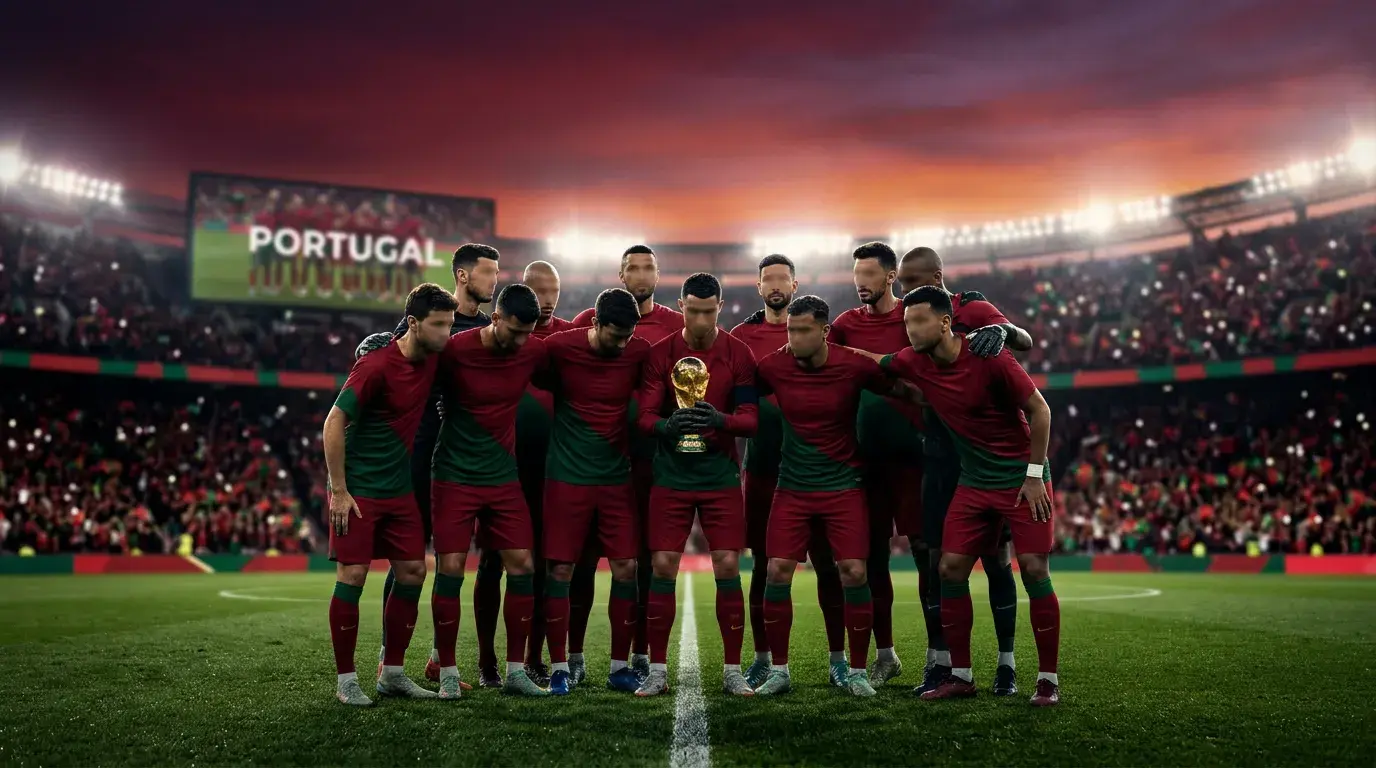
Every sporting dynasty eventually ends, and Cristiano Ronaldo’s international career has reached its twilight. Whether he participates at World Cup 2026 at age 41 or watches from retirement, Portugal must construct identity beyond the player who defined their modern era. The transition creates uncertainty that betting markets struggle to price accurately — is Portugal weaker without their greatest scorer, or liberated to build cohesive systems around different profiles?
The Portugal World Cup 2026 squad features exceptional talent that previous generations would envy. Bruno Fernandes provides creative drive from midfield. Rafael Leão’s pace terrifies defenders when his concentration peaks. João Félix’s potential remains tantalisingly unfulfilled despite obvious technical gifts. This collection of quality suggests Portugal should compete among favourites, yet the adjustment to post-Ronaldo dynamics complicates assessment.
Squad Composition and Ronaldo’s Role
The Ronaldo question dominates any Portuguese squad analysis. At 41 during the tournament, his physical capabilities cannot match previous years regardless of continued determination. The question involves whether his presence benefits Portugal through experience and big-game mentality, or constrains tactical flexibility that younger options would provide. This debate has divided Portuguese football commentary since Qatar 2022’s complications.
If Ronaldo participates, expect limited minutes focused on knockout round appearances where his penalty-box instincts remain valuable. His movement into scoring positions continues generating chances that younger strikers cannot replicate through the same methods. The psychological weight of his presence — both inspiring teammates and intimidating opponents through reputation alone — provides intangible value that statistics miss. Penalty-taking ability alone justifies inclusion if shootouts occur.
Without Ronaldo, Portugal gains tactical flexibility that manager Roberto Martínez might prefer. The forward line could feature Leão, Félix, and emerging talents operating in fluid combinations rather than structured service to a central striker. This approach better utilises Portuguese midfield creativity that Ronaldo’s positioning sometimes constrained through predictable patterns.
Bruno Fernandes anchors midfield creativity regardless of striker selection. His passing range, set-piece delivery, and goal threat from deep positions make him indispensable to Portuguese attacking play. The Manchester United midfielder’s understanding with Portuguese teammates exceeds club relationships, producing combinations that training sessions have perfected across dozens of international appearances together.
Rafael Leão represents Portugal’s most explosive attacking threat when his concentration peaks. The AC Milan winger’s pace and dribbling ability terrifies defenders who know that containing him requires perfect positioning. His inconsistency remains the primary concern — brilliant performances alternate with anonymous displays that frustrate supporters and analysts alike. If Leão arrives at the tournament in form, Portugal’s attacking capability multiplies significantly.
João Félix’s potential remains tantalisingly unfulfilled despite obvious technical gifts that made him one of football’s most expensive teenagers. His creative vision and finishing ability appear periodically before disappearing for extended stretches. World Cup pressure could either unlock his best performances or compound struggles that have defined recent seasons.
Defensive organisation has improved significantly under Martínez. Rúben Dias provides centre-back leadership that previous managers sought, while his Manchester City partnership experience with various defenders translates to international understanding. His communication and positioning organise the defensive line regardless of partnering centre-back. Full-back options feature João Cancelo’s attacking threat and Nuno Mendes’s pace, creating width that stretches opponents while providing recovery speed.
Goalkeeper Diogo Costa has established himself as undisputed first choice following years of transition at the position. His shot-stopping reflexes and penalty-saving record — demonstrated dramatically at Qatar 2022 against Slovenia — provide security that tournament football demands. The Porto goalkeeper’s distribution has improved since his international breakthrough, contributing to Portugal’s build-up sequences.
Martínez’s Tactical Framework
Roberto Martínez brings experience from Belgium’s golden generation management, understanding how to navigate talented squads through tournament football’s unique pressures. His Portugal appointment represented a significant departure from previous domestic-focused selections, acknowledging that elite international football requires different managerial profiles.
The system typically deploys 4-3-3 or 3-4-3 variations depending on opponent analysis. Flexibility defines Martínez’s approach — Portugal can control possession against weaker opponents or absorb pressure before counterattacking against stronger ones. This adaptability helps navigation across different tournament phases.
Possession patterns under Martínez exceed previous Portuguese approaches. The team now builds patiently from the back, involving Diogo Costa in passing sequences that draw opponents forward. Centre-backs split wide while full-backs push high, creating numerical advantages in build-up that progress possession effectively.
Pressing triggers have been refined since Martínez’s appointment. Portugal engages high when specific patterns emerge — goalkeeper distribution, sideways passes in defensive third — while dropping into mid-blocks against opponents whose quality suggests caution. This selective approach conserves energy across tournament duration.
Group K Opposition and Pathway
Portugal’s Group K placement alongside Uzbekistan, Colombia, and DR Congo presents varied challenges that should ultimately favour Portuguese quality. Colombia provides the toughest opposition with South American pedigree and creative midfield talent, while Uzbekistan and DR Congo offer different styles that require tactical adjustment rather than simple quality domination.
Colombia represents South American quality refined through CONMEBOL qualification’s demanding process. Their midfield featuring James Rodríguez’s experience and younger talents like Luis Díaz creates creative combinations that can trouble any defence. Colombia’s tournament experience — reaching quarter-finals at Brazil 2014 and Copa América success — provides psychological foundation that newer World Cup participants lack. The fixture likely determines group leadership positioning and subsequent bracket placement that could significantly affect knockout round difficulty.
Uzbekistan’s qualification represents Central Asian football’s development that has been accelerating through targeted investment. Their organised defensive approach and counterattacking capability demand respect without suggesting genuine upset probability against fully focused Portuguese opposition. Uzbekistan will sit deep, frustrate through compactness, and seek set-piece or transition opportunities. This fixture requires professional execution that maintains focus despite apparent quality differential.
DR Congo brings African football’s athleticism and unpredictability that can produce surprising results against complacent opponents. Their qualification through CAF represents achievement that generates tournament enthusiasm throughout the squad. The Leopards’ physical presence and pace on counterattacks create moments where Portuguese defenders must concentrate absolutely. Portugal cannot afford complacency against opponents whose individual quality includes European-based professionals familiar with elite competitive environments.
The knockout pathway presents potential round of 32 matchups against Group L opponents — likely England, Croatia, or Ghana. England represents obvious challenge whose quality matches Portuguese levels and whose historical rivalry adds competitive edge. Croatia’s midfield experience could trouble Portuguese control patterns. Ghana’s athleticism and organisation present different challenges.
The bracket positioning beyond early rounds could feature Argentina, France, or Brazil depending on results elsewhere. These represent fixtures where Portuguese quality would compete without being favoured. Reaching quarter-finals appears achievable, while semi-final progression would require defeating one of football’s genuine elite teams.
Portugal World Cup 2026 Betting Analysis
Portugal typically trades around 13.00-17.00 for tournament victory, positioning them among the second tier of favourites behind established elite teams like Argentina, France, and Brazil. This pricing reflects squad quality while acknowledging transition uncertainty that Ronaldo’s declining role creates. The implied probability around 6-8% represents market consensus about Portuguese ceiling that accepts quarter-final or semi-final achievement as realistic while discounting championship probability.
The value case involves squad depth that exceeds many competitors. Portugal could field two competitive starting elevens from their available talent pool, providing rotation options that tournament schedules demand. The blend of youth and experience provides different options for different situations — pace against deep defences, creativity against organised blocks, physicality against technical opponents. Martínez’s tournament experience with Belgium — including a third-place finish at Russia 2018 — suggests competent management through knockout pressures that some managers struggle to navigate.
The case against Portugal centres on persistent failure to convert talent into trophies at World Cup level. Euro 2016 remains their only major honour, achieved through Éder’s extra-time final goal while Ronaldo watched injured from the sideline in circumstances unlikely to recur. Subsequent tournaments have featured talent-laden squads exiting against inferior opponents — Morocco at Qatar 2022 representing the most recent example of Portuguese underperformance when expectations peaked. This pattern suggests systemic issues beyond personnel that managerial changes alone may not resolve.
The Ronaldo uncertainty creates market inefficiency that informed bettors might exploit. If he participates and performs well, Portuguese confidence rises in ways markets may not immediately price. If he struggles or his presence creates team dynamic issues, downside exceeds current pricing assumptions. Monitoring pre-tournament news about his role provides information edge.
Alternative markets warrant consideration for those seeking Portuguese exposure without outright commitment. Portugal reaching quarter-finals prices around 2.00, reflecting manageable group and early knockout draws. Bruno Fernandes for tournament assists leader offers value given his set-piece and creative responsibilities that generate opportunities regardless of finishing quality. Team totals during group stage might be underpriced given opponent profiles that suggest open matches.
For Australian punters, Portugal represents a team whose transition creates market uncertainty that informed bettors might exploit. Their pricing suggests value if you believe the post-Ronaldo adjustment has succeeded and the squad has matured beyond previous tournament failures. Alternatively, opportunities exist to oppose Portuguese progression if you assess persistent tournament failures will continue regardless of personnel changes.
Historical Context and Tournament Record
Portugal’s World Cup history features more frustration than celebration. Zero World Cup titles despite generations of talented players — Eusébio, Figo, Ronaldo — establishes pattern of underachievement that haunts Portuguese football. The 1966 third-place finish remains their best World Cup result, achieved when Eusébio’s nine goals carried them through knockout rounds before England’s semi-final victory ended their run.
The modern era featuring Ronaldo produced semi-final appearance at Germany 2006 before quarter-final exits became familiar. That 2006 run featured victories against Netherlands and England (on penalties) before France ended progress in the semi-final. The squad’s quality suggested they could have won the tournament with slightly different circumstances.
Subsequent World Cups failed to match that progress. Russia 2018’s round of 16 loss to Uruguay saw Portugal dominated by South American counterattacking. Qatar 2022’s quarter-final defeat to Morocco represented perhaps the most painful exit — losing to African opponents whose organisation exceeded Portuguese creativity. The pattern of talented squads falling short when stakes peaked has become expected rather than surprising.
Euro 2016’s triumph provided the only counter-evidence to persistent failure narratives. That tournament run featured grinding victories through extra time and penalties, culminating in Éder’s final winner against hosts France. Ronaldo’s tearful injury exit from the final and subsequent coaching from the sideline provided iconic images. The triumph demonstrated Portuguese ability to win knockout football when circumstances aligned — whether those circumstances can recur at World Cup level remains uncertain.
The Nations League 2019 victory added another trophy but carries less weight than World Cup or European Championship success. Portugal’s tournament record suggests a team capable of reaching later rounds without crossing the threshold into genuine contention for the ultimate prize.
World Cup 2026 arrives with expectations that Euro 2016 success established yet subsequent failures have undermined. The squad’s quality suggests capability for deep tournament runs. Whether capability translates to results determines both Portuguese football’s immediate trajectory and Ronaldo’s final international chapter if he participates.
