
 Available in US
Loading...
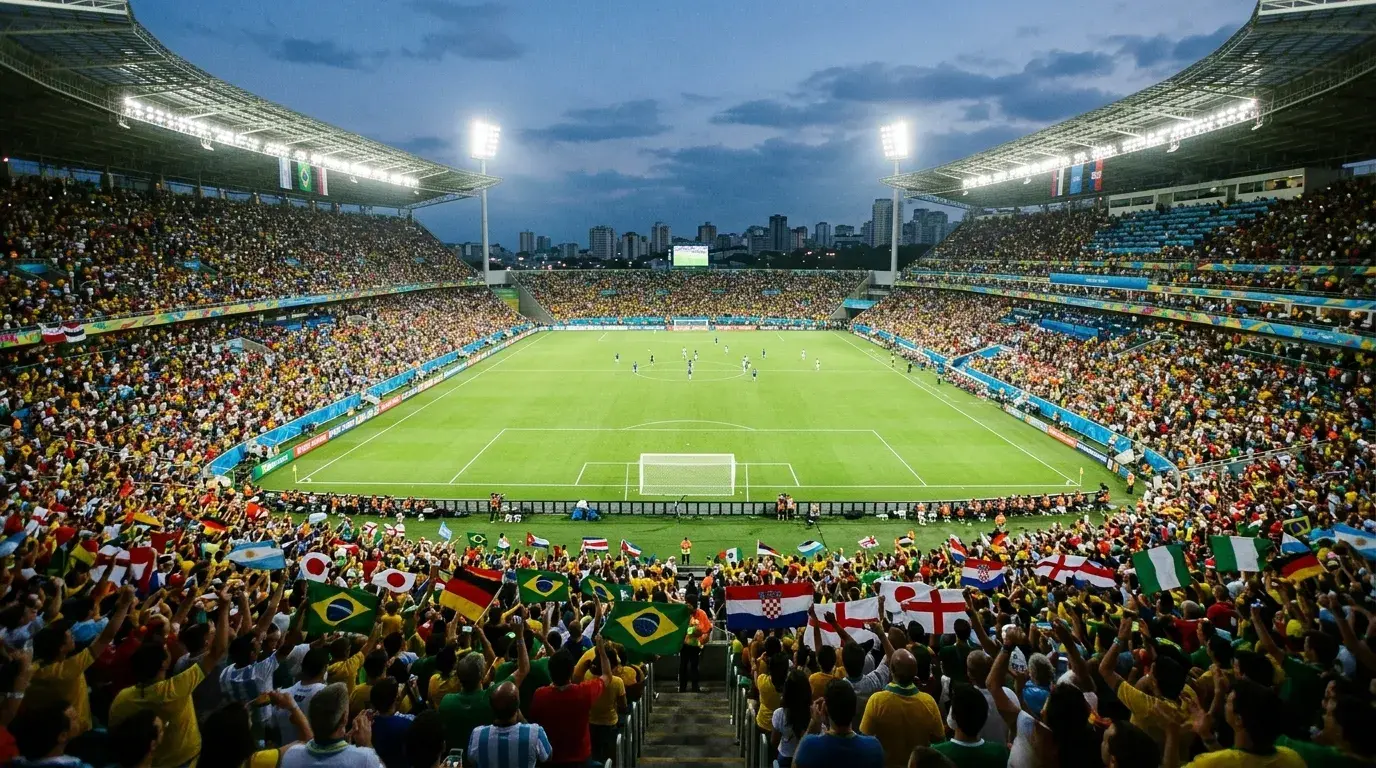
Nine years ago, I placed my first serious World Cup wager during the 2014 tournament in Brazil. Germany had just thrashed the hosts 7-1 in the semi-final, and I watched my pre-tournament outright punt on Brazil evaporate in 29 catastrophic minutes. That night taught me more about tournament betting than any textbook ever could: the World Cup punishes lazy assumptions and rewards those who understand its peculiar rhythms.
The 2026 FIFA World Cup represents the most significant shift in tournament structure since the competition expanded to 32 teams in 1998. With 48 nations competing across three host countries, punters face an entirely new landscape of opportunities and pitfalls. The expanded format creates more matches, more markets, and more ways to find value — but only for those willing to learn how the mechanics actually work.
Throughout this guide, I break down every aspect of World Cup betting that matters for Australian punters. From understanding how the new 12-group format changes qualification dynamics to identifying which markets consistently offer the best value, I cover the strategic thinking that separates profitable tournament punters from those who just throw money at favourites. Whether you are placing your first World Cup bet or have been punting on international football for decades, this guide provides the foundation you need to approach the 2026 tournament with confidence.
The betting landscape in Australia operates under specific regulations that shape what markets you can access and how you can access them. I address those considerations throughout, ensuring the strategies discussed apply directly to punters working within the Australian market framework. The goal is not to promise easy profits — no honest betting guide can do that — but to give you the knowledge to make informed decisions rather than hopeful guesses.
Understanding the 2026 World Cup Format
Standing in a Sydney pub during the 2022 tournament, I overheard two blokes arguing about whether the new 48-team format would “water down” the World Cup. One insisted more teams meant more mismatches and boring group stages. The other countered that every expansion in World Cup history had ultimately produced better entertainment. They were both wrong — and both right — because the real story lies in how the format changes betting dynamics rather than match quality.
FIFA has divided the 48 teams into 12 groups of four nations each. This represents a dramatic departure from the eight-group structure that has defined the tournament since 1998. Each team plays three group matches, just as before, but the qualification pathway has fundamentally changed. The top two teams from each group advance automatically to the Round of 32, while the eight best third-placed teams also progress. This creates 32 knockout spots from 48 teams, meaning exactly two-thirds of all participants will reach the elimination rounds.
For punters, this third-place qualification pathway creates fascinating strategic scenarios. A team can lose their opening match, draw their second, and still advance with a single victory in the final group game. The pressure dynamics shift considerably from previous World Cups where a loss in the first two matches often eliminated any realistic hope. I expect we will see more conservative tactical approaches in opening matches, with managers willing to accept draws against stronger opponents while preserving players for winnable fixtures later in the group stage.
The tournament spans 39 days from 11 June to 19 July 2026, with matches held across 16 venues in the United States, Mexico, and Canada. The United States hosts 78 of the 104 total matches, including every knockout round from the quarter-finals onwards. Mexico holds the distinction of hosting the opening match at the legendary Estadio Azteca, while the final takes place at MetLife Stadium in New Jersey. This geographic spread creates significant timezone considerations for Australian punters — most matches will air between 4:00 AM and 2:00 PM AEST, with Group D fixtures involving the Socceroos hitting Australian screens between 5:00 AM and 2:00 PM.
The three-country hosting arrangement also introduces variables that do not exist in traditional single-nation tournaments. Teams will travel across continental distances between matches, with some facing altitude challenges when playing in Mexico City before returning to sea-level venues in the United States. These factors rarely appear in standard pre-match analysis but can significantly impact performance, particularly for European teams unaccustomed to such logistical demands.
Understanding bracket implications becomes crucial under this format. Unlike previous World Cups where the bracket was somewhat predictable based on group positions, the 2026 structure creates more crossover scenarios. The eight third-placed qualifiers get slotted into the Round of 32 based on which groups they finish third in, creating potential paths where strong third-place teams face easier opponents than weak group winners. Savvy punters will map these possibilities before the tournament begins, identifying value in outright and stage-of-elimination markets based on bracket positioning.
Complete Guide to Betting Markets
My mate Dave once asked me why bookmakers offer so many different World Cup markets when “everyone just punts on who wins anyway.” I pulled up the market list for the 2022 final and showed him 147 distinct betting options for a single match. His eyes widened. “Right then,” he said, “where do I even start?” The answer depends entirely on what kind of value you are seeking and how much research you are willing to do.
Outright Winner
The tournament winner market opens months before kick-off and remains available throughout the competition. Bookmakers adjust odds continuously based on results, injuries, and market demand. Argentina enter 2026 as defending champions with current odds around 6.00, while Brazil, France, and England cluster in the 7.00 to 9.00 range. The value in outright markets typically appears before the tournament begins, when bookmakers set prices based on reputation and rankings rather than current form.
One pattern I have observed across six World Cups: the eventual winner rarely has the shortest odds at kick-off but almost always ranks in the top five favourites. Germany at 11.00 won in 2014. Spain at 8.00 won in 2010. Italy at 12.00 won in 2006. Punters seeking outright value should focus on the 8.00 to 15.00 range rather than backing the pre-tournament favourite or searching for ridiculous longshots. The expanded field in 2026 makes genuine outsiders even less likely to triumph — more matches simply provides more opportunities for upsets to occur against weaker teams while still requiring consistency against quality opponents.
Group Stage Markets
Group winner, to qualify from group, and group points totals offer three distinct angles on the same fixtures. Group winner markets pay significantly better than qualification markets but require predicting the specific finishing position rather than just advancement. I tend to favour qualification markets for value betting because the third-place pathway creates genuine uncertainty about which two teams from each group will take the automatic spots.
Group points totals provide an alternative approach entirely. Instead of predicting outcomes against specific opponents, you are betting on aggregate performance across three matches. The typical offering sits at over/under 5.5 points, meaning a team needs two wins, or a win and two draws, to clear the over. Historical data shows approximately 60% of World Cup teams exceed 5.5 group points when including those who qualify through any pathway. However, the third-place qualification system may reduce incentive for dominant performances, potentially lowering average points totals compared to previous tournaments.
Match Betting
The bread and butter of World Cup punting, match betting encompasses result markets, handicaps, and totals for each individual fixture. The 1X2 market — home win, draw, away win — remains the most popular option despite World Cup matches technically having no home team except for the three host nations. Bookmakers assign the team listed first as the “home” side purely for market construction purposes.
Group stage matches historically produce draws at a higher rate than domestic league football, with approximately 22% of World Cup group matches ending level compared to 15% in the Premier League. This draw bias creates consistent value in backing the X when two similarly-matched teams meet. I specifically target matches where bookmakers have priced the draw above 3.50 between teams ranked within 15 FIFA positions of each other — these draws hit at a rate that suggests significant underpricing.
Knockout matches introduce extra time and penalty shootout dynamics. The 90-minute result market excludes these additional periods, meaning a 0-0 draw after regulation pays out as a draw regardless of the eventual winner. The “to lift the trophy” market on specific knockout matches accounts for extra time and penalties, paying only on the team that actually advances. Understanding which market you are betting matters enormously in elimination rounds.
Player and Special Markets
Golden Boot, Golden Ball, and individual match markets like anytime goalscorer open punters to the individual brilliance that defines World Cup memories. The Golden Boot awards the tournament’s top scorer, with Harry Kane and Kylian Mbappé currently sharing the 8.00 favouritism. Historical winners often come from teams reaching at least the semi-finals, as more matches means more scoring opportunities. Punters backing longshot Golden Boot candidates from teams unlikely to progress deep into the knockouts face mathematical headwinds regardless of individual talent.
Special markets cover everything from first goal of the tournament to whether a specific manager will be sacked during the competition. These markets typically carry higher margins than standard offerings, meaning bookmakers build in more profit protection. I treat specials as entertainment punts rather than serious value opportunities, with stakes reflecting their lottery-like nature. That said, I did collect handsomely on Zinedine Zidane to be sent off at his final World Cup in 2006 — sometimes the specials just make sense.
Reading and Comparing Odds
A friend visiting from London once tried to explain fractional odds to me over beers at a Melbourne racecourse. After twenty minutes of confusion, I realised we had been talking about the same thing in completely different languages. Australian bookmakers use decimal odds exclusively, which represents the total return on a successful one-unit bet. When you see 3.50, that means a $10 punt returns $35 total — your original $10 stake plus $25 in profit.
The decimal format makes comparison straightforward because higher numbers always mean bigger potential returns. If one bookmaker offers Argentina at 6.50 and another offers 6.20, the first provides better value without any calculation required. This simplicity becomes crucial when comparing odds across multiple bookmakers before placing a bet. Even small differences compound significantly over many wagers: taking 6.50 instead of 6.20 consistently adds roughly 5% to your expected returns on that selection.
Converting between odds formats occasionally becomes necessary when reading international betting content or analysis. Decimal odds translate to implied probability by dividing 100 by the odds figure. Brazil at 7.00 implies approximately 14.3% win probability (100 divided by 7 equals 14.29). This implied probability calculation helps identify value by comparing bookmaker assessments against your own analysis. If you believe Brazil has a 20% chance of winning the tournament, 7.00 odds represent clear value since the bookmaker implies only 14.3% probability.
Margin calculation reveals how much bookmakers build into their prices. A fair market on a two-outcome event would have both sides at 2.00, implying 50% probability each and totalling exactly 100%. Real markets total above 100% because bookmakers shade prices in their favour. A typical World Cup outright market totals around 115-120%, meaning bookmakers extract 15-20% margin from punters collectively. Match markets run tighter at 105-108% margin in competitive markets. Lower margins mean better value for punters, so comparing total market percentages across bookmakers identifies which consistently offers the sharpest prices.
Odds movements tell their own story about market sentiment and information flow. Significant shortening on a specific team often indicates professional money or breaking news that has not yet reached wider public attention. Sharp moves immediately after team announcements suggest lineup-related factors driving professional opinion. I monitor odds movements across multiple bookmakers for any selection I am considering, looking for consensus moves versus single-bookmaker anomalies that may indicate error rather than information.

Finding Value in World Cup Markets
The term “value” gets thrown around constantly in betting circles, but most punters have only a vague understanding of what it actually means. Let me put it plainly: value exists when the probability you assign to an outcome exceeds the implied probability embedded in the bookmaker’s odds. If you genuinely believe the Socceroos have a 35% chance of qualifying from Group D, and bookmakers offer qualification at 3.20 (31.25% implied), that represents value. If your assessment matches the bookmaker’s implied probability, no value exists regardless of the price.
Finding genuine value requires developing probability assessments independent of bookmaker prices. This is harder than it sounds because human psychology tends toward anchoring — once you see a price, your estimate unconsciously drifts toward what the market suggests. I combat this by recording my own predictions for every World Cup match before checking any odds. Only after locking in my assessments do I compare against bookmaker prices to identify discrepancies worth pursuing.
World Cup betting offers specific value patterns that recur across tournaments. Group stage draws between similar-ranked nations typically present value because bookmakers often overprice decisive outcomes based on public demand for winners. The first match of the tournament historically favours the underdog at better odds than subsequent fixtures because hosts face enormous pressure while opponents operate without expectation. Teams playing their first knockout match after dominating their group often underperform relative to odds because they have not faced genuine pressure for two weeks.
The expanded 48-team format introduces new value dynamics that previous tournament data cannot fully capture. Third-place qualification incentives change how teams approach group matches — a side that loses their opener may focus entirely on collecting points against weaker opponents rather than challenging the group favourite. This creates potential value in backing expected group losers to collect draws against opponents also focused on third-place calculations rather than winning.
Market timing affects value availability throughout the tournament. Outright markets offer the clearest value opportunities before competition begins, when bookmaker prices reflect reputation rather than current evidence. During the group stage, match markets present value as bookmaker models struggle to incorporate limited World Cup-specific data. By the knockout rounds, markets tighten significantly as performance evidence accumulates and public money concentrates on surviving contenders. My heaviest betting typically occurs pre-tournament and during the first week of group play, with increasingly selective approach as the competition progresses.
Bankroll Management for Tournament Betting
During the 2018 World Cup, I watched a friend turn $500 into $3,200 through the group stage with a series of clever multis and upset picks. By the quarter-finals, he had blown the entire sum chasing losses after Germany’s elimination. His mistake was not the bets themselves — several were genuinely well-reasoned — but the complete absence of bankroll discipline once his balance swelled beyond expectation.
Tournament betting requires a dedicated bankroll separate from any other gambling funds. I recommend setting aside an amount you can genuinely afford to lose entirely without affecting your life in any meaningful way. For most recreational punters, this means somewhere between $200 and $2,000 depending on personal circumstances. This is not money earmarked for rent, groceries, or other obligations. It exists purely for World Cup entertainment with no expectation of return.
Once your bankroll is established, stake sizing determines long-term survival more than any individual selection. The standard approach limits individual bets to 1-5% of total bankroll, with larger percentages reserved for higher-conviction plays. On a $1,000 World Cup bankroll, most bets should fall between $10 and $30, with occasional $50 stakes on selections you find particularly compelling. This structure allows you to absorb losing streaks without depleting your funds entirely.
Tournament betting spreads across approximately five weeks of action, so pacing matters as much as sizing. Front-loading heavy stakes in the group stage leaves you unable to capitalise on knockout opportunities or adapt to emerging information. I typically allocate roughly 40% of my tournament bankroll to group stage betting, 35% to the Round of 32 and Round of 16, and reserve 25% for quarter-finals onwards. This distribution provides flexibility when value opportunities emerge later in the competition.
Multi bets — combining multiple selections into a single wager — offer outsized returns but require particular discipline. The compounding effect of multi odds means a four-leg accumulator at average prices of 2.00 each returns 16 times your stake, but must hit all four selections. Professional punters rarely use multis because the mathematical edge shifts dramatically toward bookmakers when combining events. For recreational punters, multis provide entertainment value and dream potential, but should represent no more than 10-15% of total tournament betting activity with appropriately small stakes.
Never chase losses by increasing stakes after bad results. The temptation grows strongest after a near-miss or an unlucky defeat, but chasing represents the single most common pathway to bankroll destruction. If your selections lose, accept the outcome and return to your standard staking structure for subsequent bets. If you find yourself emotionally unable to maintain discipline after losses, step away from betting entirely until equilibrium returns.
When to Place Your Bets
Last World Cup, I secured Argentina at 11.00 to win the tournament six months before kick-off. By the time opening matches began, they had shortened to 5.50. That early bet locked in double the potential return compared to waiting until the tournament started. Timing is not everything in betting, but it absolutely matters — particularly in tournament markets where prices shift dramatically based on qualification results, injury news, and market sentiment.
Outright markets generally offer the best value in the months leading up to the tournament. Bookmakers set early prices based on historical performance, FIFA rankings, and reputation rather than current form or squad assessment. Shrewd punters identify teams likely to enter the tournament with stronger squads than their historical positioning suggests, locking in value before pre-tournament friendlies and camp reports shift market perception. The window between final squad announcements and the opening match represents peak liquidity and attention, often causing prices to tighten considerably.
Group stage match markets typically open 48-72 hours before kick-off with full liquidity. Earlier prices may appear on some bookmakers but with restricted stakes and wider margins. I wait until team news approaches confirmation — usually the day before a match — before placing group stage bets. Manager comments during press conferences often signal tactical approaches and lineup decisions that materially affect match dynamics. The 90 minutes between confirmed lineups and kick-off represents the final opportunity to assess information before matches begin.
Knockout match timing differs because elimination stakes change how teams approach fixtures. I often wait until I have seen both teams play at least one knockout match before placing bets on their subsequent round. Teams that cruise through the Round of 32 against weak opposition may face very different challenges against quality in the Round of 16. The psychological adjustment from group stage football to elimination pressure reveals itself most clearly in that first knockout fixture.
Live betting — placing wagers during matches — operates differently in Australia than other markets. Regulatory restrictions prohibit placing in-play bets online, requiring telephone betting for any stakes during match action. This restriction affects strategy because the friction of calling to place bets removes some spontaneous betting opportunities while creating potentially exploitable situations when bookmaker in-play markets lag behind match developments.
Common World Cup Betting Mistakes
I have made every mistake on this list at some point in my punting career. Some cost me significant money, others just bruised my ego when hindsight revealed the obvious error. Learning from your own mistakes costs money; learning from others’ mistakes costs nothing. Consider this section an investment in avoiding tuition fees to the school of hard betting knocks.
Backing teams based on reputation rather than current form destroys more bankrolls than any other single factor. Germany arrived at the 2018 World Cup as defending champions with odds around 5.50, then crashed out in the group stage with one win from three matches. Their squad was aging, their domestic league players had endured a gruelling season, and warning signs appeared throughout pre-tournament preparation. Punters who backed them based on 2014 glory ignored 2018 reality. Every tournament produces at least one major disappointment from a traditional power — identifying which giants have feet of clay matters more than respecting historical achievement.
Overvaluing individual star players leads to misguided selections. Kylian Mbappé might be the best footballer on the planet, but France’s tournament prospects depend on 25 other squad members functioning as a cohesive unit. Teams with brilliant individuals but questionable supporting casts often underperform their star power in tournament settings where margin for error shrinks with each match. Portugal’s 2016 European Championship triumph came with Cristiano Ronaldo injured for much of the final — the team around him proved capable of winning without their talisman.
Ignoring travel and scheduling factors leads to poorly-priced assessments. The 2026 World Cup spans three countries with matches in cities separated by thousands of kilometres. Teams travelling from Mexico City (elevation 2,240 metres) to Miami (sea level) experience physiological adjustment challenges that affect performance. Scheduling congestion matters too — sides playing late in the final group match round have less recovery time before knockout fixtures than those who finished earlier. These factors rarely appear in headline analysis but materially affect on-pitch outcomes.
Chasing losses through increased stakes or riskier selections accelerates bankroll depletion. The human brain responds to losses by seeking quick recovery, often through exactly the kind of aggressive betting that created losses initially. I use a simple rule: if I have lost more than 20% of my tournament bankroll before the knockout rounds begin, I reduce stake sizes by half for remaining bets. This forces discipline when emotion pushes toward recklessness.
Betting on every match turns entertainment into exhausting obligation. The 2026 World Cup features 104 matches across 39 days, averaging nearly three matches daily during the group stage. No punter can realistically analyse every fixture with the depth required for value identification. Selective betting on matches where you hold genuine insight outperforms scattered approach across the entire fixture list. I typically place meaningful bets on 15-25% of World Cup matches, passing entirely on fixtures where I cannot identify any edge.
Betting on World Cup in Australia
The Australian gambling landscape operates under regulatory frameworks that shape how punters can access World Cup markets. Licensed bookmakers must comply with the Interactive Gambling Act 2001 and individual state regulations, creating a standardised experience across major operators. BetStop, the national self-exclusion register introduced in August 2023, allows punters to voluntarily exclude themselves from all licensed gambling services simultaneously — a tool worth knowing about regardless of whether you choose to use it.
Online in-play betting remains prohibited in Australia, with real-time wagers only available via telephone. This restriction means pre-match betting represents the primary opportunity for most punters, making thorough preparation before matches even more important than in markets with full live betting access. Some punters maintain telephone accounts specifically for in-play opportunities, though the friction of calling to place bets makes this approach less attractive for casual participants.
Australian bookmakers offer World Cup markets in decimal odds with stakes and payouts in Australian dollars. Major operators provide similar market ranges for the tournament, though specific pricing and margin levels vary. Shopping across multiple bookmakers for the best odds on any selection represents basic best practice — the difference between 3.40 and 3.60 on a consistent selection adds roughly 6% to expected returns over time. Having accounts with three to five bookmakers allows effective odds comparison without excessive administrative burden.
Advertising restrictions increasingly limit how bookmakers promote World Cup offerings. The ban on gambling advertising during live sport broadcasts between 9:00 AM and 8:30 PM affects how you encounter promotional messaging. Bonus bet restrictions in several states mean traditional sign-up offers may not be available depending on your location. These regulations exist to promote responsible gambling participation, and while they change the landscape compared to historical tournaments, they do not fundamentally alter the mechanics of finding value in World Cup betting.
For Socceroos matches specifically, you will find extensive market coverage given the Australian interest. The three Group D fixtures against Turkey, the United States, and Paraguay will generate substantial domestic liquidity, with bookmakers keenly pricing these matches knowing Australian punters will focus heavily on national team outcomes. Be aware that this concentration of public interest typically means Socceroos markets are priced with particular attention to liability management — finding value on obvious public selections proves difficult when bookmakers know exactly where the money will flow.
Tax treatment of gambling winnings in Australia exempts recreational punters from paying tax on betting profits. Unlike many international jurisdictions where winnings face income tax obligations, Australian law treats gambling as a leisure activity with winnings falling outside assessable income. Professional gamblers who derive their primary income from betting may face different treatment, but the vast majority of punters can enjoy World Cup winnings without tax considerations affecting their returns.

Your World Cup 2026 Approach
The 2026 FIFA World Cup offers Australian punters an unprecedented opportunity within an entirely new tournament structure. Forty-eight teams across three countries over five weeks creates more markets, more matches, and more pathways to finding value than any previous World Cup. Success requires understanding how the expanded format changes qualification dynamics, identifying where bookmaker models may lag behind tournament-specific factors, and maintaining disciplined bankroll management throughout the competition.
Start your preparation now rather than waiting for the opening whistle. Research group compositions and bracket implications before prices fully reflect tournament structure analysis. Build your bankroll allocation plan before emotional decisions override rational planning. Identify the matches where you hold genuine analytical edge rather than spreading attention across every fixture. The punters who profit from World Cup 2026 will be those who approach the tournament with strategy rather than hope, discipline rather than desperation, and realistic expectations rather than dreams of overnight riches.
For deeper analysis of specific markets, teams, and World Cup 2026 groups, explore the dedicated sections throughout this site. If you have not already, consider bookmarking this guide as a reference point throughout the tournament — the principles outlined here remain relevant from the opening match in Mexico City through to the final whistle at MetLife Stadium.
