
 Available in US
Loading...
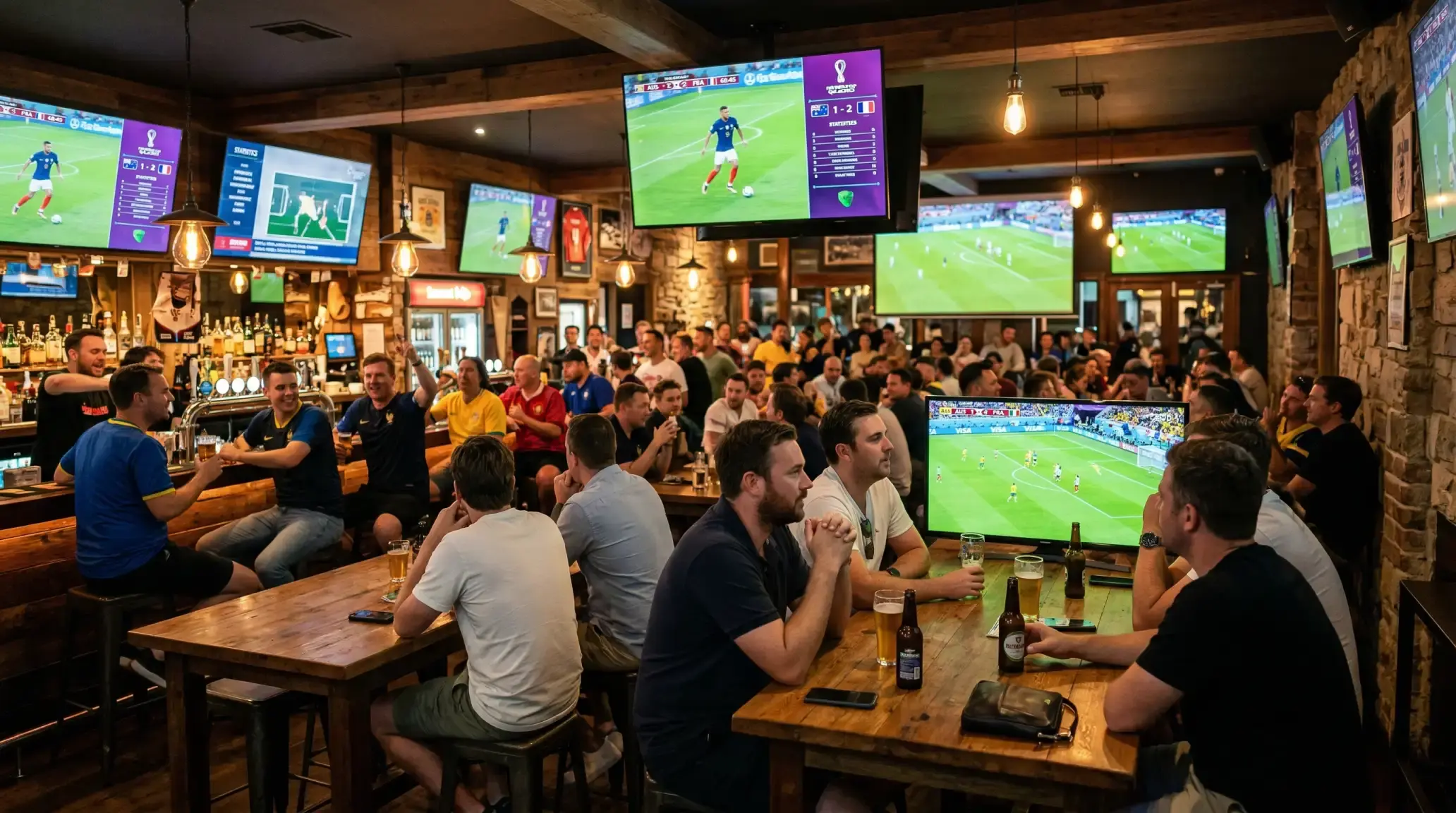
My first World Cup punt was a disaster. Brazil 2014, and I stacked a five-leg multi that looked bulletproof on paper — Germany to beat Portugal, Spain to beat Netherlands, Argentina to top their group. Two days in, I learned that tournament football follows its own chaotic logic. Spain went down 5-1, my multi evaporated, and I spent the rest of the tournament watching matches without any skin in the game. That experience taught me something every punter eventually discovers: World Cup betting markets reward understanding over enthusiasm.
Nine tournaments later (if you count the Women’s World Cups and youth editions I’ve covered), I approach World Cup betting markets with a different mindset. The sheer variety of available markets means every punter can find their niche — whether you prefer the long-range strategy of outright betting or the immediate gratification of match-day punts. With 104 matches across 39 days in 2026, the World Cup offers more betting opportunities than any other football event on the calendar.
What makes World Cup 2026 particularly interesting from a betting perspective is the expanded format. Forty-eight teams create twelve groups instead of eight, generating more competitive group-stage matches. The inclusion of more nations from outside traditional football strongholds means we’ll see greater variation in quality — and with that variation comes opportunity. Understanding how bookmakers structure their markets, where the margins sit, and which bet types suit different stages of the tournament will separate successful punters from those who simply chase flags.
This guide breaks down every significant betting market you’ll encounter for the World Cup 2026. I’ll explain how each market works, identify where value typically emerges, and highlight the specific considerations for Australian punters navigating decimal odds and local regulations. Whether you’re planning a single outright punt or building a tournament-long strategy, knowing your markets is the foundation everything else builds upon.
Outright Markets: Long-Range Tournament Bets
A mate of mine has had the same $50 on Argentina to win the World Cup since December 2022, the day after they lifted the trophy in Qatar. His reasoning? Champions historically perform well in defending cycles, and he locked in odds that have since shortened considerably. That’s the appeal of outright markets — they reward early conviction and allow punters to sit back and enjoy the tournament with a long-range investment already placed.
Outright markets represent bets on tournament-wide outcomes rather than individual matches. These markets typically open months or even years before the tournament begins, with odds fluctuating based on qualification results, form, injuries, and draw outcomes. For World Cup 2026, outright markets have been trading since the format expansion was confirmed, giving punters ample time to study the landscape.
Tournament Winner
The flagship outright market asks the simplest question: who lifts the trophy on July 19, 2026, at MetLife Stadium? As I write this in April 2026, Brazil sit as marginal favourites around the 5.00 mark, with Argentina, France, and England clustered between 6.00 and 8.00. These prices reflect both perceived squad strength and favourable draw positioning.
Tournament winner betting carries inherent variance that punters must accept. Even genuine title contenders face roughly 15-20% implied probability at best, meaning the most likely outcome is still that they don’t win. This isn’t a market for certainty-seeking punters. The value proposition lies in identifying teams whose true chances exceed their implied probability — a 7.00 shot that actually has closer to 18% probability rather than the 14.3% the odds suggest.
I tend to place tournament winner bets in tranches rather than all at once. An initial position months out captures the best available odds, with additional bets placed if prices drift favourably after the draw or following group-stage results. This approach averages entry price and maintains flexibility. The 2026 draw has already occurred, so current odds reflect known group paths — a factor I’ll discuss in the group markets section.
Golden Boot (Top Scorer)
Picking the tournament’s top scorer introduces variables beyond team success. The Golden Boot often goes to a player from a team that reaches at least the semi-finals, maximising available matches. However, penalty specialists and set-piece takers carry advantages regardless of how far their team progresses. Harry Kane’s Golden Boot at Russia 2018 came largely through penalties, while Kylian Mbappé’s eight goals at Qatar 2022 showcased a striker at the peak of his powers.
For 2026, the market centres on familiar names: Mbappé, Erling Haaland, Kane, Vinícius Júnior, and a cluster of emerging talents. The expanded format adds complexity — with 104 matches instead of 64, there’s potential for higher total goals, but individual scorers from smaller nations gain more opportunities too. I look for players guaranteed minutes in attack-minded teams with clear paths to the knockout rounds. Penalty responsibility remains a crucial filter; knowing who takes spot kicks for contenders can be the difference between a winning and losing selection.
Golden Ball (Best Player)
The Golden Ball, awarded to the tournament’s outstanding player, represents a subjective market influenced by narrative as much as performance. Voters — typically journalists and technical committees — often favour players whose teams go deep and who produce memorable moments. Lionel Messi’s Golden Ball at Qatar 2022 reflected both his individual brilliance and the romantic appeal of a legend finally winning the one trophy that had eluded him.
From a betting standpoint, this market carries significant unpredictability. A goalkeeper could be named best player after a heroic tournament, as could a midfielder who doesn’t score but controls every match. I treat Golden Ball betting as a secondary market, placing smaller stakes on players likely to reach the final whose playing style attracts attention — playmakers, talismanic figures, or potential breakout stars.
Golden Glove (Best Goalkeeper)
The goalkeeper award typically correlates with clean sheets and high-profile saves rather than pure statistical dominance. Emiliano Martínez won at Qatar 2022 partly due to his penalty shootout heroics, which overshadowed other strong goalkeeping performances. For 2026, this market favours keepers from defensively solid teams expected to progress — think Alisson (Brazil), Courtois (Belgium), or Donnarumma (Italy didn’t qualify, reminder noted).
With twelve groups creating more matches, the clean sheet count could rise, benefiting keepers whose teams cruise through weaker groups. I identify this as a niche market worth a small stake if you spot a goalkeeper facing favourable group-stage opposition while playing for a genuine contender.
Group Stage Markets: Navigating the First Phase
The group stage is where World Cup betting differs most from domestic league punting. You’re dealing with compressed timelines — three matches per team over roughly ten days — and matchups between nations that might not have faced each other in years. Form lines become murky, motivation levels vary wildly, and dead rubbers appear faster in the expanded format where two teams can secure qualification with matches to spare.
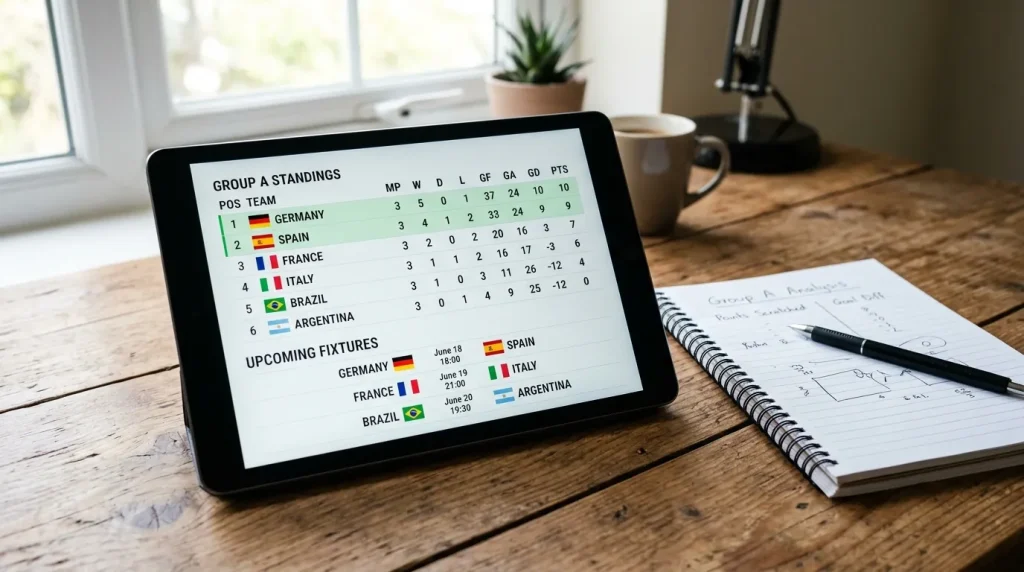
Group markets settle after the final matchday of each group, creating natural checkpoints throughout the tournament’s first two weeks. These markets suit punters who prefer analysis over instinct — the group compositions are known, historical head-to-head data exists, and qualification probabilities can be modelled with reasonable accuracy.
Group Winner Markets
Picking which team finishes top of their group rewards both quality assessment and schedule awareness. The team playing their final match last gains an informational advantage, knowing exactly what result they need. In close groups, this can influence outcomes — a team that’s already qualified might rest players against a desperate third-place side pushing for survival.
For 2026, Group D (USA, Paraguay, Australia, Turkey) offers an interesting group winner market. The USA as hosts carry home advantage across their Seattle and Santa Clara fixtures, but Paraguay’s South American pedigree and Turkey’s European quality create genuine competition. Australia’s Socceroos represent an underpriced proposition if you believe Tony Popovic’s system can deliver results against established opposition.
Group winner prices typically offer less value than to-qualify markets because they require teams to finish specifically first rather than simply advancing. I use group winner bets sparingly, focusing on groups where one team has clear superiority over their competitors.
To Qualify from Group
This market asks whether a team finishes in the top two of their group — or, for 2026, potentially as one of the eight best third-placed teams. The expanded format means 24 of 48 teams (50%) progress to the Round of 32, compared to 50% (16 of 32) in previous formats. However, the third-place wildcard adds complexity that bookmakers build into their odds.
To-qualify markets represent my preferred group-stage betting approach. The qualification threshold is lower than winning outright, meaning you’re backing a team to simply avoid disaster rather than demanding excellence. I look for teams trading at 1.50-2.00 to qualify whose underlying quality suggests they’re virtual certainties to progress. Even a 1.60 price implies 62.5% probability — if I assess true probability at 80%, that’s a consistent value opportunity across multiple groups.
The third-place escape route changes calculations for 2026. Teams finishing third need sufficient points and goal difference to rank among the top eight thirds. Groups with one dominant team and three evenly matched others could see multiple teams finishing on identical points, creating chaos for third-place calculations. I factor this into to-qualify assessments, preferring groups with clearer hierarchies.
Group Points Totals
Some bookmakers offer over/under markets on how many points a team will accumulate in the group stage. With three matches available, the range spans 0-9 points (though 9 requires winning all three). A team trading at over 5.5 points needs two wins or a win and two draws at minimum — a meaningful hurdle even for strong sides.
Points totals suit punters who have strong views on specific teams without wanting to predict precise finishing positions. If I believe Brazil will dominate Group C (Brazil, Morocco, Scotland, Haiti) but am uncertain whether they’ll beat Morocco specifically, an over 7.5 points bet captures my conviction without requiring perfection. These markets carry higher margins than match betting, so I treat them as secondary plays rather than primary strategies.
Match Betting: The Core Punting Markets
Every punter remembers their first successful match bet. Mine was Australia versus Japan at Germany 2006 — Socceroos were trailing 1-0 into injury time, and I’d already mentally written off my stake. Then Tim Cahill happened. Twice. John Aloisi sealed it, and a boring Wednesday night in my uni dorm became one of my favourite football memories. Match betting creates these moments, connecting individual matches to personal investment in ways that outright markets can’t replicate.
Match betting markets account for the majority of World Cup wagering volume. With 104 matches on offer, ranging from opener to final, punters can engage daily throughout the tournament. The principles remain consistent across matches, though stakes and margins shift as the tournament progresses.
Match Result (1X2)
The classic market: home win (1), draw (X), or away win (2). In World Cup context, “home” typically refers to the team listed first, regardless of venue — though for 2026, the USA, Mexico, and Canada will enjoy genuine home advantage in their fixtures.
Three-way markets carry the challenge of pricing draws accurately. International football produces draws at roughly 23-25% frequency historically, but this varies significantly by tournament stage. Group matches see more draws (teams settling for points that suit both sides) while knockout matches after extra time eliminate draws entirely. I approach 1X2 betting by first assessing draw probability — if both teams might be satisfied with a point, draw prices below 3.50 represent potential value.
The 2026 format affects 1X2 markets in the group stage. With third-place teams able to qualify, we’ll likely see more cautious approaches when a draw secures mutual survival. Bookmakers will build this into their models, but early-tournament patterns might not fully reflect the new incentives until punters and teams adjust.
Asian Handicap
Asian handicaps eliminate the draw as a betting outcome by applying goal handicaps that level the playing field. A team given a -1.5 handicap must win by two or more goals for the bet to succeed; a team at +1.5 can lose by one goal and still cover the spread.
For World Cup matches between mismatched opponents — think Brazil versus Haiti or Germany versus Curaçao — Asian handicaps create more interesting propositions than 1.10 match odds on the favourite. A -2.5 handicap on Brazil at 1.90 asks whether they’ll win by three or more, a meaningful question even against weaker opposition.
Quarter and half-goal handicaps add refinement. A -1.25 handicap splits your stake between -1 and -1.5 lines, meaning a one-goal win returns half your stake while two goals wins everything. These markets reduce volatility and allow precise positioning. I use Asian handicaps extensively for group-stage matches where quality gaps are substantial but motivation levels vary — heavy favourites in dead rubbers might not cover large handicaps despite having superior squads.
Over/Under Goals (Totals)
Goals markets ask whether the total match score exceeds or falls below a specified line, typically 2.5 for standard matches. World Cup group stages historically average around 2.4-2.6 goals per match, making the 2.5 line a genuine coin-flip in aggregate while individual matches diverge significantly.
I evaluate totals by considering attacking quality, defensive organisation, and match context. Two free-scoring teams with shaky defences push toward overs; two organised defensive units pull toward unders. However, tournament football features more cagey encounters than league play — managers protect against elimination, players avoid yellow cards that trigger suspension, and unfamiliar opponents create conservative approaches.
For 2026, the expanded format introduces more mismatch potential. Matches like France versus Iraq or England versus Panama should theoretically produce goals, but favourites sometimes struggle to break down determined defensive blocks. I approach totals with caution in the group stage, reserving stronger conviction for knockout matches where desperation forces open play.
Both Teams to Score (BTTS)
A binary market: will both teams find the net, yes or no? BTTS removes scoreline specifics, focusing purely on whether each side registers on the scoresheet. This market appeals when you expect goals without confident directional views.
In World Cup context, BTTS “Yes” faces challenges when quality gaps are extreme. A team might thrash their opponent 5-0 with the losing side never seriously threatening — one-sided routs kill BTTS “Yes” bets just as surely as dour 0-0 draws. I target BTTS in competitive group matches where both teams need to attack or in knockout rounds where trailing teams must chase the game.
Player Proposition Bets: Individual Performances
The rise of player props has transformed tournament betting over the past decade. Where once match results dominated, punters now have access to markets on individual players — who scores, who assists, who receives cards, who makes saves. These markets allow specialisation: a punter who studies striker movement patterns can focus exclusively on goalscorer props without needing broader match predictions.
For World Cup 2026, player props will be available across most fixtures, with liquidity and variety increasing as matches approach. Early-tournament markets might offer anytime goalscorer and first goalscorer only, while knockout matches attract cards, shots, and assists markets. Australian bookmakers have expanded their prop offerings significantly since 2022, making this a more accessible space for local punters.
Anytime goalscorer remains the most popular player prop. This market asks whether a specific player scores at any point during the match (excluding extra time unless specified). Prices reflect both the player’s historical scoring rates and their team’s expected goal output. A penalty taker on a team likely to win receives shorter odds than an equally skilled striker whose team might struggle to create chances.
First goalscorer markets offer enhanced prices for correctly picking who opens the scoring. These bets carry higher variance — a player might score twice but miss first-goalscorer honours to a teammate — but the price increases compensate for added difficulty. I approach first goalscorer selectively, targeting matches where one team will dominate early and their primary striker takes penalties and positioned plays.
Cards markets have gained popularity, especially for tournament football where referee tendencies vary by nationality and assignment patterns cluster certain officials with specific matches. A player one yellow away from suspension might be withdrawn before risk accumulates, while teams trailing in knockout matches send players forward desperately, creating card-worthy defensive situations. I treat cards betting as situational, waiting for specific match contexts rather than systematic approaches.

Shot and assist props require deeper statistical analysis than goalscorer markets. Expected assists (xA) models predict assist frequency based on chance creation, while shot maps reveal which players regularly attempt shots from scoreable positions. These advanced metrics have become more accessible, and punters willing to study underlying data can find edges in prop markets that casual bettors overlook.
Tournament football introduces additional player prop considerations. Players accumulating tournament experience may improve as matches progress, while others fade under physical and mental demands. Watch for players who historically perform in knockouts versus those who shine only in group stages — these patterns inform prop betting beyond surface-level statistics.
Tournament Specials: Unique World Cup Wagers
Beyond standard outrights and match betting, World Cup tournaments generate unique special markets that capture specific tournament scenarios. These markets range from straightforward propositions to elaborate predictions that only settle after the final whistle on July 19.
Stage of elimination markets ask how far a specific team will progress. Rather than betting on them to win or fail outright, you might back England to reach “Semi-finals or better” at enhanced odds compared to their tournament winner price. This approach suits punters confident in a team’s quality without wanting to predict the entire bracket.
Highest-scoring group markets predict which of the twelve groups will produce the most total goals. Groups containing attacking heavyweights against defensive minnows traditionally score heavily — think of Germany’s 7-1 against Brazil in 2014, which boosted Group G’s total despite other matches being tight. For 2026, Group C (Brazil, Morocco, Scotland, Haiti) and Group E (Germany, Curaçao, Ivory Coast, Ecuador) present candidates for high-scoring affairs.
Without-favourites markets remove the top three or four teams (by odds) from tournament winner betting, asking who wins among the remaining field. These markets carry enhanced prices and appeal if you believe a dark horse can emerge without competing directly against Brazil, Argentina, France, and England. Morocco’s run to the 2022 semi-finals would have landed massive without-favourites bets; identifying the 2026 equivalent is the challenge.
Continental winner markets split the tournament by confederation. Will a European nation win, or can South America claim another title? UEFA teams have dominated recent World Cups (four of the last five winners), but CONMEBOL’s depth with Argentina and Brazil maintains competitive prices. AFC, CAF, and CONCACAF representatives face longer odds, reflecting historical results while offering speculative appeal if you believe 2026 will produce continental upheaval.
Novelty markets appear closer to tournament time — will a goalkeeper score? Will there be a red card in the final? Will the tournament see a golden goal moment (irrelevant since rules changed)? These markets carry high margins and entertainment value rather than serious punting merit. I avoid novelty markets beyond minimal stakes for amusement, as bookmaker edges typically exceed 10-15%.
Multi Betting: Combining Selections
Multis (called parlays or accumulators elsewhere) combine multiple selections into a single bet, with all legs needing to win for the bet to pay out. The appeal is obvious: combining three 2.00 selections creates an 8.00 payout from a single stake. The mathematics, however, work against punters — each additional leg multiplies not just the potential return but also the probability of failure.
Despite the house edge built into every selection compounding across legs, multis remain popular for World Cup betting. The tournament structure actually suits certain multi approaches better than league football. Group-stage matches fall on sequential days, allowing punters to build short multis across 24-48 hour windows rather than waiting a week between legs.
My approach to tournament multis focuses on correlation and conditionality. If I believe Argentina will dominate their group, betting on them to beat each opponent individually carries correlated risk — if my Argentina assessment is wrong, all three legs fail. Instead, I might combine Argentina to win their group with a player prop on an Argentine player, creating a multi where one selection supports the other rather than duplicating risk.
Same-game multis (SGMs) combine selections within a single match: match result, goal totals, and player props from the same fixture. These markets have gained popularity because bookmakers price them algorithmically, sometimes missing correlations that observant punters identify. If I believe Brazil will win heavily, combining Brazil -1.5 handicap with over 3.5 total goals and Vinícius Júnior anytime scorer creates a coherent same-game multi where each leg supports the others.
For Australian punters, multi regulations matter. Some promotional offers require minimum leg counts or odds thresholds, pushing punters toward riskier combinations than they might otherwise choose. I recommend treating promotional offers as bonuses to strategic bets rather than reasons to construct multis that wouldn’t otherwise make sense. The best multi is still one where each leg carries independent value.
Leg failures in multis create the tournament’s most frustrating moments. Your four-leg multi sits at three wins with one match remaining, and a last-minute equaliser destroys the entire ticket. Risk management involves accepting this variance while structuring bets to minimise unnecessary exposure. Single bets alongside smaller multi stakes create a balanced approach — you capture multi upside without depending entirely on perfect outcomes across multiple fixtures.
Australian Bookmakers and World Cup Markets
Licensed Australian bookmakers will offer comprehensive World Cup 2026 coverage, with market depth rivalling any global operator. Sportsbet, Ladbrokes, TAB, Neds, Bet365, and PointsBet represent the major players, each with slightly different market offerings and promotional approaches during major tournaments.
Australian regulations shape how bookmakers present World Cup markets. In-play betting remains prohibited online — you can’t place bets on matches after kick-off through apps or websites, though telephone betting during matches is technically permitted. This regulation affects strategy significantly: all pre-match analysis matters more when you can’t adjust positions as matches unfold.
Promotional restrictions in certain states (NSW, NT, SA, Tasmania, WA, ACT) prohibit inducement offers like deposit bonuses or stake-back specials. Punters in these jurisdictions access the same markets but without promotional enhancements that might be available elsewhere. Check your state’s specific regulations, as they can affect which offers you’re eligible to receive.
Odds formats in Australia default to decimal (2.50 means your stake is multiplied by 2.50 including the original stake), which I find cleaner than fractional or American alternatives. All major bookmakers allow preference settings, but decimal remains the standard for Australian punters and will be used throughout World Cup coverage on local platforms.
BetStop, the national self-exclusion register implemented in August 2023, allows punters to exclude themselves from all licensed Australian operators simultaneously. For those approaching World Cup betting with awareness of responsible gambling needs, BetStop provides a meaningful safety mechanism. The tournament’s intensity — matches daily for a month — can create problematic patterns, and having tools available before issues develop is sensible preparation.
Market availability varies between operators, particularly for exotic props and early-tournament outrights. I maintain accounts with multiple bookmakers to access best available prices and market selection, comparing odds across platforms before placing significant stakes. Price comparison sites exist for Australian punters, though verifying odds directly on bookmaker platforms ensures accuracy.
Finding Your World Cup Markets
World Cup 2026 betting markets span a spectrum from straightforward match results to intricate player props and tournament specials. No single market suits every punter — your approach should reflect your analytical strengths, risk tolerance, and engagement preferences. Someone who enjoys deep statistical analysis might thrive in player prop markets; a punter who prefers watching matches without second-guessing every possession might prefer placing outright bets and letting the tournament unfold.
The 48-team format creates more markets than previous World Cups, but also more noise. Not every betting opportunity deserves attention. I focus my World Cup analysis on markets where I can develop genuine informational advantages — typically team-level assessments for outrights and group betting, with selective match and player props where specific knowledge applies. Attempting to bet every market dilutes both analysis quality and bankroll efficiency.
For Australian punters specifically, understanding local regulations and bookmaker offerings ensures you’re operating within a comfortable framework. The absence of in-play betting emphasises pre-match preparation; the decimal odds format simplifies calculations; the BetStop safeguard exists for those who need it. The complete World Cup 2026 betting guide covers broader strategic considerations beyond market mechanics covered here.
Whatever markets you choose, the foundation remains consistent: understand what you’re betting on, assess whether prices reflect fair value, and manage stakes relative to confidence levels. World Cup tournaments reward patient punters who resist emotional decisions during the inevitable highs and lows of a month-long spectacle. With 104 matches ahead, selectivity isn’t just recommended — it’s necessary.
