

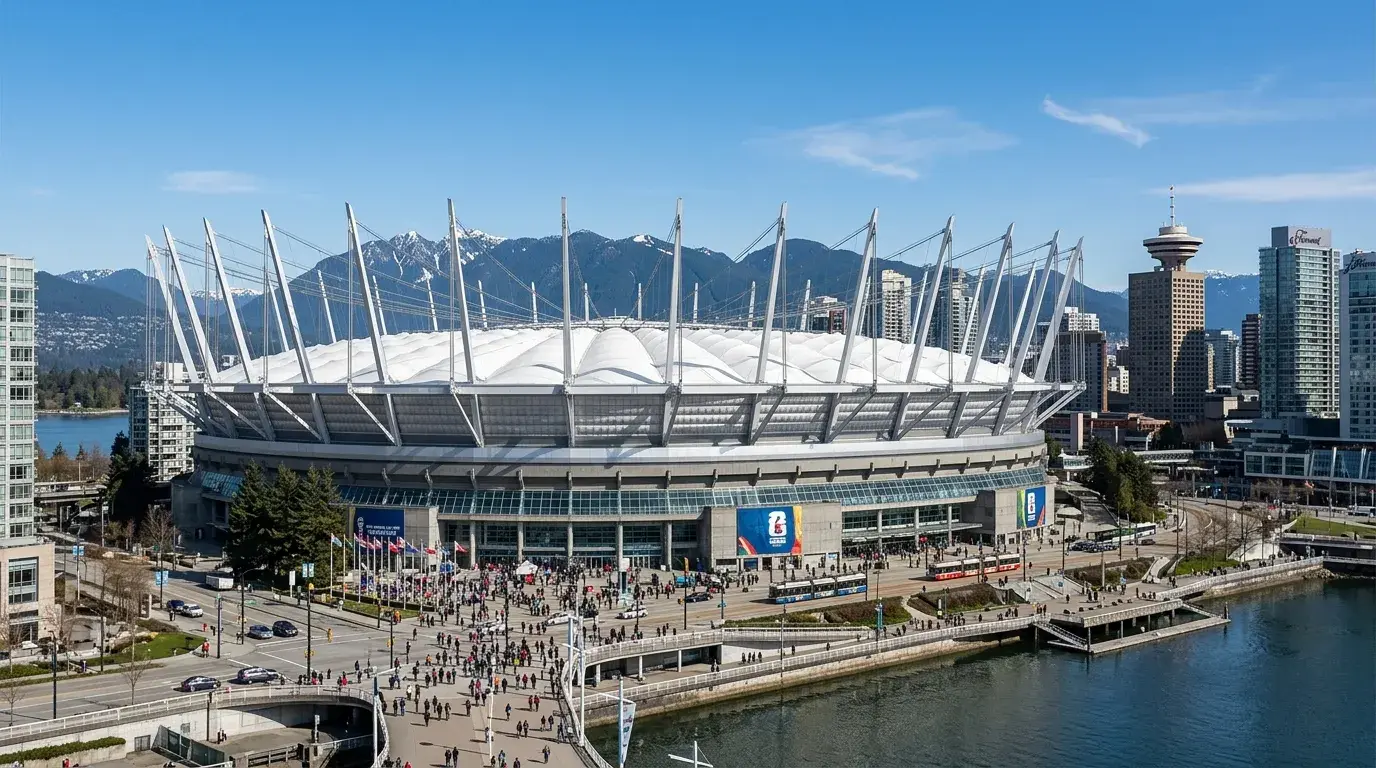
The Socceroos begin their World Cup 2026 campaign at BC Place in Vancouver — a retractable-roof stadium that provides controlled conditions regardless of Pacific Northwest weather patterns. On 13 June 2026, Australia faces Turkey in the opening Group D fixture that establishes momentum for matches against USA and Paraguay that follow. For Australian supporters making the journey or watching from home, BC Place represents the starting point for what could become a historic tournament campaign.
Vancouver’s selection as a Canadian host city reflects the country’s limited large-stadium infrastructure compared to American co-hosts. BC Place provides the capacity and facilities that FIFA requires while showcasing Canadian football culture to global audiences. Understanding this venue helps Australian punters assess conditions that might influence the Socceroos’ opening-match performance against Turkish opposition.
Stadium Overview and Specifications
BC Place opened in 1983 as a domed stadium before undergoing significant renovation in 2011 that installed the world’s largest cable-supported retractable roof. This engineering achievement allows the venue to provide covered protection during Vancouver’s frequent rain while opening for pleasant summer conditions. The stadium’s versatility makes it suitable for multiple sports including CFL football, MLS soccer, and rugby union — experience that informs World Cup operational readiness.
The stadium’s World Cup capacity will be approximately 54,000 — reduced from maximum configurations due to FIFA pitch requirements. This capacity positions BC Place among the tournament’s mid-sized venues, creating intimate atmosphere compared to 80,000-seat American stadiums while maintaining significance appropriate for group-stage fixtures. The Socceroos’ opening match will benefit from atmospheric intensity that smaller venues generate.
Playing surface at BC Place uses artificial turf for regular operations, though FIFA requirements mandate natural grass installation for World Cup matches. Temporary grass systems will overlay the existing surface, providing playing conditions that international footballers expect. This conversion process — common for World Cup venues with artificial primary surfaces — introduces variability that teams must assess during pre-match preparation.
The retractable roof provides climate control that distinguishes BC Place from open-air alternatives. June weather in Vancouver ranges from pleasant sunshine to persistent drizzle, with temperatures typically between 15-22°C. Roof decisions for individual matches depend on weather forecasts and FIFA operational preferences. Closed-roof conditions eliminate wind factors while creating acoustic intensity that amplifies supporter noise.
Australia vs Turkey: The Opening Fixture
The Socceroos’ World Cup 2026 campaign begins against Turkey on 13 June 2026 at BC Place — a fixture that establishes competitive positioning before matches against group favourites USA and dangerous Paraguay. Turkey represents the most accessible opponent in Group D’s composition, making this opening fixture essential for Australian progression hopes. Three points from Vancouver would transform the subsequent matches from must-win desperation into manageable challenges where draws might prove sufficient.
Kick-off timing for Australia vs Turkey falls at 2:00 PM AEST on Saturday 14 June — prime afternoon viewing for Australian supporters watching from home. This accessible timing should generate significant domestic audience engagement, with pubs and viewing events creating collective atmosphere that transcends individual watching experiences. The Saturday afternoon slot allows maximum Australian participation in the Socceroos’ tournament opening without requiring early morning dedication or work-day scheduling conflicts.
Turkey enters as marginal favourites based on FIFA rankings and European qualification performance, though Australia’s recent form under Tony Popovic has demonstrated competitive capability against similar opposition levels. The fixture’s significance extends beyond three points — psychological momentum from victory would energise the squad for the daunting USA match that follows one week later in Seattle. Defeat would create pressure that compounds against the tournament hosts.
Tactical analysis suggests both teams will approach cautiously given the fixture’s significance. Turkey’s technical midfield control will test Australian defensive organisation, while Socceroos counter-attacking threat through pace and set pieces provides clear pathway to goals against Turkish defensive vulnerabilities. The match might be decided by which team better executes their tactical identity under opening-match pressure.
BC Place’s conditions should suit Australian tactical approaches that Tony Popovic has implemented. The controlled indoor environment eliminates weather variables that might disadvantage either team unexpectedly. The temporary grass surface provides consistent ball behaviour that technical play requires. Atmospheric intensity from split supporter sections will create energy that both teams must channel productively into performance.
Location and Australian Supporter Access
BC Place occupies a central Vancouver location within the False Creek district, accessible via multiple transport options that international visitors can navigate without requiring local expertise or advance planning. The stadium sits adjacent to downtown Vancouver’s attractions, allowing supporters to combine match attendance with tourism that Canada’s Pacific gateway provides. For Australians making the journey, Vancouver offers familiar English-speaking environment with manageable logistics compared to non-English-speaking host cities.
Vancouver International Airport provides direct connections from Australian cities — approximately 14-hour flights from Sydney or Melbourne that arrive into a city with existing Australian expatriate community numbering in the tens of thousands. Accommodation options surrounding BC Place range from luxury hotels to budget alternatives, with June pricing reflecting peak tourist season demand that World Cup attendance will intensify. Early booking proves essential for supporters planning attendance at the Turkey fixture.
Public transport to BC Place includes SkyTrain rapid transit connections from throughout metropolitan Vancouver and surrounding suburbs. Stadium Station provides direct access, eliminating traffic concerns that stadium parking would introduce for driving spectators. Match-day crowds will stress transport systems, though Vancouver’s experience hosting major events including the 2010 Winter Olympics provides operational familiarity that minimises disruption for visitors.
The Australian supporter community in Vancouver and across western Canada will likely organise around the Socceroos’ opening fixture with dedicated supporter zones and pre-match gatherings. Expatriate networks provide local knowledge that visiting supporters can leverage for accommodation, transport, and pre-match gathering recommendations in unfamiliar territory. The shared experience of supporting Australia abroad creates bonds that transcend ordinary tourism and generate memories lasting beyond the ninety minutes.
Weather and Playing Conditions
Vancouver’s June climate presents the mildest conditions of any World Cup 2026 host city — moderate temperatures, manageable humidity, and daylight extending past 9:00 PM local time. These conditions contrast sharply with the summer heat that American venues will experience, providing playing environment that suits continuous high-intensity football without heat-related fatigue concerns.
The retractable roof adds climate control that outdoor venues cannot provide. If forecasts predict rain — common in Vancouver regardless of season — the roof closes to ensure dry playing surface and supporter comfort. If pleasant conditions prevail, an open roof allows natural atmosphere while maintaining the acoustic benefits that covered stadiums provide.
Temperature at kick-off time should range between 18-22°C — comfortable conditions for players from both Australia’s varied climate and Turkey’s Mediterranean summers. Neither team gains significant advantage from weather adaptation, creating neutral conditions where tactical preparation and squad quality determine outcomes rather than environmental factors.
For betting analysis, BC Place’s controlled conditions reduce weather-related variables that outdoor venues introduce. Markets should reflect team quality and tactical matchups without weather adjustments that open-air American fixtures require. Over/under markets can apply standard expectations without heat-related tempo reductions.
Betting Considerations for BC Place Fixtures
The controlled indoor environment at BC Place creates conditions where team quality matters more than environmental adaptation or weather-related luck. Both Australia and Turkey will experience similar preparation circumstances — neither gains home-ground advantage, neither faces unfamiliar climate challenges that might disrupt preparation. This neutrality simplifies betting analysis to core competitive assessments of squad quality, tactical matchups, and tournament readiness.
The temporary grass surface introduces minor variability compared to established natural pitches at dedicated football venues. Players accustomed to artificial surfaces might find adjustment easier than those from natural-grass leagues, though the grass overlay should provide consistent playing characteristics. Both Australia and Turkey feature players from varied club environments with different surface experiences, suggesting neither squad gains significant surface advantage over the other.
Atmospheric intensity from relatively intimate 54,000 capacity creates energy that influences match tempo throughout the ninety minutes. Both teams should feed off supporter energy that enclosed venues amplify through acoustic reflection. Consider markets where early tempo matters — first-half goals, early corners, first booking — as opening-match nerves combine with atmospheric pressure to create unpredictable early exchanges before teams settle into patterns.
The fixture’s significance for both teams’ tournament progression suggests cautious tactical approaches might prevail despite the attacking quality both sides possess. Neither team can afford defeat in their opening match, potentially producing careful football where avoiding loss takes priority over pursuing victory aggressively. Under 2.5 goals at approximately $1.90 captures this opening-match caution that characterises many World Cup openers. For complete Socceroos World Cup 2026 analysis, including squad details and all three group fixtures.
Draw markets deserve consideration given the fixture’s competitive balance. Australia at approximately $3.80 and Turkey at approximately $2.30 reflect ranking-based assessment, but the draw at approximately $3.20 offers value if both teams prioritise avoiding defeat over pursuing maximum points in their tournament opener.
Historical Context and Venue Significance
BC Place has hosted significant football events including the 2015 FIFA Women’s World Cup final, where the United States defeated Japan before a capacity crowd. That tournament established Vancouver as proven World Cup territory, demonstrating operational capability that FIFA’s venue selection process values. The 2026 tournament builds on this foundation while introducing men’s World Cup football to Canadian audiences.
For Australian football, BC Place represents another chapter in World Cup venue history that includes Rustenburg, Porto Alegre, and Al Janoub Stadium from previous tournaments. Each venue carries memories — some triumphant, some painful — that become part of Socceroos folklore. BC Place awaits its place in Australian football’s collective memory, with the Turkey fixture determining whether that memory proves joyous or cautionary.
The venue’s Canadian location adds cultural dimension to the fixture’s significance. Canada and Australia share Commonwealth heritage, English-speaking populations, and sporting cultures where football competes against dominant alternatives. Australian supporters in Vancouver will find welcoming environment among Canadian hosts who understand underdog narratives and sporting passion.
