

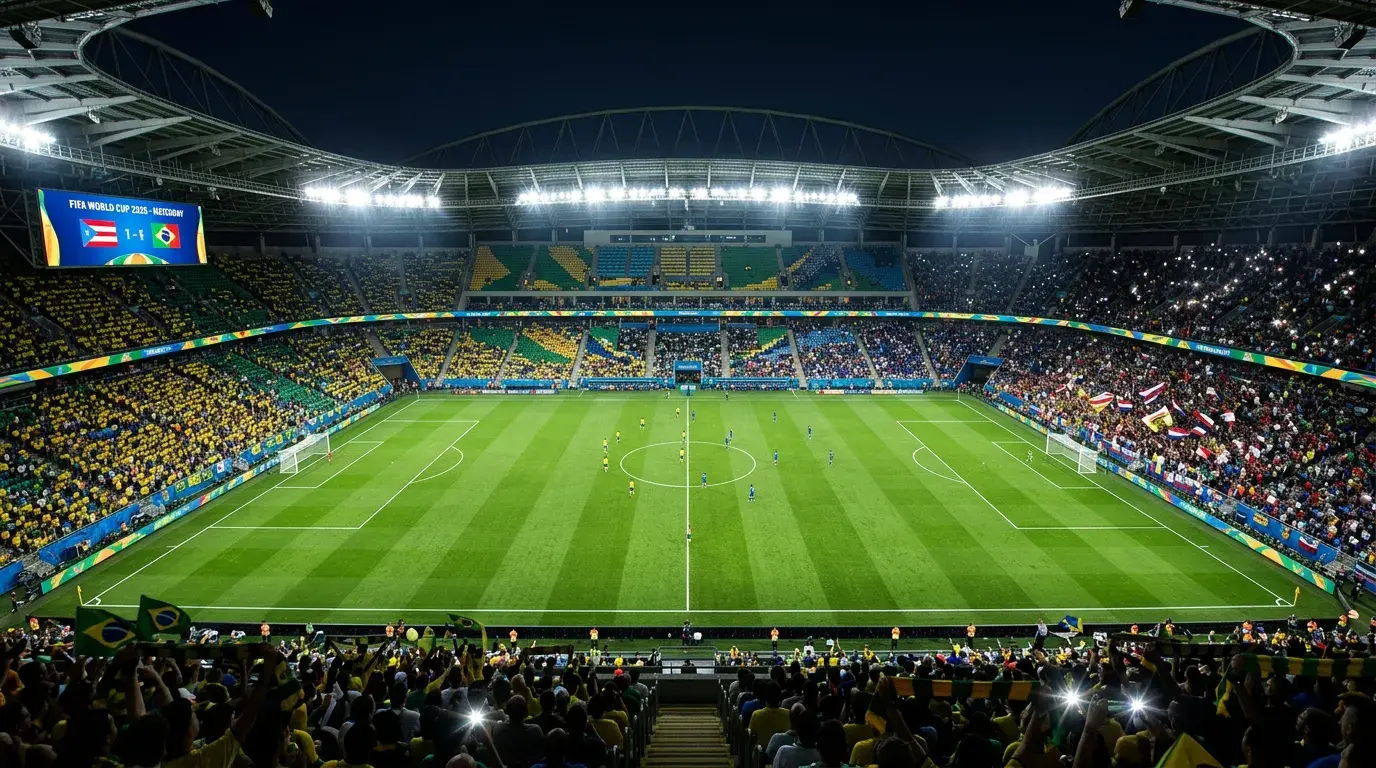
Group C contains both the clearest favourite and the most emotional storyline of the entire 2026 World Cup. Brazil — five-time champions, perennial contenders, football royalty — enters alongside Morocco, whose 2022 semi-final run rewrote African football history. Scotland returns to the World Cup stage after their 2024 European Championship adventure, carrying a nation’s renewed belief. Haiti qualifies for their first World Cup since 1974, representing Caribbean football’s resurgence. The gap between Brazil and Haiti spans football’s entire competitive spectrum, yet tournament football has taught me that predictability isn’t guaranteed.
What makes Group C compelling for betting purposes isn’t the question of who will win — Brazil’s quality makes that nearly certain — but the battle for second place between Morocco and Scotland. Both nations have genuine World Cup pedigree and recent tournament success. Morocco’s 2022 heroics proved they belong among elite football nations, while Scotland’s passionate support and tactical organisation create problems for any opponent. For Australian punters, the second-place market in Group C offers value that the lopsided group winner market cannot provide.
Brazil: Five Stars Seeking Number Six
The Seleção’s weight of history presses heavier with each passing tournament. Twenty years since their last World Cup triumph, 24 since they last reached a final — statistics that haunt Brazilian football culture. Every squad announcement triggers comparisons to 1970 or 1994, every tactical decision measured against generations of mythical predecessors. Brazil doesn’t simply participate in World Cups; they carry obligations to perform that no other nation truly understands.
Brazil’s current generation features extraordinary individual talent spread across Europe’s biggest clubs. Vinícius Júnior at Real Madrid has reached Ballon d’Or consideration, his dribbling and finishing placing him among football’s elite attackers. Rodrygo, Raphinha, and emerging talents create attacking depth that few nations can match. The midfield features players from Barcelona, Real Madrid, and Premier League sides, while the defence has solidified under consistent tactical approaches.
Tactically, Brazil has shifted toward more pragmatic systems without abandoning attacking intent. The days of four forwards and defensive vulnerability have passed, replaced by balanced formations that control possession while remaining dangerous on transitions. This evolution suits tournament football, where single-goal margins decide knockout rounds and defensive errors prove fatal. Against Group C opponents, Brazil will dominate possession and create numerous chances, requiring only competent finishing to secure comfortable victories.
The question for Brazil isn’t whether they’ll top Group C — they will — but whether they can sustain form through the knockout rounds. Their 2022 exit against Croatia revealed mental fragility when matches extend beyond regulation time, a vulnerability that superior opponents will target. Group C provides preparation time rather than genuine challenge, with Morocco representing the only opponent capable of testing Brazilian organisation.
Betting markets price Brazil at $1.15 to win Group C, offering no value whatsoever. Brazil to win the tournament at approximately $5.00 remains the relevant market for Seleção backers, while group-stage betting should focus on correct scores and goals markets. Brazil to beat Haiti by four or more goals, for instance, offers reasonable prices for blowout believers.
Morocco: Can Lightning Strike Twice
Walid Regragui stood on the sideline in Qatar, watching his players celebrate a semi-final berth that Africa had never achieved. Morocco’s 2022 run — victories over Belgium, Spain, and Portugal — rewrote tournament football history and proved that African nations could compete with anyone. The celebrations echoed across the Arab world and African continent, transforming Morocco from promising qualifier into genuine World Cup force. Now, the challenge shifts: repeating that success against opponents who’ve studied every Moroccan tactical nuance.
Morocco’s squad maintains the core that delivered 2022’s heroics. Achraf Hakimi at Paris Saint-Germain provides elite right-back quality, while Sofyan Amrabat’s midfield presence disrupts opposition rhythm. The defensive organisation that frustrated Spain and Portugal remains intact, with communication and positioning that prevents clear chances against numerically superior attacks. Morocco doesn’t beat teams through technical brilliance alone — they beat them through collective intelligence that multiplies individual contributions.
The 2026 World Cup presents different challenges than 2022. Morocco now enters as targets rather than underdogs, with opponents preparing specifically for their strengths. Scotland will study Morocco’s defensive shape obsessively, seeking weaknesses that didn’t exist against more naive opponents. Brazil’s quality likely proves too much regardless of preparation, but the Scotland match determines Morocco’s fate.
Against Haiti, Morocco should secure comfortable victory, establishing goal difference advantages that might prove crucial. Against Scotland, tactical discipline meets tactical discipline, with set pieces and individual moments likely deciding the outcome. Against Brazil, Morocco’s realistic ceiling is a respectable defeat that maintains confidence for knockout rounds. Three points from Haiti, one point from Scotland, and zero from Brazil would still secure second place and progression.
Current odds price Morocco at $5.00 to win Group C and $1.50 to qualify. The group-winning odds carry no value given Brazil’s dominance, but Morocco to qualify at $1.50 seems slightly short given Scotland’s quality. For Australian punters, Morocco to finish second at $1.90 represents the relevant market, offering decent returns on the most likely scenario.
Scotland: The Tartan Army Marches Again
Scottish football exists in permanent emotional extremes. The heartbreak of missed penalties, the ecstasy of qualification, the eternal hope that this generation might finally deliver — supporting Scotland requires resilience that borders on masochism. Yet here they are, qualified for consecutive major tournaments after decades of absence, with a squad featuring players from English football’s highest levels. Steve Clarke’s Scotland has developed a defensive identity that frustrates superior opponents and creates opportunities for set-piece specialists.
Scotland’s squad centres around familiar Premier League names. Andrew Robertson at Liverpool provides world-class attacking fullback play, while John McGinn at Aston Villa offers goals and creativity from midfield. The centre-back pairing has stabilised under Clarke’s consistent selection, with communication and positioning that limits clear chances against Scotland’s goal. This isn’t a squad that will overwhelm opponents with attacking quality, but it’s a squad that will compete in every match through organisation and determination.
Against Brazil, Scotland faces a near-impossible task. The quality gap between the squads spans multiple tiers, with Brazil’s substitutes likely outperforming Scotland’s starters in most positions. Securing a draw would represent a historic achievement, while narrow defeat maintains progression hopes. Against Morocco, Scotland has genuine opportunity — both teams play similar styles, with matches decided by fine margins. Against Haiti, Scotland must secure victory to keep qualification hopes alive.
The match sequence matters crucially for Scotland. If they face Brazil first and lose heavily, confidence could collapse before the Morocco match. If they face Haiti first and secure victory, momentum builds into tougher fixtures. The draw order shapes Scotland’s psychological journey through Group C, affecting how they approach each subsequent match.
Bookmakers price Scotland at $8.00 to win Group C and $2.50 to qualify. The group-winning odds are essentially zero value given Brazil’s presence, while qualification odds reflect appropriate uncertainty. For Australian punters, Scotland to finish third at $2.00 offers interesting value — they’re likely to beat Haiti but struggle against Brazil and Morocco, leaving them in third-place contention for the best-thirds pathway.
Haiti: Caribbean Dreams in North America
Fifty-two years between World Cup appearances. The number seems impossible until you consider Haiti’s journey — political instability, natural disasters, economic challenges that make football development a luxury few nations could sustain. That Haiti has qualified at all represents a triumph over circumstances that would have defeated lesser footballing cultures. Their 1974 squad included players who became national heroes, and the 2026 generation carries that legacy into a tournament being played, in part, on Caribbean-accessible North American soil.
Haiti qualified through the CONCACAF pathway, navigating a region that includes USA, Mexico, and Canada — all sides with vastly superior resources. Their success came through defensive discipline and counter-attacking efficiency, squeezing results from matches where possession statistics favoured opponents. This approach will face its ultimate test against Group C opponents, where even defensive solidity might not prevent heavy defeats.
Realistically, Haiti enters Group C with near-zero chance of qualification. Brazil, Morocco, and Scotland all possess squad quality that significantly exceeds Haitian levels, with group positioning determined by matches between those three nations. Haiti’s objective becomes securing a goal, avoiding embarrassment, and representing Caribbean football with dignity. If they can achieve a draw against Scotland or score against Morocco, the tournament becomes a success regardless of final standings.
For betting purposes, Haiti offers value only in specific match markets. Haiti over 0.5 goals against Scotland, for instance, might provide value if markets underrate Haitian attacking potential. Haiti to score in any group match also offers speculative opportunity. However, any wager on Haiti to qualify from Group C wastes money that could find better homes elsewhere.
Current odds price Haiti at $75.00 to win Group C and $15.00 to qualify. Both numbers appropriately reflect Haiti’s limitations against Group C opposition. The value in Haiti markets lies in goals and match-specific outcomes rather than group progression.
Group C Match Schedule and Scenarios
Group C fixtures are distributed across American venues, with matches played in Atlanta, Dallas, and other southern cities where heat could factor into late-afternoon fixtures. Brazil versus Haiti in the opening round sets the tone, likely producing the most lopsided scoreline of the group stage. Morocco versus Scotland in the second round determines qualification dynamics, while the final round’s simultaneous fixtures resolve any remaining uncertainty.
For Australian punters, Group C kick-off times fall into mixed slots. Early morning AEST starts for some fixtures, while others occur in more viewer-friendly late-morning hours. The Brazil versus Haiti match, likely scheduled for prime American television, kicks off around 10:00 AM AEST — manageable for those willing to adjust their morning routine.
The crucial fixture is Morocco versus Scotland, which I expect to decide second place. If Morocco wins, they’re nearly certain to progress. If Scotland wins, they create a three-way race for second and third that could require goal difference calculations. A draw suits Morocco more than Scotland, given likely results against Brazil and Haiti.
Predicted Standings and Betting Angles
My projected Group C final standings show Brazil first with nine points, Morocco second with six points, Scotland third with three points, and Haiti fourth with zero points. Brazil’s dominance is unquestioned, while Morocco’s experience edges them past Scotland in their direct encounter. Scotland’s quality secures victory over Haiti but cannot overcome Morocco or Brazil.
The best betting value in Group C lies in correct score markets for Brazil matches. Brazil to beat Haiti 4-0 or 5-0, Brazil to beat Scotland 3-0 or 2-0 — these specific outcomes offer better returns than backing Brazil in standard match winner markets at prohibitive odds. Morocco versus Scotland provides opportunities for draw betting at attractive prices, while Scotland to beat Haiti offers value if markets underrate Scottish quality against weaker opposition.
Group C’s one-sided nature limits betting opportunities compared to more balanced pools, but careful market selection still identifies value. Focus on specific outcomes rather than group positions, and accept that Brazil’s dominance constrains the competitive matches to Morocco versus Scotland. For analysis of all twelve groups, see our complete World Cup 2026 groups guide.
