
Messi Final World Cup: Argentina Defeat Ends Legendary Career
 Available in US
Loading...
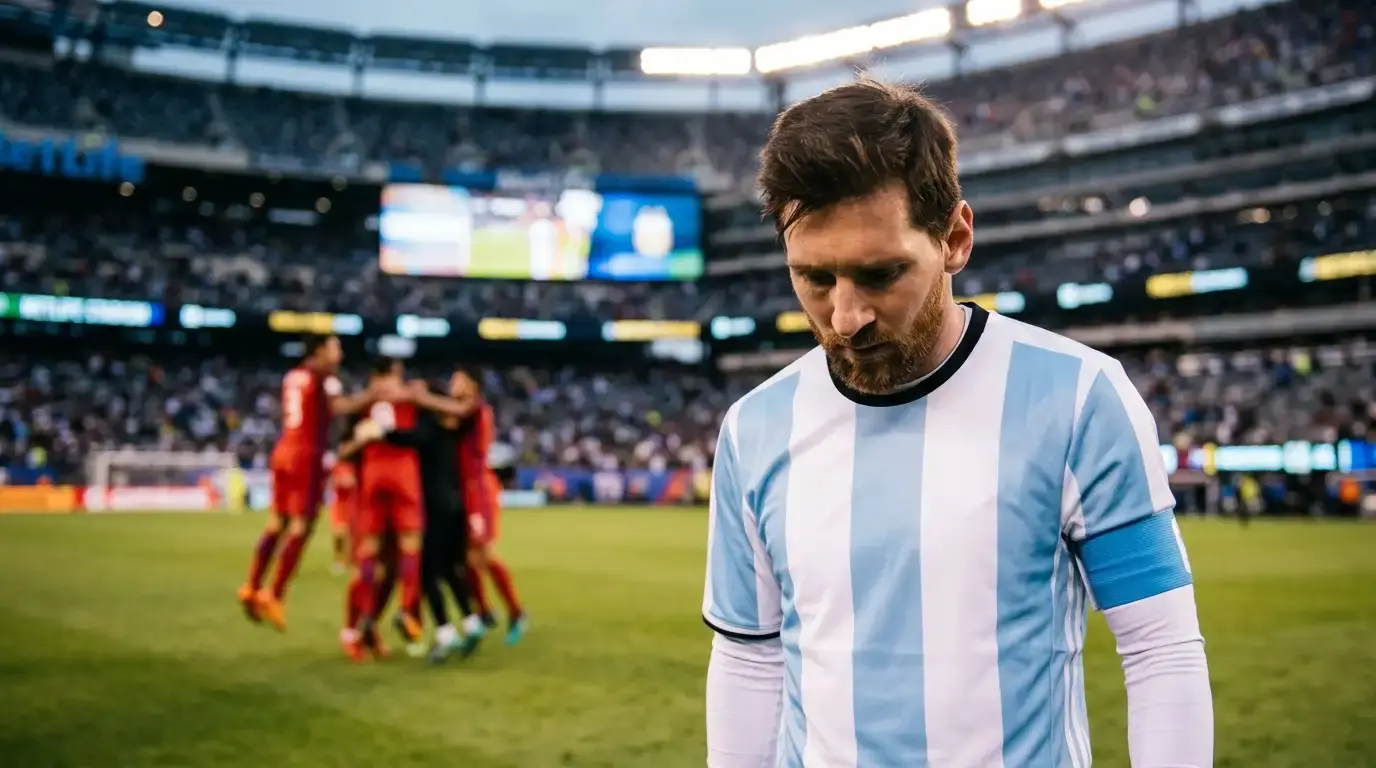
Lionel Messi’s World Cup career has concluded with defeat in the 2026 final, as Argentina fell 1-0 to Spain in extra time on 19 July at MetLife Stadium. The 39-year-old, widely reported to be playing his final World Cup, finished the tournament with the Silver Ball but was held scoreless in the final as Spain claimed their second title.
Contents
- The Final Defeat
- Messi’s Tournament Numbers
- Records Lost and Retained
- The Silver Ball
- Emotional Farewell
- Betting Market Collapse
- Argentina’s Campaign
The Final Defeat
Argentina entered the World Cup final as defending champions, seeking to become the first nation to win back-to-back titles since Brazil in 1958 and 1962. Spain stood in their way, and despite Emiliano Martínez’s heroic 11 saves in goal, Ferran Torres’s 106th-minute strike proved decisive.
Messi was kept quiet throughout the 120 minutes, registering no goals and failing to produce the magic that had illuminated earlier rounds. Spain’s defensive discipline limited his influence, and Argentina managed zero shots on target across the entire match.
The defeat was compounded by Argentina finishing with 10 men after Enzo Fernández received a second yellow card in the 90+3rd minute, forcing them to navigate extra time a man down.
Messi’s Tournament Numbers
Despite the final disappointment, Messi produced a remarkable individual tournament at age 39.
| Statistic | Total |
|---|---|
| Matches played | 8 |
| Goals | 8 |
| Assists | 4 |
| Award | Silver Ball |
| Final performance | 0 goals, 0 assists |
His eight goals included a crucial semi-final hat-trick against England (Argentina won 2-1) that temporarily tied him with Kylian Mbappé at the top of the all-time World Cup scoring charts. However, Mbappé’s brace in the bronze medal match (18 July) vaulted him clear, and Messi’s scoreless final meant he finished the tournament two goals behind.
Records Lost and Retained
The 2026 World Cup represented a mixed legacy for Messi’s place in football history.
Record Lost: All-Time World Cup Goals
Messi entered the tournament tied with Miroslav Klose at 19 career World Cup goals. His eight goals in 2026 took him to 21, briefly placing him alone at the top of the all-time list.
However, Kylian Mbappé’s 10-goal haul (including the decisive bronze-match brace) lifted him to 22 career World Cup goals, establishing a new record. Messi finishes second on the all-time list at 21.
Records Retained
Messi still holds multiple World Cup records that remain unchallenged:
- Most World Cup appearances: 33 (extended during this tournament)
- Most all-time World Cup assists: 12 (career total across five tournaments)
- Most World Cup minutes played (exact total unspecified in available data)
These marks represent longevity and consistency across five World Cup campaigns (2006, 2010, 2014, 2018, 2022, 2026), an achievement unlikely to be matched in the modern era.
The Silver Ball
Messi was awarded the Silver Ball as the tournament’s second-best player, behind Spain captain Rodri (Golden Ball) and ahead of Kylian Mbappé (Bronze Ball).
The award represented a significant market upset. Pre-final betting markets had priced Messi at approximately 1.11 to win the Golden Ball, making him an overwhelming favourite. Rodri won from around 11.0 odds, marking the tournament’s biggest individual award surprise.
Messi’s case for the Golden Ball rested on:
- Eight goals (tied for second behind Mbappé’s 10)
- Four assists (joint-fourth in the tournament)
- Leading Argentina to the final as captain
- Producing match-winning performances in knockout rounds
However, the final defeat and Rodri’s midfield dominance throughout Spain’s eight-match winning run swung the award decisively in the Spaniard’s favour.
Emotional Farewell
Reports from MetLife Stadium described Messi as visibly emotional at the medal ceremony, with tears reportedly visible as Spain’s players formed a guard of honour for him—a gesture of respect for one of football’s all-time greats.
Messi’s post-match comments reflected both disappointment and acceptance:
"I feel sad, but I am aware that we played our hearts out" (English translation from Spanish original, as published by Bleacher Report, 19 July 2026), he said.
"They were better, to be honest. We lost the game, and we accept that. That doesn’t mean that we will forget everything we’ve done so far, so I’d like to thank my people, my players and the country" (English translation from Spanish original, as published by Bleacher Report, 19 July 2026).
Argentina manager Lionel Scaloni paid tribute to his captain:
"He’s 39 years old, it’s an incredible thing" (English translation from Spanish original, as published by World Soccer Talk, 19 July 2026), Scaloni said. "In my opinion, he’s the best footballer to ever step onto a football pitch" (English translation from Spanish original, as published by World Soccer Talk, 19 July 2026).
While neither Messi nor the Argentine federation have issued a formal retirement statement, widespread reporting suggests this was his final World Cup appearance. At 39, the prospect of competing in 2030—when he would be 43—appears highly unlikely.
Betting Market Collapse
Messi’s scoreless final represented a significant collapse for punters who backed him across multiple markets.
Golden Boot Drift
Entering the final, Messi sat at eight goals, two behind Mbappé (who had already completed his tournament with 10 goals after France’s bronze-medal match). Betting markets reflected the steep climb required:
- Messi: 13.0 (pre-final)
- Mbappé: 1.04 (heavily backed favourite)
Messi needed a hat-trick to claim the Golden Boot outright. The scoreless performance confirmed Mbappé’s back-to-back Golden Boot wins.
Golden Ball Upset
As noted earlier, Messi entered the final as the 1.11 favourite for the Golden Ball. The scoreless final and Spain’s dominant victory shifted sentiment decisively toward Rodri, who had anchored Spain’s title run with a record-breaking passing performance (approximately 756 completed passes across the tournament).
The result: Messi’s Silver Ball at 1.11 pre-match odds represents one of the tournament’s most significant betting market failures.
Anytime Goalscorer
Messi was priced at 2.50 to score at any time in the final—short odds reflecting his goalscoring form throughout the knockout rounds. His failure to convert any chances resulted in a loss for backers across this market as well.
Argentina’s Campaign
Despite the final disappointment, Argentina’s run to the final represented a strong defence of their 2022 title.
| Round | Opponent | Result |
|---|---|---|
| Group J | — | 9 points (winners) |
| Round of 32 | Cabo Verde | 3-2 (a.e.t.) |
| Round of 16 | Egypt | 3-2 |
| Quarter-final | Switzerland | 3-1 (a.e.t.) |
| Semi-final | England | 2-1 |
| Final | Spain | 0-1 (a.e.t.) — LOSS |
Argentina won seven of eight matches, with the final representing their only defeat. However, the tournament will be remembered as much for its ugly conclusion as for the football.
Post-Match Controversy
Seconds after the final whistle, Argentina midfielder Leandro Paredes grabbed Spain defender Eric García by the throat and wrestled Gavi to the ground, sparking a melee involving players from both sides. Several media outlets initially reported that Paredes was sent off; however, FIFA’s official match report confirms he was not dismissed.
Argentina were also criticised for turning away during Spain’s trophy presentation and failing to return the guard of honour that Spain had offered Messi. BBC pundit Alan Shearer described the scenes bluntly:
"Paredes threw two or three haymakers into someone’s face. He went for them," Shearer said (Yahoo Sports, 19 July 2026).
The incidents cast a shadow over what had been a competitive and largely sporting final until the closing seconds.
Messi’s World Cup Legacy
Across five World Cup tournaments spanning 20 years, Messi’s legacy is secure despite the 2026 final defeat:
- 2006 (Germany): 1 goal, 1 assist; quarter-final exit
- 2010 (South Africa): 0 goals, 1 assist; quarter-final exit
- 2014 (Brazil): 4 goals, 1 assist; runners-up, Golden Ball
- 2018 (Russia): 1 goal, 2 assists; Round of 16 exit
- 2022 (Qatar): 7 goals, 3 assists; champions, Golden Ball
- 2026 (USA/Canada/Mexico): 8 goals, 4 assists; runners-up, Silver Ball
Total: 21 goals, 12 assists, 33 appearances, 1 title, 2 Golden Balls (2014, 2022), 1 Silver Ball (2026).
The 2022 title in Qatar—long considered the missing piece of his career—ensures Messi retires from World Cup football with the sport’s ultimate prize. The 2026 defeat prevents a fairytale ending but cannot diminish the broader legacy.
What’s Next for Argentina?
Manager Lionel Scaloni confirmed he will remain in charge, stating: "Sadness, but knowing that we left everything out there. We’re great in victory, and we have to show that we’re great in defeat too" (English translation from Spanish original, as published by World Soccer Talk, 19 July 2026).
Argentina’s immediate challenge will be transitioning away from Messi’s era while maintaining their status among football’s elite. The squad features promising young talent—including several players in their early-to-mid 20s—but replacing a figure of Messi’s stature and influence represents an unprecedented challenge.
For Australian punters, Argentina’s odds for the 2030 World Cup (to be hosted by Spain, Portugal, and Morocco, with select matches in South America) will likely lengthen significantly without Messi. Early outright markets should reflect the transition period ahead.
Final Thoughts
Messi’s World Cup career concludes with a defeat but a legacy intact. The 2022 triumph in Qatar secured his place in football immortality; the 2026 final loss, while painful, represents the reality that even the greatest players cannot win forever.
At 39, Messi delivered one final elite World Cup performance—eight goals, four assists, and a run to the final—before the curtain fell at MetLife Stadium. For those fortunate enough to witness his two-decade World Cup journey, the memories endure far beyond the final scoreline.
This analysis is based on official match data from FIFA, ESPN, and verified reporting from 19-20 July 2026. Quotes translated as published by outlets cited. All betting odds sourced from major Australian and international bookmakers. For responsible gambling resources, visit our Responsible Gambling Guide.
